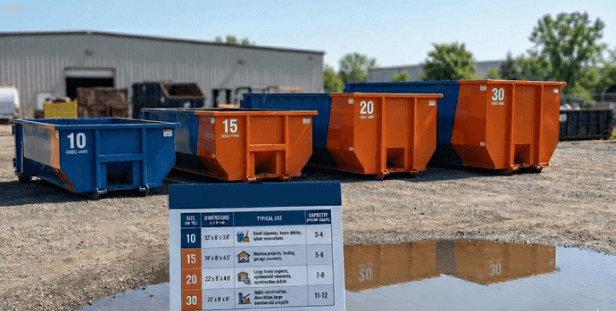
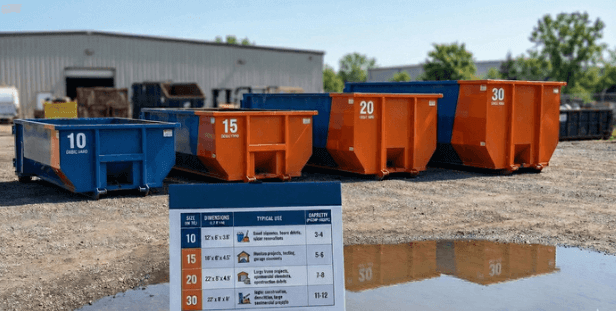
Trash Roll Off Dumpster Sizes Chart: A Guide to Typical Different Residential and Commercial Garbage Roll Off Dumpster Sizes to Help You Choose the Right Fit
Pick the wrong dumpster size and you’ll either waste money on unused space or face unexpected overage fees—mistakes we’ve helped countless customers avoid over our decade in the junk removal industry.
After hauling thousands of loads since 2014, our Jiffy Junk teams have learned that most homeowners overestimate what they need for cleanouts, while contractors often underestimate demolition debris volume. This guide shares the sizing insights we’ve gathered firsthand, helping you sidestep the common pitfalls we see on job sites every day.
Below, you’ll find our practical breakdown of roll-off dumpster sizes ranging from 10 to 40 yards, complete with real-world examples of projects that are based on the number of jobs we’ve done. Whether you’re working on a basement cleanout or dealing with commercial construction waste, there’s bound to be plenty of material when it comes to fitting the first time around, and using our experience designates the answer.
Quick Answers
Dumpster Sizes
Roll off dumpsters come in five standard sizes: 10, 15, 20, 30, and 40 cubic yards.
Quick size guide:
| Size | Capacity | Common Use |
| 10 yard | 3 pickup loads | Small cleanouts, minor renovations |
| 15 yard | 4-5 pickup loads | Garage/basement cleanouts |
| 20 yard | 6 pickup loads | Kitchen/bath remodels, whole-house cleanouts |
| 30 yard | 9 pickup loads | Major renovations, estate cleanouts |
| 40 yard | 12 pickup loads | Large demolition and commercial projects |
What we’ve learned after thousands of hauls: Most homeowners underestimate by one size. When uncertain, size up—the small cost difference beats overflow fees every time.
Top 5 Takeaways
- Size up when uncertain. The cost difference is minimal. Overflow fees aren’t. First-time renters typically underestimate by one size.
- Weight limits matter as much as volume. Concrete, brick, and shingles hit tonnage caps fast—even in half-full containers. Ask about weight, not just cubic yards.
- Estimate what’s coming out. Demolition generates 90% of debris. Focus on materials being removed, not space being cleared.
- Check permits before delivery. Street placement usually requires one. Driveway usually doesn’t. Verify HOA rules and ensure 60 feet of truck clearance.
- Choose responsible disposal. 600 million tons of C&D debris are generated annually. 50% of waste still hits landfills. Recycling and donation should be standard—not optional.
Table of contents
- Trash Roll Off Dumpster Sizes Chart: A Guide to Typical Different Residential and Commercial Garbage Roll Off Dumpster Sizes to Help You Choose the Right Fit
- Quick Answers
- Top 5 Takeaways
- Roll Off Dumpster Sizes Guide
- Residential Dumpster Sizes: What Homeowners Need to Know
- Commercial Dumpster Sizes: Options for Larger Projects
- How to Choose the Right Dumpster Size
- What Can Go in a Roll-Off Dumpster?
- Let Jiffy Junk Handle the Heavy Lifting
- Essential Resources for Choosing the Right Dumpster Size
- 1. Match Your Project to the Perfect Container Size
- 2. Stay Within Weight Limits and Avoid Surprise Fees
- 3. Estimate Your Debris Weight Before You Start Loading
- 4. Plan Your Budget With Transparent Pricing Information
- 5. Know Exactly What Can and Can’t Go in Your Container
- 6. Find Out If Your Location Requires a Permit
- 7. Follow Best Practices for Construction and Demolition Debris
- Supporting Statistics: What a Decade of Hauling Has Taught Us About Waste in America
- Final Thought: Why Dumpster Size Is Really About Peace of Mind
- FAQ on “Dumpster Sizes”
- Ready to Choose the Right Roll-Off Dumpster Size for Your Project?
Roll Off Dumpster Sizes Guide
Understanding Roll Off Dumpster Sizes
Roll-off dumpsters are measured in cubic yards, which refers to the amount of debris that they can contain by volume. The most common sizes are from 10 to 40 cubic yards, with one for each kind of project and space required. Our teams at Jiffy Junk work with all standard sizes regularly, and have discovered from experience that it is very helpful to both understand dimensions and even practical capacity in order to make more intelligent decisions than simply comparing cubic yard measurements all at once.
Residential Dumpster Sizes: What Homeowners Need to Know
Most residential projects fall within the 10 to 20 yard range. From our experience handling estate cleanouts and home renovation debris, here’s what we typically recommend:
10 Yard Dumpsters work well for small-scale projects like cleaning out a single room, disposing of old furniture, or handling a minor bathroom remodel. This compact size fits easily in most driveways and represents the most budget-friendly option for homeowners tackling weekend projects.
15 Yard Dumpsters hit the sweet spot for garage and basement cleanouts—jobs our crews handle regularly. This size accommodates years of accumulated items without overwhelming your driveway space.
20 Yard Dumpsters serve as the go-to choice for larger home projects. We frequently see this size used for kitchen renovations, roof replacements, and whole-house cleanouts. If you’re removing carpet and flooring throughout a home or clearing out a property after a move, the 20-yard container typically handles the load efficiently.
Commercial Dumpster Sizes: Options for Larger Projects
Commercial and construction projects demand more capacity, which is where 30 and 40-yard dumpsters prove their value.
30 Yard Dumpsters handle substantial renovation debris, new construction waste, and large-scale property cleanouts. Businesses clearing out office spaces or contractors managing mid-size demolition projects find this size delivers solid capacity without the footprint of the largest containers.
40 Yard Dumpsters represent the heavy-duty option for major demolition, large commercial cleanouts, and industrial projects. These containers accommodate significant volumes of construction debris, warehouse clearances, and multi-unit property cleanouts. Based on our commercial project experience, the 40-yard size often proves more economical than multiple smaller containers for large-scale jobs.
How to Choose the Right Dumpster Size
Selecting the appropriate size comes down to three key factors:
Project scope matters most. A single-room cleanout differs dramatically from a whole-home renovation. When in doubt, our teams suggest sizing up rather than risking overage fees or needing a second container.
Consider material weight, not just volume. Heavy materials like concrete, brick, and roofing shingles fill weight limits quickly, even when the container appears half-empty. Most dumpsters have weight caps between 2 and 6 tons, depending on size.
Account for available space. Measure your driveway or placement area before ordering. A 40-yard dumpster won’t help if it can’t fit on your property. Standard containers need roughly 60 feet of clearance for delivery truck access.
What Can Go in a Roll-Off Dumpster?
Accepted items typically include:
- Household junk and furniture
- Renovation debris (drywall, lumber, flooring)
- Yard waste and landscaping materials
- Appliances (non-refrigerant)
- Construction materials
Items requiring special handling:
- Refrigerators and air conditioners (contain refrigerants)
- Electronics and batteries
- Paint and chemicals
- Tires
- Hazardous materials
Jiffy Junk’s White Glove Treatment includes proper sorting and disposal, ensuring recyclable materials get diverted from landfills and restricted items receive appropriate handling.
Let Jiffy Junk Handle the Heavy Lifting
Still unsure which size fits your project? Our team provides free, no-obligation quotes and can recommend the right container based on your specific needs. With transparent pricing and eco-conscious disposal practices, we make debris removal simple from start to finish.
“After hauling thousands of loads since 2014, we’ve learned that cubic yards only tell part of the story—a 20-yard dumpster fills up twice as fast with bulky furniture as it does with broken-down demolition debris, which is why we always ask customers what they’re tossing, not just how much.” — Jiffy Junk Operations Team
Essential Resources for Choosing the Right Dumpster Size
Picking the right roll-off dumpster doesn’t have to be complicated. We’ve gathered the most helpful resources our customers rely on—covering everything from sizing basics to permit requirements—so you can move forward with confidence and get back to what matters most.
1. Match Your Project to the Perfect Container Size
Resource: Dumpsters.com – What Size Dumpster Do I Need?
Not sure where to start? This straightforward guide walks you through standard dumpster dimensions and pairs each size with real project examples. You’ll find easy visual comparisons that make selecting your container simple—no guesswork required.
URL: https://www.dumpsters.com/resources/what-size-dumpster-do-i-need
2. Stay Within Weight Limits and Avoid Surprise Fees
Resource: Dumpsters.com – Guide to Roll Off Dumpster Weight Limits
Here’s something we’ve learned after thousands of hauls: weight limits matter just as much as container size. This resource breaks down typical tonnage allowances and shows you exactly how to keep your project on budget—especially when you’re clearing heavy materials like concrete, brick, or roofing debris.
URL: https://www.dumpsters.com/resources/dumpster-weight-limits
3. Estimate Your Debris Weight Before You Start Loading
Resource: Dumpsters.com – Dumpster Weight Calculators
Wondering how much your materials actually weigh? These quick calculators take the mystery out of drywall, shingles, concrete, and household items. A few clicks now can save you from unexpected costs later—and help you choose the right container the first time.
URL: https://www.dumpsters.com/resources/dumpster-weight-calculator
4. Plan Your Budget With Transparent Pricing Information
Resource: HomeGuide – Dumpster Rental Prices
We believe in upfront, honest pricing—and this resource shares that philosophy. You’ll find current national averages organized by dumpster size, rental duration, and region, plus practical tips for keeping costs fair and predictable.
URL: https://homeguide.com/costs/dumpster-rental-prices
5. Know Exactly What Can and Can’t Go in Your Container
Resource: Dumpsters.com – What Items Can’t Go in a Dumpster?
Before you start tossing items, take a quick look at this list of prohibited and restricted materials. Understanding what’s allowed keeps your project running smoothly and ensures responsible disposal—something we take seriously with every job we handle.
URL: https://www.dumpsters.com/resources/prohibited-items
6. Find Out If Your Location Requires a Permit
Resource: Dumpsters.com – Do You Need a Permit for a Dumpster Rental?
Permit requirements vary from city to city, and sometimes even block to block. This helpful guide explains when you’ll need one, what to expect cost-wise, and how placement location affects your options. A little research upfront prevents delays down the road.
URL: https://www.dumpsters.com/resources/dumpster-permits
7. Follow Best Practices for Construction and Demolition Debris
Resource: U.S. EPA – Sustainable Management of Construction and Demolition Materials
For larger renovation or commercial projects, the EPA’s official guidelines cover everything from federal regulations to eco-friendly disposal practices. At Jiffy Junk, we’re committed to recycling and donating whenever possible—and this resource reflects those same values.
URL: https://www.epa.gov/smm/sustainable-management-construction-and-demolition-materials
Supporting Statistics: What a Decade of Hauling Has Taught Us About Waste in America
After ten years in junk removal, we’ve learned to read projects differently. These EPA statistics confirm patterns we see on job sites every day—and explain why dumpster sizing matters more than most people realize.
600 Million Tons of C&D Debris Generated Annually
The EPA reports that construction and demolition debris in the U.S. topped 600 million tons in 2018—more than double the amount of regular household trash.
What we’ve observed since 2014:
- Homeowners consistently underestimate debris volume
- A single bathroom remodel fills a 10-yard dumpster faster than expected
- Cubic yards on paper don’t always match real-world results
This is why we ask detailed questions before recommending a size. Getting it right upfront saves time, money, and frustration.
Source: U.S. EPA – Construction and Demolition Debris: Material-Specific Data
76% of C&D Materials Now Diverted From Landfills
EPA data shows over 455 million tons directed to recycling or reuse, while just under 145 million tons reached landfills. That’s a 76% diversion rate.
How we’ve seen this shift firsthand:
- Recycling infrastructure has improved dramatically since we started
- We now have reliable partnerships with processing facilities for concrete, metal, and wood
- Our crews identify recyclable and donatable items on every job
The 76% figure is encouraging. We believe it can go higher—which is why sorting and diversion are standard practice for us, not an afterthought.
Source: U.S. EPA – Best Practices for Reducing, Reusing, and Recycling Construction and Demolition Materials
Demolition Generates 90% of all C&D Waste.
Here’s a statistic we reference almost daily: demolition represents over 90% of C&D debris generation, while new construction accounts for less than 10%.
Why this surprises homeowners:
- People focus on what they’re installing, not what’s coming out
- Tearing out old materials produces far more debris than adding new ones
- A kitchen renovation isn’t just new cabinets—it’s old cabinets, countertops, flooring, and fixtures removed first
Our approach:
We ask customers what they’re removing, not just what they’re building. That single question often changes our size recommendation entirely.
Source: U.S. EPA – Sustainable Management of Construction and Demolition Materials
https://www.epa.gov/smm/sustainable-management-construction-and-demolition-materials
Final Thought: Why Dumpster Size Is Really About Peace of Mind
Choosing a roll-off dumpster seems straightforward. Pick a size, schedule delivery, fill it up, and have it hauled away.
After a decade of helping homeowners and contractors manage debris, we see it differently.
It’s not about cubic yards. It’s about removing one more thing from your plate.
What This Guide Covered
- Standard sizes from 10 to 40 yards and realistic capacities
- Weight limits that matter as much as volume
- The 90/10 rule—demolition generates most project debris
- Permit requirements by location and placement
- Prohibited items requiring special handling
- EPA data showing 600 million tons of C&D debris generated annually
One purpose: helping you decide confidently before your project begins.
Our Honest Take
The dumpster industry overcomplicates things.
Cubic yard calculations. Tonnage limits. Overage fees. Permit applications. It can feel like you need a logistics degree just to clear out a garage.
That’s backwards.
Debris removal should be the easy part. You’re already juggling contractors, timelines, and budgets. The last thing you need is uncertainty about container size or surprise fees after the fact.
Three Principles That Guide Our Recommendations
1. When in doubt, size up. The cost difference between containers is minimal compared to the hassle of an overflow or second haul.
2. Weight catches people off guard. A half-full dumpster of concrete hits weight limits faster than a full container of furniture. We always ask what you’re disposing of—not just how much.
3. Responsible disposal is the baseline. With 50% of waste still hitting landfills, recycling and donation aren’t extras. They’re built into how we work.
What Experience Has Taught Us
Most guides give you dimensions and leave you to figure out the rest. We’ve learned from:
- Standing in driveways with customers who ordered the wrong size
- Walking through homes where “small cleanouts” became three-day projects
- Hauling debris from renovations that produced twice what anyone expected
Patterns we’ve observed:
- 20-yard dumpsters work for most whole-house cleanouts
- Estate cleanouts with decades of belongings often need 30-yard containers
- Roofing shingles look light but weigh far more than furniture
- “What are you removing?” matters more than “how big is your space?”
This isn’t spec sheet information. It comes from doing the work.
The One Takeaway
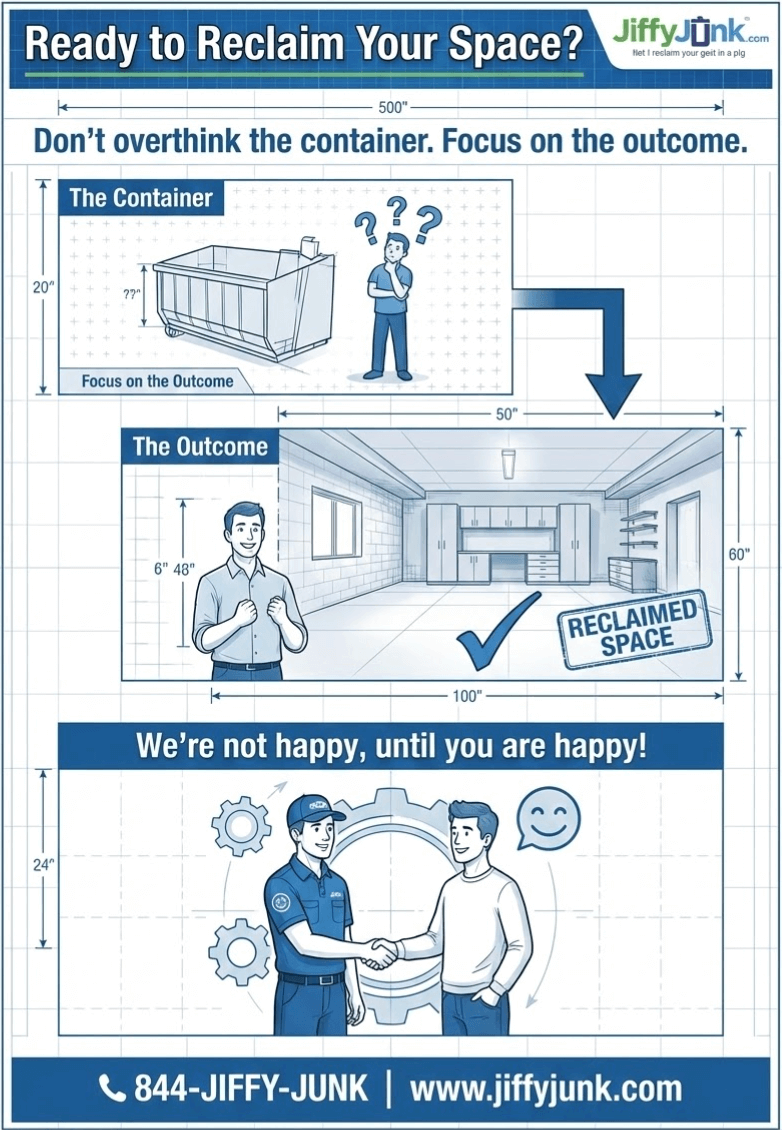
Don’t overthink the container. Focus on the outcome.
You want:
- Clutter gone
- Space reclaimed
- Your project is moving forward
The right dumpster is simply the one that makes that happen smoothly.
FAQ on “Dumpster Sizes”
Q: What are the standard roll-off dumpster sizes available?
A: Five standard sizes exist: 10, 15, 20, 30, and 40 cubic yards.
Size overview:
| Size | Dimensions | Best For |
| 10 yard | 12′ x 8′ x 4′ | Small cleanouts |
| 15 yard | 16′ x 8′ x 4′ | Garage/basement projects |
| 20 yard | 22′ x 8′ x 4.5′ | Most renovations |
| 30 yard | 22′ x 8′ x 6′ | Major renovations |
| 40 yard | 22′ x 8′ x 8′ | Large demolition |
What we’ve observed: The 20-yard is most popular—but popularity doesn’t mean it’s right for your project. We’ve seen customers regret defaulting to the common choice when their debris load needed something larger.
Our advice: Start with what you’re removing, not what most people rent.
Q: How do I know what size dumpster I need for my project?
A: Estimate based on what’s coming out, not the space you’re clearing.
The pickup truck method:
- 10 yards = 3 truck loads
- 15-yard = 4-5 truck loads
- 20-yard = 6 truck loads
- 30-yard = 9 truck loads
- 40-yard = 12 truck loads
What experience has taught us:
We’ve hauled full 30-yard loads from single garages that homeowners swore would take “maybe a 10-yard.”
The pattern: Projects generate 20-30% more debris than expected.
Our rule: If your gut says 15-yard, consider the 20. Sizing up costs a little more but saves overflow headaches.
Q: What’s the difference between dumpster size and weight limit?
A: They’re completely different measurements—and confusing them causes costly mistakes.
- Size = volume (cubic yards) — how much space you have
- Weight limit = tonnage (tons) — how heavy your load can be
Real scenario we see regularly:
Customer rents a 20-yard dumpster for patio demolition. Fills it halfway with concrete. The container looks mostly empty, but already exceeds the 3-ton weight limit. Result: overage fees on a half-full dumpster.
Heavy materials that trigger weight limits fast:
- Concrete
- Brick
- Roofing shingles
- Dirt and soil
Our advice: For heavy materials, ask about weight limits specifically—not just size. A smaller container with an appropriate weight allowance often makes more sense.
Q: Will a roll-off dumpster fit in my driveway?
A: Usually yes. But delivery access catches people off guard.
What fits where:
- 10, 15, 20-yard: Most single-car driveways
- 30, 40-yard: Double-wide driveways or open lots
Delivery requirements:
- 60 feet straight clearance
- 23-25 feet vertical space
Common obstacles we encounter:
- Low-hanging trees
- Basketball hoops
- Overhead power lines
- Parked vehicles
Before booking:
1. Walk your driveway
2. Look for obstacles
3. Mention challenges when you call
If the driveway won’t work, Street placement is usually an option. Budget extra time for permits in most cities.
Q: What happens if I choose the wrong dumpster size?
A: Depends on which direction you miss.
Too small (the expensive mistake):
- Overfilled containers can’t be legally transported
- You’ll remove debris yourself or pay for a second rental
- A $400 job becomes $800
Too large (the smaller problem):
- You pay for unused capacity
- But your project stays on track
Mid-project solutions:
- Call immediately if you underestimate
- Ask about swap-out services
- Exchange a full container for an empty one
The pattern we’ve observed:
First-time renters underestimate by one size category. If your instinct says 15-yard, the 20-yard is probably right.
Ready to Choose the Right Roll-Off Dumpster Size for Your Project?
Now that you understand typical residential and commercial dumpster sizes, let Jiffy Junk help you select the perfect fit. Call 844-JIFFY-JUNK or visit www.jiffyjunk.com/booking for a free, no-obligation quote and experience our White Glove Treatment firsthand.