How Big Is a 6-Cubic-Yard Dumpster? Understanding Size Dimensions and Rental Cost So You Know Exactly What You’re Getting Before You Book
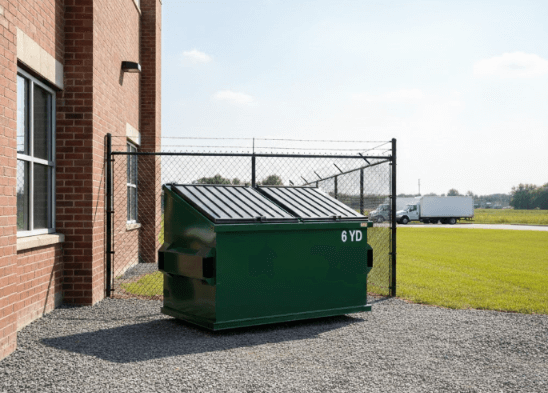
A 6 cubic yard dumpster measures approximately 10 feet long, 3 feet wide, and 4 feet tall—about the footprint of a large sofa, but chest-high. Customers often tell us they expected something bigger based on the name alone. In reality, we’ve found this mid-size container handles most single-room cleanouts, small renovation debris, and garage decluttering projects without paying for capacity you won’t use.
Here’s what a decade of hauling has taught us: the 6-yard dumpster works best when you’re clearing out stuff that’s been piling up—old furniture mixed with boxes, outdated appliances alongside yard waste. It struggles with dense materials like concrete or roofing shingles, where weight limits become the issue long before space runs out.
This guide covers exact dimensions, realistic capacity examples from jobs we’ve completed, current rental pricing, and weight restrictions that actually matter. We’ll also show you when sizing up makes sense—and when it’s just wasted money.
TL;DR Quick Answers
6 Yard Dumpster
A 6-yard dumpster measures 10 feet long × 3 feet wide × 4 feet tall and holds 2–3 pickup truck loads of material.
Fast facts:
- Cost: $250–$450
- Weight limit: 1,000–2,000 lbs
- Rental period: 3–7 days, typical
- Fits: Narrow driveways, tight spaces
Best for: Single-room cleanouts, garage decluttering, small bathroom renovations, light yard waste
Not ideal for: Concrete, brick, roofing shingles, or multi-room projects
From our experience: This container is the most underrated size we offer. Customers who measure their project realistically and understand that weight limits matter more than space consistently get the best value. When uncertain between sizes, go bigger—it costs less than ordering a second container.
Top Takeaways
6 Yard Dumpster: Quick Facts
Dimensions
- Length: 10 feet
- Width: 3 feet
- Height: 4 feet (chest-level)
- Footprint: Size of a large sofa
Capacity
- Volume: 2–3 pickup truck loads
- Weight limit: 1,000–2,000 lbs
- Remember: Weight limits out before space does
Cost
- Range: $250–$450
- Duration: 3–7 days, typical
- Tip: Confirm all fees upfront
Best For
- Single-room cleanouts
- Garage decluttering
- Small bathroom renovations
- Light yard waste
- Estate cleanout starting points
Avoid For
- Concrete or brick
- Roofing shingles
- Multi-room cleanouts
- Heavy demolition debris
Before Booking
- Measure placement area (10′ × 4′ minimum)
- Identify debris types
- Separate donation items
- Check permit requirements
- Confirm weight limits
Bottom Line
- Underrated size for single-room projects
- Best value when chosen strategically
- When uncertain: Size up—cheaper than a second container
Table of Contents
- How Big Is a 6-Cubic-Yard Dumpster? Understanding Size Dimensions and Rental Cost So You Know Exactly What You’re Getting Before You Book
- Top Takeaways
- 6 Yard Dumpster: Quick Facts
- Exact Dimensions of a 6 Cubic Yard Dumpster
- What Actually Fits Inside a 6 Yard Dumpster
- Weight Limits That Actually Matter
- Current Rental Costs for 6 Yard Dumpsters
- Best Projects for a 6 Cubic Yard Dumpster
- When to Size Up or Down
- Essential Resources to Help You Plan a Stress-Free Dumpster Rental
- What the Data Tells Us—And What We’ve Learned on the Job
- Why We Share These Numbers
- Our Take: Why the 6 Yard Dumpster Deserves More Respect
- Ready to Book? Here’s What to Do
- Frequently Asked Questions
Exact Dimensions of a 6 Cubic Yard Dumpster
A standard 6-cubic-yard dumpster measures approximately 10 feet long, 3 feet wide, and 4 feet tall. These dimensions can vary slightly between providers, but most containers fall within an inch or two of these measurements.
To visualize the footprint, imagine a space roughly the length of a standard parking spot but only half as wide. The 4-foot height sits at chest level for most adults, making it easy to toss items over the side without a ladder. In our experience, this accessible height is one reason homeowners prefer this size over taller alternatives for DIY cleanout projects.
What Actually Fits Inside a 6 Yard Dumpster
Six cubic yards holds approximately 2 to 3 pickup truck loads of material. We’ve seen customers successfully clear out a single-car garage, one large bedroom’s worth of furniture, or the debris from a small bathroom remodel with room to spare.
Typical items that fit well include old furniture pieces, mattresses, small appliances, boxes of household clutter, and light construction debris like drywall scraps or laminate flooring. After thousands of deliveries, we’ve found this size works best for mixed loads—think a combination of bulky items and bagged materials rather than one type of heavy debris.
What doesn’t work as well: dense materials like concrete, brick, soil, or roofing shingles. These items hit weight limits long before filling the container, leaving you paying for unused space.
Weight Limits That Actually Matter
Most 6 cubic yard dumpsters have a weight limit between 1,000 and 2,000 pounds, depending on your provider and location. This is where many renters get surprised—the container looks half-empty, but they’ve already maxed out the allowable weight.
Our teams see this most often with renovation debris. A small pile of old tile, concrete backer board, and broken porcelain can weigh several hundred pounds while barely covering the bottom. We always recommend asking about weight limits upfront and understanding overage charges before loading heavy materials.
For mixed household items like furniture, clothing, toys, and general clutter, weight rarely becomes an issue. These lighter materials typically fill the container before approaching weight restrictions.
Current Rental Costs for 6 Yard Dumpsters
Rental pricing for a 6 cubic yard dumpster typically ranges from $250 to $450, depending on your location, rental duration, and included weight allowance. Urban areas and regions with higher disposal fees generally fall on the upper end of this range.
Most rental periods run 3 to 7 days, with extensions available for an additional daily fee. We’ve found that weekend warriors tackling garage cleanouts usually finish within the standard window, while renovation projects sometimes need extra time as work progresses in phases.
When comparing quotes, look beyond the base price. Ask about delivery fees, pickup charges, weight overage costs, and prohibited item fees. Some providers advertise lower upfront rates but add charges that push final costs above competitors with transparent all-inclusive pricing.
Best Projects for a 6 Cubic Yard Dumpster
This mid-size container handles a specific range of projects exceptionally well. Based on jobs we complete regularly, the 6-yard dumpster fits perfectly for single-room cleanouts like a bedroom, home office, or basement storage area. It also works well for small renovation debris from bathroom updates or flooring replacement, garage decluttering projects, and seasonal yard cleanups with light brush and landscaping waste.
Estate cleanouts sometimes start with this size for a single room before scaling up as needed. We often recommend this approach—beginning smaller lets you gauge volume without committing to a larger container that sits partially empty.
When to Size Up or Down
Choosing the right dumpster size saves money and hassle. Go smaller with a 3 or 4-yard container if you’re clearing a single closet, small shed, or tackling a quick decluttering project with mostly bagged items.
Size up to a 10 or 12 yard dumpster for whole-home cleanouts, multi-room renovations, or projects involving bulky furniture from several rooms. The price difference between sizes is often modest compared to the cost of ordering a second container when the first fills up unexpectedly.
When in doubt, our experience suggests sizing up by one level. Customers rarely regret having extra space, but running out of room mid-project creates delays and added expense.
“After completing thousands of dumpster rentals, we’ve learned that the 6-yard container is the most underestimated size in our lineup—it handles far more than people expect, but only when you’re loading the right materials. The customers who get the best value are those clearing out mixed household items, not heavy construction debris, where weight limits become the real constraint.” — Jiffy Junk Operations Team
Essential Resources to Help You Plan a Stress-Free Dumpster Rental
We want every customer to feel confident before booking. That’s why we’ve gathered the most helpful resources our teams recommend when customers ask about permits, weight limits, and what can go in their container. Bookmark these links—they’ll save you time and help you avoid surprises.
1. Know Which Items Need Special Handling Before You Start Loading
Resource: EPA Household Hazardous Waste Guidelines
Paints, batteries, cleaners, and certain chemicals require separate disposal—they can’t go in any standard dumpster. The EPA’s guide helps you identify these items so you can plan ahead and keep your project on track.
Why we recommend it: Our crews see customers caught off guard by this more often than you’d expect. A quick review before loading day prevents delays and extra trips.
URL: https://www.epa.gov/hw/household-hazardous-waste-hhw
2. Understand the Rules for Renovation and Construction Debris
Resource: EPA Construction & Demolition Debris Management
Tackling a bathroom remodel or clearing out a renovation site? The EPA outlines proper handling, recycling options, and federal guidelines for construction materials. It’s straightforward information that helps you stay compliant.
Why we recommend it: After completing thousands of renovation cleanouts, we’ve learned that knowing the rules upfront makes every project go smoother.
URL: https://www.epa.gov/smm/sustainable-management-construction-and-demolition-materials
3. Find Recycling Centers and Disposal Facilities in Your Area
Resource: Earth911 Recycling Locator
Just enter your zip code to search over 100,000 locations that accept specific materials. Whether you need to drop off electronics, batteries, paint, or tires, this tool points you to the closest option.
Why we recommend it: We’re committed to recycling and donating whenever possible. This resource helps you do the same with items that can’t go in your container.
URL: https://search.earth911.com/
4. Donate Usable Items Instead of Tossing Them
Resource: Habitat for Humanity ReStore
Furniture, appliances, and building materials in good condition deserve a second life. Habitat ReStores offer free pickup in many areas, and proceeds support affordable housing in your community.
Why we recommend it: Our customers tell us they feel better knowing their belongings help someone else. Donating first also means less volume in your dumpster—and potentially lower costs for you.
URL: https://www.habitat.org/restores
What the Data Tells Us—And What We’ve Learned on the Job
After a decade of hauling everything from single-room cleanouts to full estate disposals, we’ve developed a ground-level perspective on waste disposal. These EPA statistics align with patterns our crews observe every day.
600 Million Tons of Construction Debris Generated Annually
The EPA reports Americans generated 600 million tons of construction and demolition debris in 2018. That’s more than twice the volume of regular household waste.
What we’ve seen firsthand:
- Bathroom remodels, kitchen updates, and flooring replacements now account for a significant portion of our rentals
- Customers consistently underestimate how much debris “minor renovations” produce
- A single bathroom demo can fill half a 6-yard container with drywall, tile, and old fixtures alone
Source: U.S. EPA, Sustainable Management of Construction and Demolition Materials
https://www.epa.gov/smm/sustainable-management-construction-and-demolition-materials
76% of Construction Debris Recovered for Recycling or Reuse
EPA data shows that approximately 455 million tons of C&D debris—76 percent—were directed toward recycling or beneficial reuse rather than landfills in 2018.
Why this matters to how we operate:
- We don’t just haul containers to the nearest landfill
- We’ve built partnerships with local recycling facilities and donation centers
- Materials we commonly divert include scrap metal, concrete, clean wood, and reusable furniture
What customers tell us: Environmental responsibility matters to them. An old dresser headed for disposal might furnish a family’s first apartment instead.
Source: U.S. EPA, Construction and Demolition Debris: Material-Specific Data
50% of Municipal Solid Waste Still Goes to Landfills
Americans generated 292.4 million tons of municipal solid waste in 2018. Despite recycling efforts recovering 94 million tons (32.1 percent), more than 146 million tons—half of everything—ended up in landfills.
What we see in the field:
- Estate cleanouts and garage projects produce mixed loads of furniture, clothing, appliances, and household items
- Sorting these materials after pickup is expensive and time-consuming
- Much of what reaches landfills could have been donated or recycled with minimal extra effort
What works better (based on our experience):
- Separate donatable items before we arrive
- Set aside working appliances and good-condition furniture
- Keep recyclables accessible for easy sorting
The result: Less volume in your dumpster, potential cost savings, and usable items stay out of landfills.
Source: U.S. EPA, National Overview: Facts and Figures on Materials, Wastes and Recycling
Why We Share These Numbers
What we’ve learned over the years:
- Customers who plan get better results
- Right-sizing your dumpster the first time saves money
- Separating donation items before loading day speeds up the process
- Asking where materials end up leads to smarter choices
Our promise: Not just a dumpster dropped in your driveway—a partnership with a team that cares about doing the job right.
Our Take: Why the 6 Yard Dumpster Deserves More Respect
What We Covered
- Dimensions: 10 feet long × 3 feet wide × 4 feet tall (sofa footprint, chest-high)
- Capacity: 2–3 pickup truck loads
- Weight limits: 1,000–2,000 pounds
- Pricing: $250–$450, depending on location
- Best projects: Garage cleanouts, single-room clearing, small bathroom remodels
- Key resources: EPA guidelines, permits, weight calculators, donation options
Our Honest Opinion
Customers gravitate toward 10 or 20-yard options because bigger feels safer. We understand that instinct. But after thousands of residential jobs, we’ve noticed a pattern worth sharing.
The 6-yard container hits a sweet spot that larger sizes miss:
- Fits tight driveways where bigger containers won’t
- Handles what single-room projects actually produce—not what people imagine
- Costs less when you’re already spending on renovation or moving expenses
Customers who choose this size strategically tend to be the most satisfied. They’ve measured realistically, separated donations beforehand, and understood that weight—not space—usually determines capacity.
The Weight Truth Nobody Mentions
If there’s one thing we wish more renters understood:
Space and weight are two different constraints. Weight usually wins.
A 6-yard dumpster looks half-empty with concrete, tile, and porcelain at the bottom. But that “half-empty” container might already be maxed out on weight.
This isn’t a system flaw. It’s physics.
What We’d Tell a Friend
Choose the 6-yard if:
- You’re clearing one room, not an entire house
- Your debris is mostly furniture, boxes, and household items
- Your driveway is narrow, or the space is limited
- You want to minimize costs without sacrificing convenience
Size up if:
- You’re tackling multiple rooms or a whole-home cleanout
- Heavy materials like tile, brick, or concrete are involved
- You’d rather have extra space than risk needing a second container
Either way:
- Separate donation items before loading day
- Check permit requirements if placing on the street
- Ask about weight limits upfront
The Bigger Picture
Six hundred million tons of construction debris hit the U.S. waste stream annually. That number feels abstract until you’re standing in your own garage, surrounded by decades of belongings.
The truth: it adds up one project at a time.
The dumpster you rent becomes part of that picture. Choosing the right size means less waste. Working with a company that prioritizes recycling means more items get a second life.
We take that seriously. We’ve seen what ends up in these containers—family photos, childhood furniture, items that meant something. The least we can do is handle them thoughtfully.
Our Promise
Renting a dumpster shouldn’t require hours of research. You’ve got a project to finish.
What you get from us:
- Right container at a fair price
- Delivered on time
- Hauled away without hassle
- Information to decide confidently—not just a sales pitch
We’re not happy until you are happy.
That’s not a slogan. It’s how we’ve built this business since 2014, one driveway at a time.
Ready to Book? Here’s What to Do
You’ve done the research. Now turn information into action.
Step 1: Confirm Your Project Scope
Take 10 minutes to assess what you’re clearing out.
- How many rooms or areas?
- What material types—household items, renovation debris, or both?
- Any heavy materials (concrete, tile, brick)?
Pro tip: Walk through with your phone and snap photos. Customers who do this choose the right size the first time.
Step 2: Measure Your Placement Area
A 6-yard dumpster needs approximately 10 feet × 4 feet of space.
Verify:
- Placement area fits container dimensions
- The delivery truck has 12 feet of overhead clearance
- Surface is flat and stable
Street placement? Check permit requirements with your municipality first.
Step 3: Separate Donation Items
Set aside anything in good condition before the dumpster arrives.
Donation-worthy items:
- Furniture without major damage
- Working appliances
- Clothing, books, household goods
- Usable building materials
Result: Less volume, potential cost savings, and items stay out of landfills.
Step 4: Review Prohibited Items
These cannot go in any dumpster:
- Refrigerators, freezers, air conditioners
- Tires and car batteries
- Paints, solvents, chemicals
- Electronics and fluorescent bulbs
- Hazardous materials
Find local disposal: Earth911.com
Step 5: Get Your Quote
Have ready:
- Project type (cleanout, renovation, yard waste)
- Estimated debris types and volume
- Preferred delivery and pickup dates
- Placement location
We’ll confirm:
- Container size recommendation
- Total cost with no hidden fees
- Weight limit and rental period
- Extension options if needed
Step 6: Schedule Delivery
Timing tips from experience:
- Book 3–5 days ahead for best availability
- Request morning delivery for maximum loading time
- Schedule pickup for one day after expected completion
Step 7: Load Smart
Best practices:
- Flat items (plywood, drywall) along the bottom first
- Fill gaps with smaller items and bags
- Heavy items last, distributed evenly
- Break down furniture and boxes
- Keep debris below top edge—overfilled containers can’t be transported
Step 8: Schedule Pickup
What happens next:
- We retrieve your container on schedule
- Materials sorted for recycling and donation
- Remaining debris goes to proper facilities
- You receive completion confirmation
Frequently Asked Questions
Q: What are the exact dimensions of a 6 yard dumpster?
A: A standard 6 cubic yard dumpster measures approximately 10 feet long × 3 feet wide × 4 feet tall.
How to visualize it:
- Footprint: roughly the size of a large sofa
- Height: chest-level for most adults (no ladder needed)
- Fits: narrow driveways where larger containers won’t
Customers often tell us they expected something bigger based on the name. After delivering thousands of these containers, we’ve found this size strikes the right balance—tall enough for meaningful volume, compact enough to fit tight spaces.
Before booking: Measure your driveway to confirm fit.
Q: How much can I fit in a 6 yard dumpster?
A: Approximately 2–3 pickup truck loads.
Real-world examples from jobs we complete weekly:
- Single-car garage cleanout with room to spare
- One large bedroom’s worth of furniture and boxes
- Small bathroom demo (drywall, tile, fixtures)
The insight we wish more customers understood:
Space and weight are different constraints. Weight usually wins.
- Household items (furniture, boxes, clothing): Fill the entire container
- Heavy materials (concrete, tile, brick): Hit weight limits while the container looks half-empty
Typical weight limit: 1,000–2,000 pounds
Our advice: Know what you’re loading before you start. Save heavy materials for last—or separate them.
Q: How much does it cost to rent a 6 yard dumpster?
A: Typical pricing ranges from $250 to $450.
Factors affecting cost:
- Location (urban areas trend higher)
- Rental duration (usually 3–7 days)
- Weight allowance included
- Local disposal fees
What we’ve learned matters most: The base price rarely tells the full story.
Watch for hidden fees:
- Delivery charges
- Pickup charges
- Environmental fees
- Weight overage costs
We’ve heard from countless customers who switched to us after surprise invoices doubled their original quotes.
Our approach: All costs are included upfront. The price we quote is the price you pay. No hidden fees. No surprises.
After a decade in this business, we’ve found that transparency earns more repeat customers than clever pricing ever could.
Q: What projects is a 6-yard dumpster best suited for?
A: Based on the jobs our crews handle daily, this size excels at specific project types.
Ideal projects:
- Single-room cleanouts (bedroom, home office, basement)
- Small renovation debris (bathroom updates, flooring replacement)
- Garage decluttering
- Seasonal yard cleanup (light brush, landscaping waste)
Smart strategy we’ve noticed: Customers tackling estate cleanouts often start with a 6 yard for one room. This lets them gauge volume before committing to something larger.
Where this size struggles:
- Concrete and brick
- Roofing shingles
- Dense demolition debris
Why: Heavy materials hit weight limits fast. When customers describe these projects, we recommend sizing up or renting a dedicated heavy-debris container.
This isn’t upselling. It’s making sure you don’t pay for a container you can only half-fill.
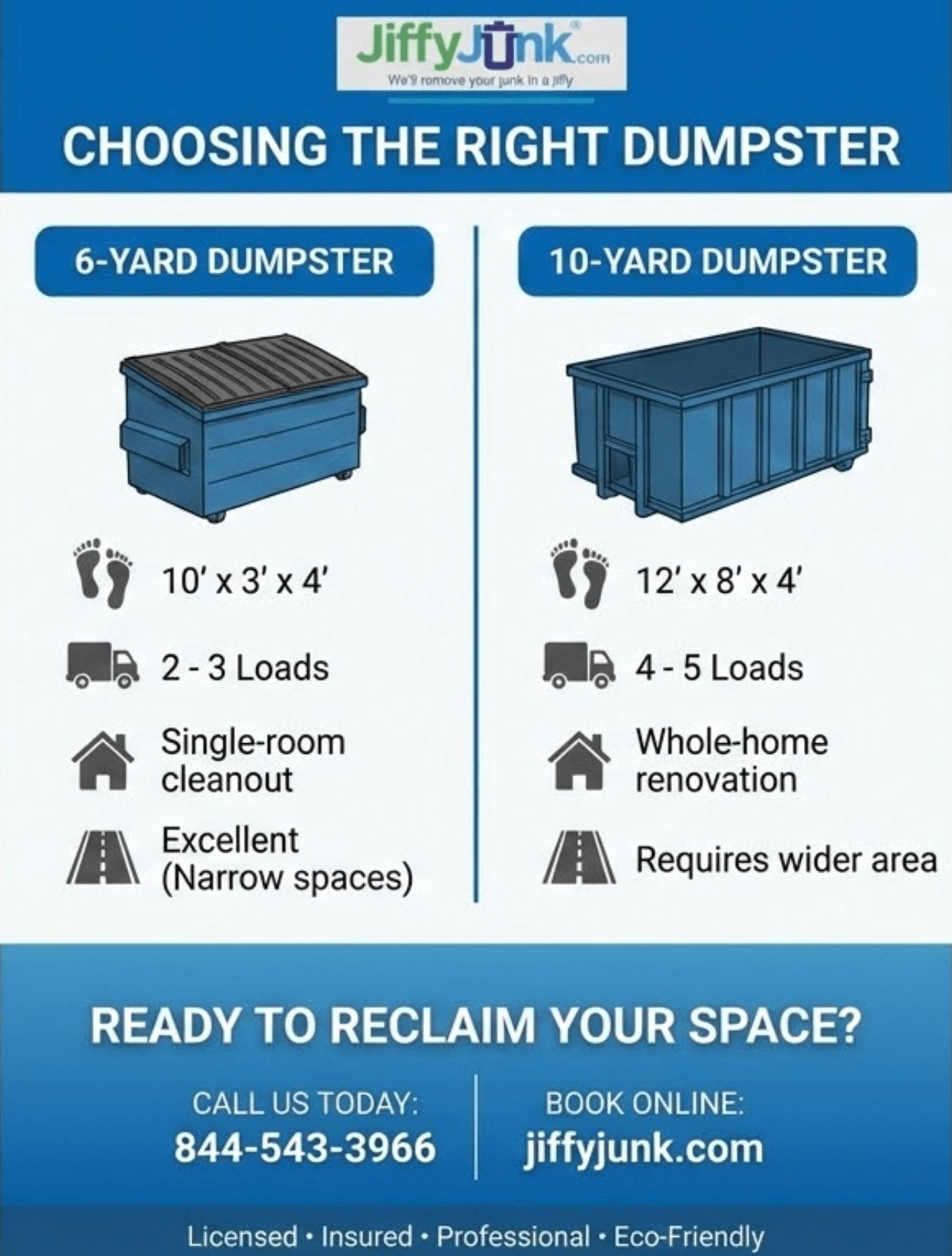
Q: What’s the difference between a 6-yard dumpster and a 10 yard dumpster?
A: Here’s the direct comparison:
| Feature | 6 Yard | 10 Yard |
| Dimensions | 10′ × 3′ × 4′ | 12′ × 8′ × 4′ |
| Capacity | 2–3 truck loads | 4–5 truck loads |
| Best for | Tight driveways | Larger spaces |
| Price difference | — | $50–$100 more |
Advice we give constantly: When you’re on the fence, sizing up usually costs less than ordering a second container.
What we’ve observed: Plenty of customers rent 10 or 20 yard dumpsters for projects that barely fill a 6 yard dumpster. They pay for space they never needed.
Our honest recommendation:
- Choose 6 yard: Single-room projects, mostly household items
- Choose 10 yard: Multi-room cleanouts, heavy materials, or when peace of mind matters
Ready to Book Your 6 Yard Dumpster?
Now that you understand the exact dimensions, weight limits, and rental costs, you have everything you need to make a confident decision. Call us at 844-543-3966 or visit jiffyjunk.com/booking to get your free quote and schedule delivery—we’re not happy until you are happy.