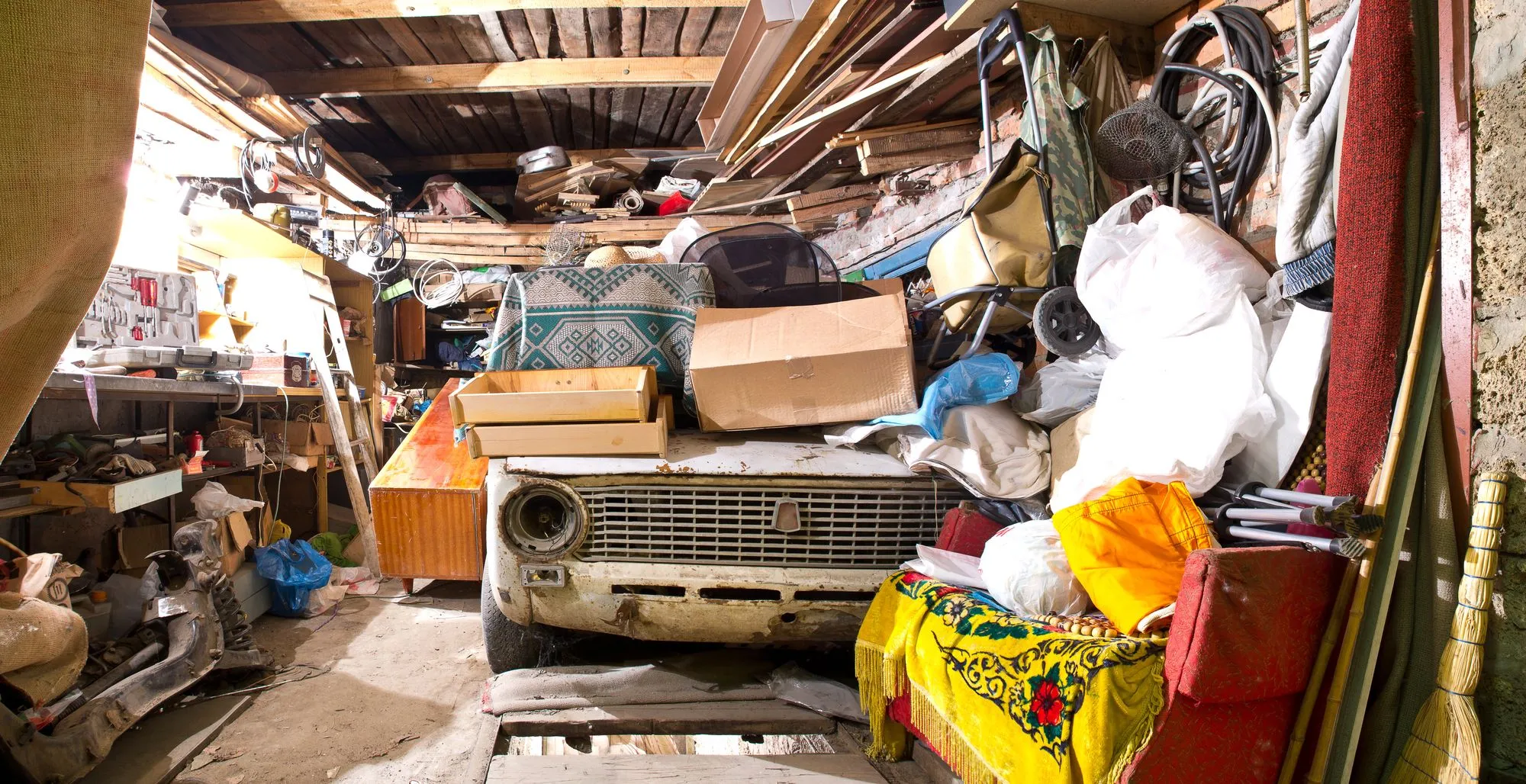
Tips on How to Declutter, Organize, and Empty Your Garage Fast: Cleanout and the Best Way to Clean Out Storage
After completing thousands of garage cleanouts nationwide, our Jiffy Junk crews have noticed something most homeowners don’t expect: the garage isn’t really the problem. It’s the lack of a clear plan. Without one, even a motivated weekend warrior ends up shuffling piles from one corner to another.
That’s why we’ve put together the same step-by-step approach our White Glove Treatment teams follow on every job — from the initial sort-and-zone strategy we use to work through packed garages quickly, to the disposal and donation methods that keep reusable items out of landfills. Whether you’re tackling a full garage cleanout, clearing out overstuffed storage, or just trying to find your workbench again, these are field-tested tips from the crews who do this every single day.
TL;DR: Quick Answers
Tips on How to Declutter and Empty Your Garage
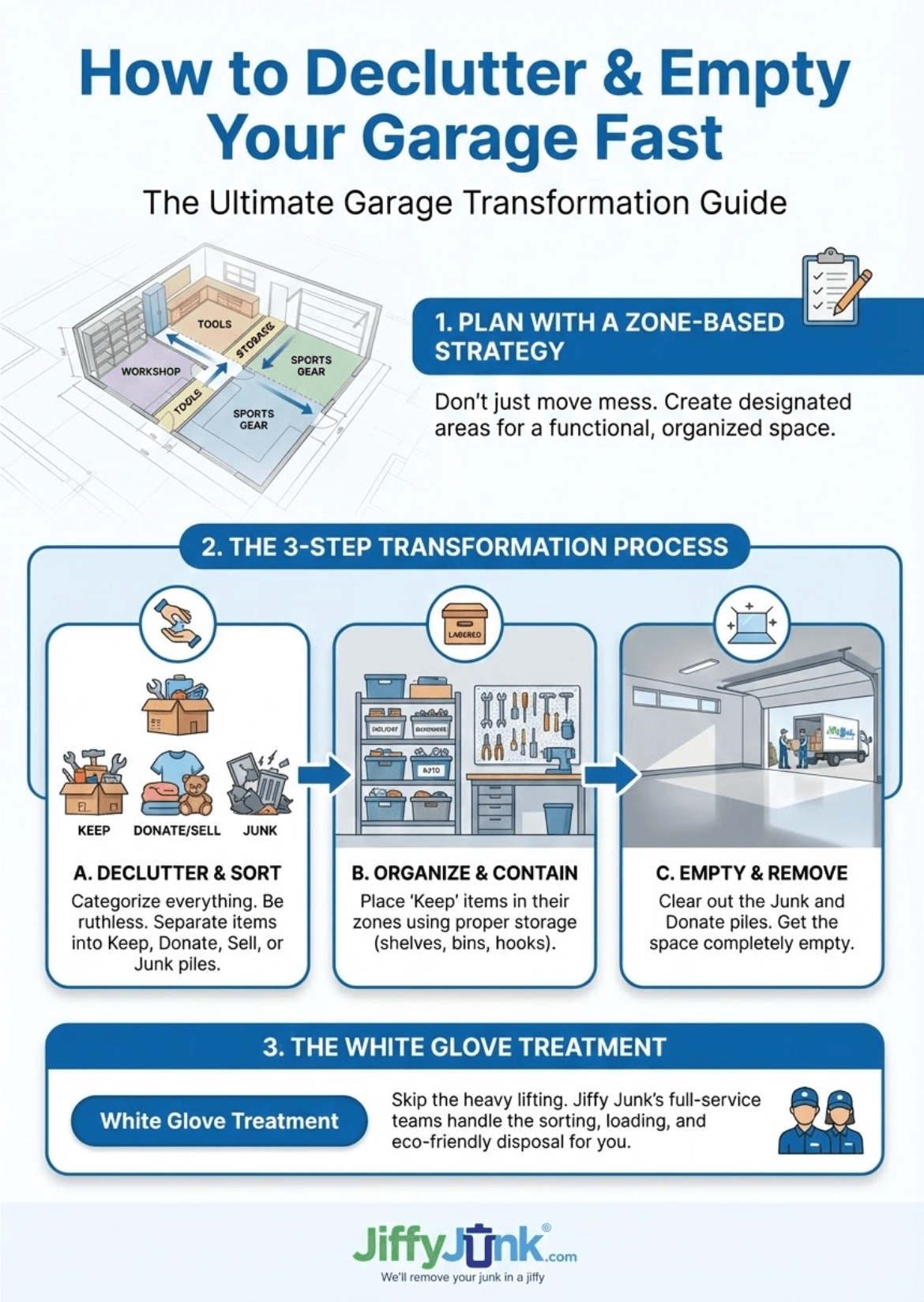
The fastest way to declutter and empty your garage is to start with a plan — not a trash bag. After thousands of garage cleanouts, our Jiffy Junk crews follow the same proven approach every time:
- Zone it. Break your garage into 3–5 categories: tools, seasonal, sports gear, storage overflow, etc.
- Sort everything into four groups. Keep, donate, recycle, or remove. No “maybe” pile — it’s where cleanouts stall.
- Go big first. Old furniture, broken appliances, and bulky equipment are the space hogs. Remove them, and the rest opens up fast.
- Work top to bottom, one zone at a time. Set a 20–30 minute limit per zone to keep momentum moving.
- Stage items for removal near the exit. Donate and recycle piles should leave your garage within 48 hours.
- Install a basic storage system before putting anything back. Shelves, hooks, and clear bins give every item a home — and prevent re-cluttering.
The bottom line: The garage is rarely a space problem. It’s a decision problem. Once you commit to a plan and make one clear choice per item, even the most overwhelming garage can be transformed in a single day.
Top Takeaways
- The garage isn’t the problem — the lack of a plan is. Start with zones. Use a clear keep-donate-recycle-remove framework. Our crews follow this on every job because it works.
- Go big first, decide once. Remove the largest items before anything else. Skip the “maybe” pile. You’ll uncover more usable space than you expect.
- Where your items end up matters. Half of all U.S. waste still goes to landfills. Route donations to local charities, recyclables to proper facilities, and hazardous materials like paint and batteries to designated collection programs.
- The garage gets neglected because it’s out of sight — break the cycle. Pair your cleanout with a simple storage system (shelves, hooks, clear bins) so clutter doesn’t creep back.
- You don’t have to do it alone. Follow the DIY checklist in this guide or let our White Glove Treatment team handle everything. Either way, the fastest path forward starts with one decision: today’s the day.
Table of Contents
- Tips on How to Declutter, Organize, and Empty Your Garage Fast: Cleanout and the Best Way to Clean Out Storage
- TL;DR: Quick Answers
- Top Takeaways
- Start With a Game Plan, Not a Garbage Bag
- Declutter First, Organize Second
- The Best Way to Clean Out Storage Areas
- Speed Tips From Our Crews
- Essential Resources to Make Your Garage Cleanout Easier
- 1. Habitat for Humanity ReStore — Give Your Old Furniture and Appliances a Second Life
- 2. The Salvation Army — Schedule a Free Pickup for Items You No Longer Need
- 3. Earth911 — Find a Recycling Drop-Off Near You in Seconds
- 4. U.S. EPA — Safely Handle the Hazardous Materials Hiding in Your Garage
- 5. Family Handyman — 46 Smart, Budget-Friendly DIY Storage Ideas to Keep Your Garage Organized
- 6. This Old House — Your Go-To Guide for Charities That Pick Up Furniture for Free
- Final Thought: The Garage You Want Is Already There
- FAQ on Tips on How to Declutter and Empty Your Garage
- Q: What is the fastest way to declutter and empty a garage?
- Q: How do I decide what to keep and what to get rid of during a garage cleanout?
- Q: What should I do with items I don’t want but are still in good condition?
- Q: How do I dispose of paint, batteries, chemicals, and other hazardous materials found in my garage?
- Q: How do I keep my garage from getting cluttered again after a cleanout?
- Ready to Declutter, Organize, and Empty Your Garage the Fast Way?
Start With a Game Plan, Not a Garbage Bag
The biggest mistake we see homeowners make is diving straight into the mess without a strategy. Before you touch a single box, take ten minutes to walk through your garage and mentally break it into zones — tools and equipment, seasonal items, sports gear, things to keep, and things to go. Our crews use this same zone-based approach on every cleanout because it prevents the “shuffle and stall” cycle, where items just move from pile to pile without ever leaving the garage.
Grab four large bins or designate four floor areas labeled Keep, Donate, Recycle, and Toss. Every item goes into one of those categories — no “maybe” pile allowed. That single rule is what separates a productive cleanout from an all-day reorganization that ends exactly where it started.
Declutter First, Organize Second
It’s tempting to buy shelving units and storage bins before you’ve sorted anything, but that’s organizing clutter — not eliminating it. Work through one zone at a time and be honest about what you actually use. A good rule of thumb from our experience: if you haven’t touched it in over a year and it doesn’t have seasonal or sentimental value, it’s time to let it go.
Focus on the large items first — old furniture, broken appliances, outdated exercise equipment. These are the space hogs that create the illusion of an impossibly full garage. Once they’re out, you’ll be surprised how much room you actually have to work with.
The Best Way to Clean Out Storage Areas
Garages often double as overflow storage, which means you’re not just dealing with garage items — you’re dealing with boxes from closets, attics, and moves that happened years ago. For packed storage areas, our teams use a simple pull-and-sort method: pull everything out into the driveway or yard, clean the space, then only bring back what earns its spot.
This approach works because it forces every item through a decision point. Nothing gets shoved back in by default. It also gives you a clear view of the full space so you can plan storage solutions — like wall-mounted racks, overhead bins, or pegboard systems — based on what you’re actually keeping rather than guessing.
Speed Tips From Our Crews
Our White Glove Treatment teams clear garages quickly because they follow a few principles that any homeowner can borrow:
Work top to bottom. Shelves and wall-mounted items first, floor-level items last. Gravity is on your side, and you avoid re-handling things that fall during the process.
Set a time limit per zone. Spending too long deliberating on individual items is the number-one time killer. Give yourself 20 to 30 minutes per zone and keep momentum moving forward.
Stage items near the exit. Everything in your Donate, Recycle, and Toss categories should be moved toward the garage door or driveway immediately. Out of sight, out of the decision loop.
Have a removal plan ready. The cleanout stalls when bags and piles stack up with nowhere to go. Schedule a donation pickup, reserve a trip to the recycling center, or book a junk removal service before you start — not after.
Dispose of Items the Eco-Friendly Way
Not everything needs to end up in a landfill — and honestly, a surprising amount of what comes out of a garage cleanout doesn’t have to. Furniture and household goods that are still in usable shape? Charities and local shelters will take them. Scrap metal, electronics, and certain plastics can go through municipal recycling or specialized drop-off facilities.
At Jiffy Junk, we sort and divert reusable materials on every single job. That’s not something we tack on as a feel-good extra — it’s baked into how we operate. Responsible disposal is part of doing the work right, period.
One thing worth flagging: garages tend to collect hazardous stuff over the years. Old paint cans, pesticides, dead batteries, leftover fuel — none of it belongs in your regular trash. Most municipalities run household hazardous waste programs specifically for these items, and a quick call or website check will tell you when and where to drop them off.
When It Makes Sense to Bring In Help
A weekend DIY cleanout can absolutely get the job done if you’re working with a moderate amount of clutter. Grab some bins, crank up the music, knock it out.
But there’s a tipping point. Maybe the garage has turned into a floor-to-ceiling storage unit over the past decade. Maybe there are heavy items in there you have no business trying to move on your own. Or maybe your schedule just doesn’t have room for a multi-day project. When any of those are true, professional junk removal takes the whole thing off your plate — and keeps you out of the chiropractor’s office.
Jiffy Junk’s licensed, insured crews manage everything from start to finish: sorting, hauling, loading, coordinating donations, and making sure disposal is handled the right way. We quote you a price before we start, and that number doesn’t change when the truck is loaded. When our team walks out, your space is clean and swept. That’s what White Glove Treatment actually looks like.
“After thousands of garage cleanouts, we’ve learned that the size of the mess is rarely the real obstacle — it’s not having a clear plan for what stays, what goes, and where it all ends up. Once homeowners commit to that simple framework, even the most overwhelming garages can be completely transformed in a single day.” — Jiffy Junk Team
Essential Resources to Make Your Garage Cleanout Easier
A great garage cleanout doesn’t end when the last box leaves the floor — it’s about knowing exactly where everything goes next. Whether you’re donating furniture to a family in need, recycling materials the right way, or setting up storage that keeps your space clutter-free for good, these seven resources have you covered at every step.
1. Habitat for Humanity ReStore — Give Your Old Furniture and Appliances a Second Life
That couch, bookshelf, or set of kitchen cabinets you no longer need could make a real difference for a family in your community. Habitat ReStore accepts new and gently used appliances, furniture, building materials, household goods, and more from individuals and companies. Most locations even offer free pickup of large items like furniture and building materials, so you don’t have to worry about how to get bulky pieces out the door. Proceeds go directly toward building affordable housing — that’s a win for your garage and your neighborhood.
Schedule a donation: www.habitat.org/restores/donate-goods
2. The Salvation Army — Schedule a Free Pickup for Items You No Longer Need
If you’ve got gently used furniture, working appliances, or boxes of household items ready to go, The Salvation Army makes it simple. Donated goods are sold at their thrift stores, with proceeds funding Adult Rehabilitation Centers that support people working to rebuild their lives. You can schedule a free pickup online or call 1-800-SA-TRUCK (1-800-728-7825) — perfect for clearing out large quantities during a garage cleanout without multiple trips.
Book a pickup: satruck.org/donate/choose
3. Earth911 — Find a Recycling Drop-Off Near You in Seconds
Not sure where to take old electronics, scrap metal, or those random plastic bins you’ve been holding onto? Earth911 has you covered. With over 350 materials and 100,000+ listings, they maintain one of North America’s most extensive recycling databases. Just enter the material and your zip code, and you’ll find local facilities that accept exactly what you need to get rid of. It’s one of the fastest ways to make sure recyclable items from your garage stay out of the landfill.
Search your area: search.earth911.com
4. U.S. EPA — Safely Handle the Hazardous Materials Hiding in Your Garage
Here’s something most homeowners don’t think about until cleanout day: garages are where paint cans, old pesticides, motor oil, antifreeze, and spent batteries tend to pile up — and none of those belong in your regular curbside pickup. The EPA provides clear guidance on how to safely manage these household hazardous wastes and recommends using local collection programs designed specifically for these materials. A quick check before you start clearing could save you from an unsafe — and potentially illegal — disposal mistake.
Read the guide: www.epa.gov/hw/household-hazardous-waste-hhw
5. Family Handyman — 46 Smart, Budget-Friendly DIY Storage Ideas to Keep Your Garage Organized
You’ve done the hard work of clearing everything out — now let’s make sure it stays that way. This resource walks you through wall-mounted shelves, overhead ceiling racks, pegboard systems, clear stackable bins, and other affordable weekend projects that maximize every inch of your garage. From our experience, the cleanouts that stick are the ones where homeowners put a simple organization system in place before anything goes back in. This guide is a great place to start.
Browse storage ideas: www.familyhandyman.com/list/brilliant-ways-to-organize-your-garage
6. This Old House — Your Go-To Guide for Charities That Pick Up Furniture for Free
Wondering which organizations will actually come to your home, what they’ll accept, and how to get a tax deduction for your generosity? This comprehensive guide covers major national charities with free furniture pickup services, including Goodwill, The Salvation Army, and Habitat for Humanity. It breaks down each organization’s policies, walks you through scheduling, and explains how to document your donations at tax time. It’s a handy resource to bookmark before your cleanout weekend.
View the guide: www.thisoldhouse.com/moving/charities-that-will-pick-up-furniture-for-free
More Data That Backs Up What We See Every Day
The earlier statistics covered how widespread garage clutter is and where most waste ends up. These three additional data points go deeper — into patterns our crews recognize on nearly every job but that most homeowners don’t see until someone points them out.
The Garage Isn’t a Rare Luxury — It’s America’s Most Underused Asset
Our teams are struck by the same thing on every cleanout: how much usable space homeowners are sitting on without realizing it. This isn’t a handful of disorganized households. It’s a national pattern.
The U.S. Department of Energy reports that roughly two-thirds of all housing units nationwide have a garage or carport. That’s tens of millions of homes with dedicated space built for vehicles, storage, and projects.
What we see in the field:
- Job after job, our crews walk into garages that haven’t held a parked car in years
- Combined with the earlier stat showing 25% of two-car garage owners can’t park inside at all, the picture is clear: America doesn’t have a garage shortage — it has a garage utilization problem
- The fix isn’t more space. It’s a single focused cleanout that separates what’s needed from what’s been sitting untouched for years
Source: U.S. Department of Energy — www.energy.gov
The Relief Homeowners Feel After a Cleanout Isn’t Just Emotional — It’s Biological
There’s a moment on almost every job when we see it happen. The last load goes onto the truck. The homeowner steps back into their empty garage. Shoulders drop. They take a deep breath. Some get visibly emotional. After years of doing this work, we’ve come to expect that reaction.
Now there’s peer-reviewed research that explains why:
A controlled experimental study published through the National Institutes of Health found that household chaos — including disorganization and clutter — triggers a measurable physiological stress response, elevating cortisol levels and increasing negative emotional states.
What that means in plain language:
- The clutter in your garage generates a low-grade stress response every time you open that door, see the mess, and close it again
- Homeowners consistently describe feeling overwhelmed or embarrassed before we arrive — and visibly lighter once the space is clear
- Decluttering a garage isn’t just a home improvement project. It’s removing a source of daily stress most people have simply learned to live with
Source: National Institutes of Health (PMC) — pmc.ncbi.nlm.nih.gov
Millions of Homeowners Pay for Storage They Don’t Need — Because Their Garage Stopped Working
Our crews see this so often it’s become one of the first questions we ask on a job: “Are you also paying for a storage unit?” The answer is yes far more than you’d expect.
Over 11% of American households — more than 14.4 million — currently rent a self-storage unit. Over three-quarters of those tenants are homeowners. The top reason they give for renting is lack of space.
The insight most people miss:
- They don’t actually lack space — they have a garage full of items they no longer use blocking the space they already own
- We’ve lost count of cleanouts that ended with the homeowner realizing they could cancel a storage unit they’d been paying for — sometimes for years
- At $85–$120 per month, that’s $1,000+ per year spent storing things that could be donated, recycled, or removed in a single afternoon
- A one-time garage cleanout often pays for itself just by eliminating that recurring cost
Source: Self Storage Association — www.selfstorage.org
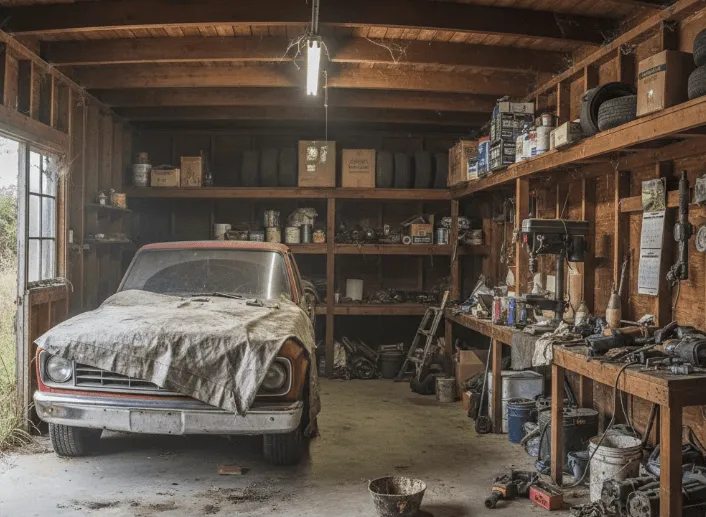
Final Thought: The Garage You Want Is Already There
After a decade of clearing out garages across the country, we’ve learned something that might surprise you: the hardest part of a garage cleanout isn’t the heavy lifting. It’s starting.
Most homeowners we work with have been thinking about tackling their garage for months — sometimes years. They can picture what the space could look like. But the sheer volume of stuff behind that door keeps the project stuck in “someday” mode.
Here’s what we’ve come to believe after thousands of jobs: there’s no such thing as a garage that’s too far gone.
We’ve walked into spaces where the homeowner couldn’t open the door more than two feet — and by the end of the day, they were parking their car inside for the first time in years. Every time, the transformation comes down to three things:
- A clear plan before you touch a single box
- A commitment to making keep-or-go decisions without a “maybe” pile
- A removal strategy that’s ready before you start — not after
What we’ve shared in this guide isn’t generic advice. These are the same strategies our White Glove Treatment crews use daily, refined over years of real-world experience:
- The zone-based sorting approach that prevents the “shuffle and stall” cycle
- The pull-and-sort method for packed storage areas
- The “no maybe pile” rule that keeps decisions moving forward
- Eco-friendly disposal tips that keep reusable items out of landfills
FAQ on Tips on How to Declutter and Empty Your Garage
Q: What is the fastest way to declutter and empty a garage?
A: Have a plan before you touch anything. After thousands of garage cleanouts, we’ve found this is the single biggest time saver — not a tool or technique, but a strategy.
The approach our crews use on every job:
- Walk through the garage and break it into 3–5 zones
- Set up four sorting areas: keep, donate, recycle, and remove
- Tackle the largest items first — they free up the most space and build momentum
- Work one zone at a time with a 20–30 minute limit per zone
- Stage everything for removal near the exit immediately
This eliminates the “shuffle and stall” cycle, where items just move from pile to pile. We’ve consistently seen even the most packed garages fully cleared in a single day using this framework.
Q: How do I decide what to keep and what to get rid of during a garage cleanout?
A: After years on the job, we’ve noticed that the items people agonize over longest are rarely the ones they end up keeping.
Two rules that change everything:
- The one-year test. Haven’t used it in the past year, and it’s not seasonal or genuinely sentimental? It’s time to let it go.
- No “maybe” pile. This is the single biggest insight from our cleanout experience. The “maybe” pile is where garage cleanouts go to die. Undecided items sit in limbo, then quietly migrate back to a shelf within a week.
Every item gets a firm keep, donate, recycle, or remove decision on the spot. We’ve watched homeowners clear years of accumulated clutter in hours once they commit to that one rule.
Q: What should I do with items I don’t want but are still in good condition?
A: Donate them — and schedule the pickup before your cleanout, not after. We’ve seen too many well-intentioned donation piles sit in driveways for weeks until the homeowner gives up and throws everything away.
Where to donate:
- Habitat for Humanity ReStore — accepts furniture, appliances, building materials, and household goods. Most locations offer free pickup.
- The Salvation Army — free pickup for gently used furniture, working appliances, and household items. Call 1-800-SA-TRUCK or schedule online.
- Not sure what’s available near you? This Old House’s charity guide covers national options, policies, and tax deduction details.
Our crews handle donation routing as a standard part of every job — usable items go to local partners on the spot, so nothing with a second life ends up wasted.
Q: How do I dispose of paint, batteries, chemicals, and other hazardous materials found in my garage?
A: This catches homeowners off guard on almost every cleanout we do. You’re making great progress, then you uncover a shelf full of old paint, pesticides, antifreeze, and dead batteries. None of it can go in regular trash.
How to handle it:
- Check the EPA’s Household Hazardous Waste guide to learn what qualifies and find local collection programs
- Search Earth911 by material type and zip code for nearby drop-off locations
- Call your local public works department for upcoming collection event dates
Our crew-tested tip: Pull hazardous items out and set them aside early in the process. Don’t let them slow your momentum. Clear the rest of the garage first, then make one dedicated trip to your local collection facility.
Q: How do I keep my garage from getting cluttered again after a cleanout?
A: This is the question we wish more homeowners asked before putting things back. We’ve done cleanouts where the garage looked incredible at the end of the day — then heard from the same customers months later because the clutter crept right back. The common thread every time? No system went in before items were returned.
Three things that make the biggest difference long-term:
- Every item needs a designated home. No specific shelf, hook, or bin? It ends up on the floor. Floor clutter is always how the cycle restarts.
- Use your walls and ceiling. Pegboards, wall-mounted racks, and overhead bins keep items accessible without sacrificing floor space. Family Handyman’s DIY guide has dozens of affordable options.
- Do a 30-minute check-in every three months. A quick seasonal pass catches new accumulation before it hits the tipping point. Customers who do this consistently tell us they haven’t needed another full cleanout since.
The goal isn’t a showroom garage. It’s a functional space that stays that way.
Ready to Declutter, Organize, and Empty Your Garage the Fast Way?
Skip the heavy lifting and let our White Glove Treatment team handle everything — sorting, hauling, donating, and recycling — so you can enjoy a clutter-free garage without the weekend project. Book your free quote today or call 844-JIFFY-JUNK — we’re not happy until you are.