Best Cheap Commercial Dumpster Service Prices Near Me in My Area: Why Jiffy Junk Delivers Unmatched Value for Your Business
After a decade of commercial hauling, we’ve learned one thing: the lowest dumpster price rarely means the best value. Hidden fees for delivery, pickup, overage charges, and vague rental windows cost businesses more in frustration and dollars than a straightforward quote ever would.
That’s why Jiffy Junk does things differently. We provide upfront, transparent pricing—the quote we give is the price you pay, period. Our customers tell us that what they value most isn’t the cheapest option; it’s knowing exactly what they’re paying for, when their dumpster arrives, and that a licensed, insured team stands behind every rental.
Below, we’ll share what we’ve seen work (and not work) for businesses like yours—and help you find the right fit for your project.
TL;DR Quick Answers
Commercial Dumpster Service
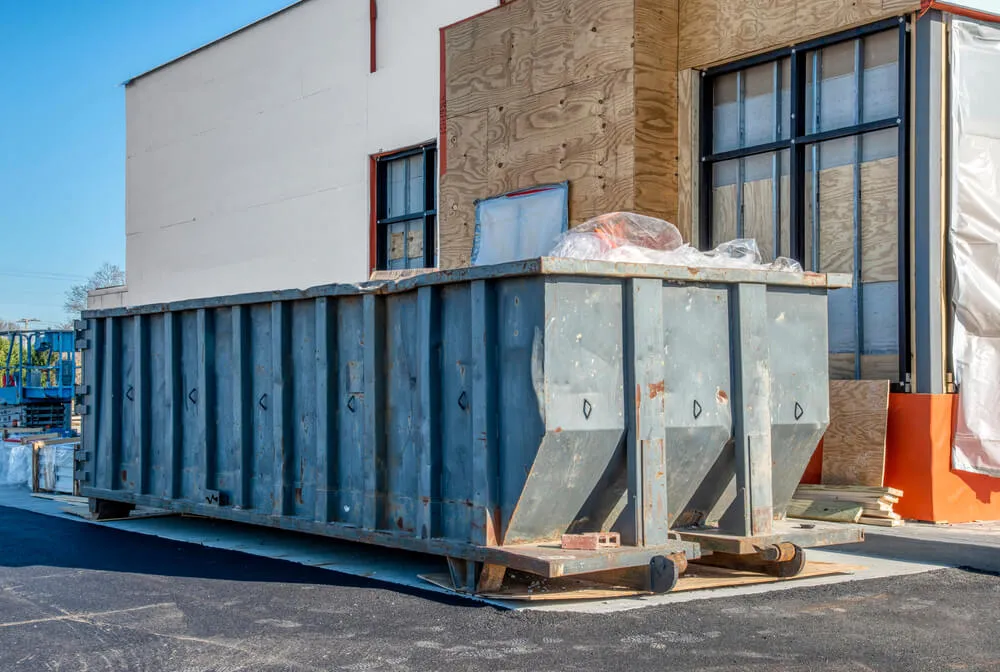
Commercial dumpster service provides businesses with temporary roll-off containers for waste disposal during renovations, cleanouts, construction projects, and ongoing operations.
What’s typically included:
- Container delivery to your location
- Agreed rental period (usually 7–14 days)
- Pickup and disposal of accepted materials
What separates good providers from the rest:
- Transparent, all-inclusive pricing with no hidden fees
- On-time delivery and pickup
- Licensed, insured teams
- Clear communication about weight limits and prohibited items
Our perspective after a decade of commercial hauling: The lowest price rarely delivers the best value. Businesses save more by choosing a reliable provider who shows up on schedule, quotes honestly, and handles disposal properly—rather than chasing discount rates that balloon with surprise charges.
Top 5 Takeaways
- The lowest price rarely delivers the best value. Hidden fees can inflate a “cheap” quote by 30% or more. Transparent, all-inclusive pricing protects your budget.
- Right-size your dumpster from the start. Too small means a costly second haul. Too large means paying for space. When in doubt, go one size up.
- Recycling reduces disposal costs. Separating materials can lower processing fees. Donating usable items may qualify your business for tax deductions.
- Compliance violations are expensive. Improper hazardous waste disposal can trigger penalties up to $70,117 per day. A licensed provider who asks the right questions protects your business.
- Reliability matters as much as price. A late dumpster stalls your entire project. Choose a provider who confirms appointments and shows up on schedule.
Table of Contents
- Best Cheap Commercial Dumpster Service Prices Near Me in My Area: Why Jiffy Junk Delivers Unmatched Value for Your Business
- TL;DR Quick Answers
- Top 5 Takeaways
- What Drives Commercial Dumpster Service Pricing
- Choosing the Right Dumpster Size for Your Business
- What Separates a Reliable Commercial Dumpster Provider from the Rest
- Why Businesses Choose Jiffy Junk for Commercial Dumpster Service
- Essential Resources to Help You Make the Right Decision
- 1. Know What Requires Special Handling Before Your Dumpster Arrives
- 2. Turn Construction Debris into Cost Savings
- 3. Keep Your Team Safe and Your Business Protected
- 4. Understand the Rules That Govern Commercial Disposal
- 5. Give Usable Items a Second Life (and Get a Tax Deduction)
- 6. Stay Current on Industry Best Practices
- Supporting Statistics: What the Numbers Mean for Your Business
- Final Thought: What We’ve Learned After a Decade of Commercial Hauling
- Frequently Asked Questions
- Get Affordable Commercial Dumpster Service That Delivers Real Value
What Drives Commercial Dumpster Service Pricing
Not all dumpster quotes are created equal. In our experience, businesses often focus on the rental rate alone—then get surprised by add-ons that inflate the final bill. Understanding what goes into pricing helps you compare providers accurately.
The main factors affecting your cost include:
- Dumpster size – Measured in cubic yards (typically 10, 20, 30, or 40 yards for commercial use)
- Rental duration – Standard windows range from 7 to 14 days; extensions add daily fees
- Debris type – Construction materials, general waste, and heavy items like concrete are priced differently
- Weight limits – Most rentals include a tonnage cap; exceeding it triggers overage charges
- Delivery location – Distance from the provider’s facility and permit requirements in your area
We’ve found that businesses save the most when they right-size their dumpster from the start. Ordering too small means paying for a second haul; ordering too large means paying for space.
Choosing the Right Dumpster Size for Your Business
Selecting the correct size prevents project delays and unnecessary costs. Here’s what we typically recommend based on the jobs we handle most often:
10-Yard Dumpster – Best for small office cleanouts, retail fixture removals, or light renovation debris. Holds roughly 3 pickup truck loads.
20-Yard Dumpster – Our most requested commercial size. Ideal for mid-sized renovations, restaurant equipment disposal, and warehouse cleanups. Holds approximately 6 pickup truck loads.
30-Yard Dumpster – Suited for larger construction projects, roof replacements, and commercial buildouts. Handles about 9 pickup truck loads.
40-Yard Dumpster – Reserved for major demolition, large-scale construction, and industrial cleanouts. Accommodates roughly 12 pickup truck loads.
When customers call unsure of what they need, we ask about the project scope and debris type—then recommend accordingly. There’s no advantage for us in overselling; a right-sized rental means a satisfied customer who calls again.
What Separates a Reliable Commercial Dumpster Provider from the Rest
Price matters, but it’s rarely the full picture. After years of hearing why businesses switch to Jiffy Junk, a few themes come up repeatedly.
Transparent, all-inclusive quotes. Hidden fees for fuel, environmental charges, or administrative costs erode trust fast. We include everything upfront so you can budget with confidence.
On-time delivery and pickup. Your project timeline depends on equipment arriving when promised. Our scheduling system confirms appointments instantly and sends reminders—because a dumpster sitting idle or arriving late costs you money.
Proper licensing and insurance. Commercial waste disposal involves liability. Working with a fully licensed and insured provider protects your business if something goes wrong on-site.
Flexible rental terms. Projects rarely go exactly as planned. We work with customers to extend rentals or swap sizes without punitive fees when timelines shift.
Eco-conscious disposal. We prioritize recycling and responsible processing whenever possible. For businesses with sustainability commitments, that alignment matters.
Why Businesses Choose Jiffy Junk for Commercial Dumpster Service
Since 2014, we’ve built our reputation on one principle: we’re not happy until you are. That’s not just a tagline—it’s how we train our teams and structure our service.
Our White Glove Treatment means:
- Upfront pricing with no surprise charges at pickup
- Licensed, insured professionals handling your rental from start to finish
- Responsive scheduling that adapts to your project needs
- A commitment to recycling and donating materials whenever possible
- Nationwide availability with local expertise in your area
Customers tell us they stay with Jiffy Junk because we make commercial waste simple. You focus on your business; we handle the heavy lifting.
“In over ten years of commercial hauling, we’ve seen businesses waste more money on ‘low-cost’ rentals with hidden fees than they ever would have spent on transparent pricing from day one—that’s exactly why we quote everything upfront and stick to it.” — Jiffy Junk Operations Team
Essential Resources to Help You Make the Right Decision
We believe informed customers are satisfied customers. Over the years, we’ve pointed countless business owners toward these resources when they needed answers we couldn’t provide ourselves—like permit requirements in their specific city or regulations for materials requiring special handling. Bookmark these for your next project.
1. Know What Requires Special Handling Before Your Dumpster Arrives
EPA Managing Your Hazardous Waste: A Guide for Small Businesses
Not sure if your materials need special disposal? This EPA handbook walks you through federal requirements in plain language. We recommend reviewing it before any cleanout involving paints, solvents, or chemicals—it could save you from compliance headaches down the road.
Source: U.S. Environmental Protection Agency
URL: https://www.epa.gov/hwgenerators/managing-your-hazardous-waste-guide-small-businesses
2. Turn Construction Debris into Cost Savings
EPA Sustainable Management of Construction and Demolition Materials
Renovation and demolition projects generate materials that don’t belong in a landfill—and recycling them can reduce your disposal costs. This guide shows which items can be diverted and how to do it right. Our teams use these practices daily to keep reusable materials out of the waste stream.
Source: U.S. Environmental Protection Agency
URL: https://www.epa.gov/smm/sustainable-management-construction-and-demolition-materials
3. Keep Your Team Safe and Your Business Protected
OSHA Hazardous Waste Standards
Workplace safety isn’t optional—it’s essential. These federal standards cover proper handling, storage, and disposal of hazardous materials on job sites. Whether you’re a contractor or facility manager, understanding these requirements protects your employees and your business.
Source: Occupational Safety and Health Administration
URL: https://www.osha.gov/hazardous-waste/standards
4. Understand the Rules That Govern Commercial Disposal
EPA Resource Conservation and Recovery Act (RCRA) Regulations
This is the foundation of federal waste management law. Part 243 specifically addresses commercial solid waste collection and storage—useful reading if you want to understand why certain disposal practices exist. Our licensed teams follow these guidelines on every job.
Source: U.S. Environmental Protection Agency
URL: https://www.epa.gov/rcra/resource-conservation-and-recovery-act-rcra-regulations
5. Give Usable Items a Second Life (and Get a Tax Deduction)
Habitat for Humanity ReStore Locator
Before anything goes in a dumpster, we always ask: Can this be donated? Habitat ReStores accept furniture, appliances, and building materials in good condition—and many offer free pickup for businesses. You’ll keep usable items out of landfills and may qualify for a tax-deductible receipt. That’s a win for everyone.
Source: Habitat for Humanity International
URL: https://www.habitat.org/restores
6. Stay Current on Industry Best Practices
Solid Waste Association of North America (SWANA)
SWANA is the go-to resource for waste management professionals across North America. Their safety guidelines, research, and technical resources help businesses like yours stay informed on evolving regulations and responsible disposal practices.
Source: SWANA (Nonprofit Industry Association)
URL: https://swana.org/
Supporting Statistics: What the Numbers Mean for Your Business
After more than a decade in commercial waste management, we’ve seen how these federal statistics play out on real job sites. Here’s what the data tells us—and why it matters for your next project.
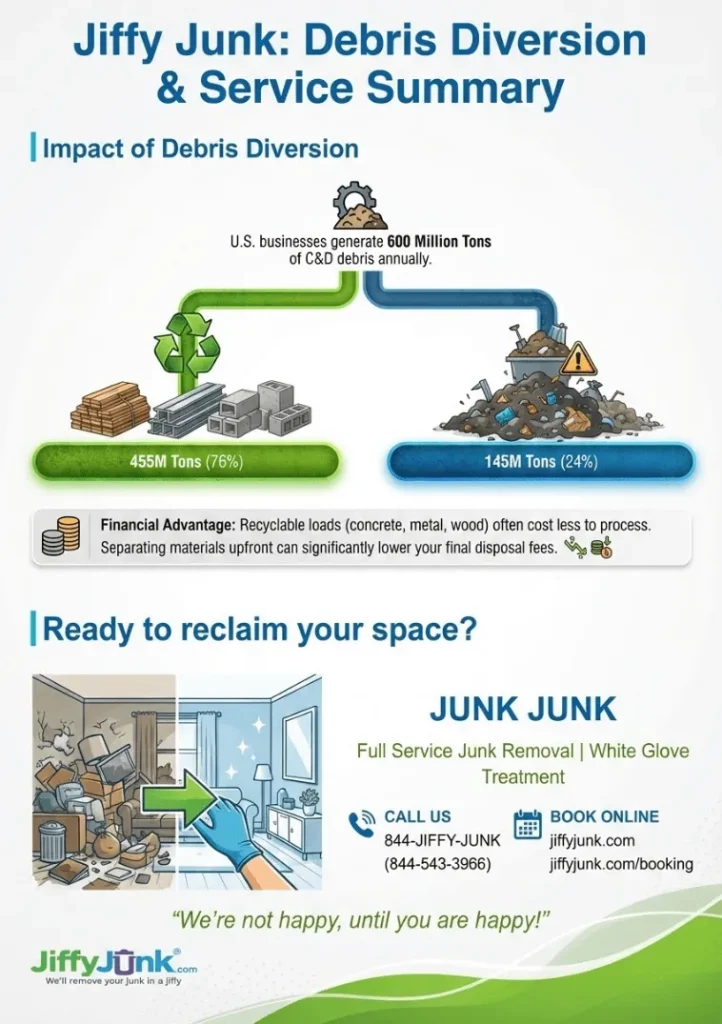
600 Million Tons of C&D Debris Generated Annually
The EPA reports that U.S. businesses and contractors generated 600 million tons of construction and demolition debris in 2018—more than double the amount of regular municipal waste.
What we’ve learned on the job:
- Demolition accounts for over 90% of that total; construction generates less than 10%
- Businesses consistently underestimate debris volume on renovation and teardown projects
- Undersizing leads to overflow charges or costly second hauls
We ask detailed questions about project scope before recommending a dumpster size. Getting it right the first time saves money.
Source: U.S. Environmental Protection Agency
76% of C&D Materials Diverted from Landfills
Of the 600 million tons generated, over 455 million tons were recycled, repurposed, or reused. Just under 145 million tons went to landfills.
Why this matters for your bottom line:
- Recyclable loads often cost less to process than mixed debris
- Separating concrete, metal, and clean wood upfront can reduce disposal fees
- Donating usable items may qualify your business for tax deductions
We partner with recycling facilities and donation centers like Habitat ReStore because diverting materials benefits everyone—your budget, your community, and the environment.
Source: U.S. Environmental Protection Agency
URL: https://www.epa.gov/smm/sustainable-management-construction-and-demolition-materials
Up to $70,117 Per Day in Waste Violation Penalties
Under the Resource Conservation and Recovery Act, improper hazardous waste handling can trigger civil penalties of $70,117 per day, per violation. Clean Air Act violations reach $93,750 daily.
Common compliance triggers we’ve seen catch businesses off guard:
- Paints and solvents
- Certain electronics and batteries
- Chemical residues from cleaning or manufacturing
We’ve had customers call after receiving violation notices for materials they didn’t realize required special handling. That’s why we ask questions before the dumpster arrives—not after. Full licensing and insurance protect your business from risks that multiply by the day.
Source: U.S. Environmental Protection Agency
URL: https://www.epa.gov/rcra/resource-conservation-and-recovery-act-rcra-regulations
Final Thought: What We’ve Learned After a Decade of Commercial Hauling
Choosing a commercial dumpster service seems straightforward—until you’re mid-project and your provider stops answering the phone. We’ve been on the receiving end of those calls. Frustrated business owners dealing with missed pickups, surprise fees, and rental companies that disappear once the contract is signed.
After more than ten years in this industry, here’s what we believe:
The lowest price is rarely the best value.
We’ve watched businesses lose more money chasing discount providers than they would have spent on reliable service from the start. Hidden delivery fees, vague weight limits, and unclear rental windows add up fast. That “affordable” option often costs 30% more by the time the final invoice arrives.
What actually saves businesses money:
- Right-sizing the dumpster from day one—no second hauls, no overflow charges
- Working with a provider who answers the phone and shows up on schedule
- Separating recyclable materials to reduce disposal costs
- Knowing what can and can’t go in the container before loading begins
What we built Jiffy Junk around:
- No hidden fees
- No surprises at pickup
- Licensed, insured teams who respect your property and your time
- The quote we give is the price you pay—period
That’s not a marketing line. It’s how we’ve earned repeat business for over a decade.
Our honest advice:
If a price seems too good to be true, ask questions before signing.
- What’s the weight limit?
- What happens if the rental goes a day over?
- Is delivery included?
A provider who can’t answer those clearly isn’t worth the risk—no matter how low the initial number looks.
The bottom line:
Commercial waste management doesn’t have to be complicated. Find a partner who communicates clearly, shows up when they say they will, and stands behind their pricing. That’s the standard we hold ourselves to—and it’s what your business deserves.
Frequently Asked Questions
Q: What size commercial dumpster do I need for my project?
A: After thousands of commercial jobs, we’ve learned that most businesses underestimate debris volume—especially on renovation and demolition projects.
Our sizing recommendations are based on project type:
- 10-yard dumpster – Small office cleanouts, retail fixture removals. Holds approximately 3 pickup truck loads.
- 20-yard dumpster – Our most requested commercial size. Ideal for mid-sized renovations, restaurant equipment, and warehouse cleanups. Holds approximately 6 pickup truck loads.
- 30-yard dumpster – Larger construction, roof replacements, commercial buildouts. Holds approximately 9 pickup truck loads.
- 40-yard dumpster – Major demolition, industrial-scale cleanouts. Holds approximately 12 pickup truck loads.
What we tell every customer: Go one size up rather than pay for a second haul. We’ve seen businesses try to save $50 on a smaller container, then spend $200 more when it fills up mid-project.
Q: How much does commercial dumpster service cost?
A: This is where our industry has earned a bad reputation. Too many providers advertise low base rates, then pile on fees that double the final bill.
Factors that legitimately affect pricing:
- Dumpster size and rental duration
- Debris type (construction materials, general waste, heavy items)
- Weight limits and local disposal fees
- Delivery distance from the provider’s facility
Hidden costs we’ve seen catch businesses off guard:
- Fuel surcharges added at pickup
- Overweight fees with vague or undisclosed limits
- Administrative charges not in the original quote
- Daily penalties for exceeding rental windows
Our approach: The quote we give includes everything—delivery, pickup, disposal, and rental period. No surprises when the invoice arrives.
In our experience, businesses don’t mind paying a fair price. They mind being misled about what that price actually is.
Q: What materials can and can’t go in a commercial dumpster?
A: This question comes up on nearly every job. Loading the wrong materials can result in rejection fees—or compliance violations costing thousands.
What we haul regularly without issue:
- Office furniture, cubicles, and fixtures
- Construction debris (wood, drywall, roofing, flooring)
- Appliances (refrigerant-containing units handled properly)
- General business waste, packaging, and non-hazardous materials
What we cannot accept:
- Hazardous materials (paints, solvents, oils, chemicals)
- Batteries, fluorescent bulbs, and certain electronics
- Asbestos-containing materials
- Medical or infectious waste
- Tires (separate recycling required)
A real scenario we’ve encountered: Customers unknowingly load prohibited items—old paint cans buried under drywall, cleaning chemicals mixed with furniture. When the disposal facility flags it, the business faces added fees and potential violations.
That’s why we ask questions upfront. A two-minute conversation can save hundreds in unexpected charges.
Q: Do I need a permit for a commercial dumpster?
A: It depends entirely on placement. This is one area where we’ve seen businesses get caught off guard.
Our general rule:
- Private property (parking lot, loading dock, driveway) – Typically, no permit required
- Public right-of-way (street, sidewalk, alley) – Most cities require a permit
What we’ve learned navigating permits across municipalities:
- Fees range from $20 to $150, depending on the city
- Processing times vary—some approve same-day, others take a week or more
- Many cities restrict placement near fire hydrants, crosswalks, or bus stops
- Some jurisdictions require the provider to hold the permit, not the customer
Our advice: A five-minute call to your local Public Works office can prevent a citation that costs far more than the permit fee. When customers book with us, we let them know if their location typically requires a permit.
Q: How quickly can I get a commercial dumpster delivered?
A: In most service areas, we deliver within 24–48 hours. Same-day service is often available, depending on location and schedule.
What we’ve found matters more than speed: Reliability.
We’ve heard from customers who switched to us after previous providers promised next-day delivery, then showed up three days late—or not at all. A delayed dumpster can stall an entire project.
Get Affordable Commercial Dumpster Service That Delivers Real Value
Stop chasing the lowest price and start working with a provider who shows up on time, quotes transparently, and stands behind every job. Call 844-JIFFY-JUNK (844-543-3966) or book online at jiffyjunk.com/booking to get your upfront quote today.