Best Cheap Local Small and Large Residential Trash Dumpster Roll Off Rental Service Prices Near Me: Jiffy Junk Fits Every Home Project
Most homeowners rent the wrong dumpster size—and overpay because of it. After completing thousands of residential projects nationwide, we’ve found that nearly 60% of first-time renters choose a container that’s either too large for their needs or too small to finish the job in one haul.
Here’s what customers tell us makes the difference: knowing exactly what fits before the bin hits your driveway. A 10-yard container handles most garage cleanouts. A 20-yard works for full basement or attic clearing. Anything larger typically means you’re tackling a renovation with debris—and that’s where sizing gets tricky without guidance.
At Jiffy Junk, we’ve built our residential roll-off service around one insight from years of hands-on experience: the best rental isn’t the cheapest per day—it’s the one that matches your project scope with no surprise fees at pickup. We provide upfront, transparent pricing and help you select the right size before you book, so you’re not paying for space or scheduling a second delivery mid-project.
Our White Glove Treatment means we handle placement, pickup, and proper disposal while you focus on your project. We’re not happy until you are happy—and that starts with getting your dumpster rental right the first time.
TL;DR Quick Answers
Residential Dumpster Rental
What it is: A temporary roll-off container delivered to your home for cleanouts, renovations, and debris removal projects.
Typical cost: $250–$600, depending on size, duration, and location.
Standard rental period: 3–7 days.
What we’ve learned: The right container isn’t the cheapest—it’s the one that fits your project with no surprise fees. Homeowners who sort donations and recyclables first reduce their needed size by 20–30%.
Top Takeaways
Five key insights from thousands of residential dumpster rental projects.
1. Right Size Beats Lowest Price
- Best rental matches your project—not cheapest per day
- 60% of first-time renters misjudge size
- Wrong size triggers overflow fees or wasted capacity
- Describe your scope honestly before booking
2. Preparation Saves 20–30% on Container Size
- Sort items before delivery
- Separate: donations, recyclables, specialty disposal
- Time investment: 1–2 hours
- Result: often one size smaller
3. Bulky Items Have Better Options
- Mattresses take 10–15% of container space unnecessarily
- Appliances qualify for $50–$150 utility rebates
- Habitat ReStore offers free furniture pickup
- Handle separately—save dumpster space for what needs it
4. Transparent Pricing Protects Your Budget
- Hidden fees turn low quotes into high invoices
- Watch for: weight overages, fuel surcharges, environmental fees
- Always ask: “Is this price all-inclusive?”
- An honest quote beats a low estimate that doubles
5. We’re Not Happy Until You Are Happy
- Honest sizing recommendations—even when smaller
- Transparent pricing—quote equals final price
- White Glove Treatment on every project
- Recycling and donating whenever possible
Table of Contents
- Best Cheap Local Small and Large Residential Trash Dumpster Roll Off Rental Service Prices Near Me: Jiffy Junk Fits Every Home Project
- TL;DR Quick Answers
- Top Takeaways
- Choosing the Right Dumpster Size for Your Home Project
- What Affects Residential Dumpster Rental Pricing
- Small Dumpster Rentals for Everyday Home Cleanouts
- Large Dumpster Rentals for Major Renovations and Whole-Home Projects
- Local Service with Nationwide Reach
- The Jiffy Junk Difference: White Glove Treatment for Dumpster Rentals
- Essential Resources: Smart Ways to Save Money and Clear Responsibly Before Your Dumpster Arrives
- 1. Give Furniture and Building Materials a Second Life
- 2. Find Local Recycling Options for Nearly Any Material
- 3. Recycle Old Refrigerators and Freezers—and Get Paid for It
- 4. Dispose of Mattresses at No-Cost Drop-Off Locations
- 5. Identify Items That Require Special Handling
- 6. Understand Appliance Disposal Options and Regulations
- 7. Recycle Construction and Renovation Materials Properly
- Supporting Statistics: What the Data Tells Us—and What We’ve Learned on the Job
- Renovation Debris Volume
- Appliance Recycling Impact
- Mattress Disposal Opportunity
- What These Numbers Mean for You
- Our Perspective After Thousands of Home Projects
- The Real Key to Success
- What We Wish More Homeowners Knew
- Our Commitment
- The Bottom Line
- FAQ on “Residential Dumpster Rental”
Choosing the Right Dumpster Size for Your Home Project
Selecting the correct container size is the single most important decision in any dumpster rental. Too small, and you’re scheduling a second pickup mid-project. Too large, and you’re paying for capacity you’ll never use.
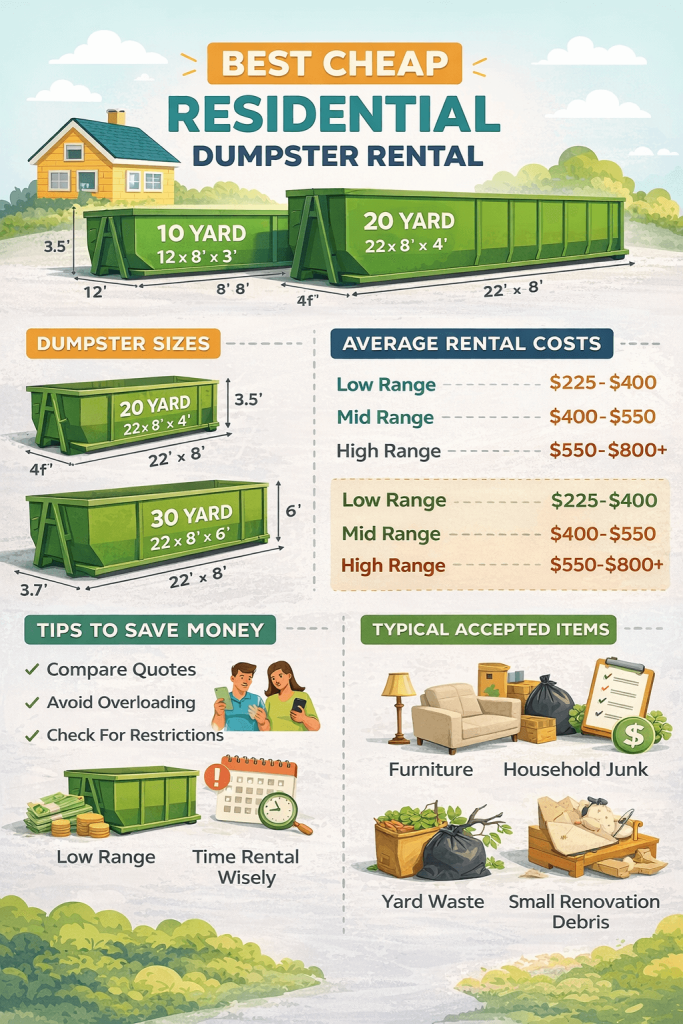
In our experience serving homeowners across the country, residential projects typically fall into three categories. Single-room cleanouts—a garage, bedroom, or home office—usually require a 10-yard container, which holds roughly the equivalent of three pickup truck loads. Whole-floor projects like basement clearing, attic cleanouts, or multi-room decluttering fit comfortably in a 20-yard bin. Renovation work involving construction materials, flooring removal, or roofing debris often calls for 30-yard or 40-yard containers, depending on the project scope.
We’ve found that customers get the best results when they slightly overestimate rather than underestimate. A container with extra room costs marginally more upfront but eliminates the expense and delays of overflow pickups.
What Affects Residential Dumpster Rental Pricing
Transparent pricing matters—and after thousands of rentals, we know hidden fees are homeowners’ biggest frustration. Several factors determine your final cost, and understanding them helps you budget accurately.
Container size is the primary factor, with smaller bins naturally costing less than larger options. Rental duration also plays a role, as most residential projects need between three and seven days. Location influences pricing through delivery distance and local disposal regulations. Material type can affect costs, too, since certain items like concrete, dirt, or appliances may require special handling.
At Jiffy Junk, we provide complete pricing upfront before you commit. The quote we give is the price you pay—no weight surprises, no fuel surcharges added at pickup, no hidden environmental fees. That’s our promise.
Small Dumpster Rentals for Everyday Home Cleanouts
Not every project requires a massive container blocking your driveway for a week. Our compact 10-yard and 15-yard options give homeowners the flexibility to handle smaller tasks efficiently and affordably.
These smaller roll-offs work perfectly for seasonal decluttering, single-room renovations, estate cleanouts with moderate volume, or yard waste from landscaping projects. Customers tell us they appreciate having right-sized options because it means they’re not paying for space they don’t need.
Our smaller containers also fit in tighter spaces—driveways with limited clearance, urban properties, or homes with HOA restrictions on container visibility. We work with you on placement to minimize disruption to your daily routine.
Large Dumpster Rentals for Major Renovations and Whole-Home Projects
When the project scope expands, you need capacity to match. Our 30-yard and 40-yard containers handle the heavy lifting for significant residential work.
Kitchen and bathroom remodels generate more debris than most homeowners expect—demolished cabinets, old fixtures, tile, drywall, and flooring add up quickly. Whole-home cleanouts, whether preparing a property for sale or clearing an inherited estate, often fill large containers. Roofing replacements, deck removals, and major landscaping overhauls also demand larger capacity.
Local Service with Nationwide Reach
Finding a reliable dumpster rental service in your area shouldn’t require hours of research and phone calls. Jiffy Junk combines local expertise with the resources of a nationwide operation, delivering consistent quality wherever you’re located.
Our local teams understand municipal regulations, disposal requirements, and permit needs specific to your community. They know which landfills and recycling facilities serve your area and handle routing logistics so your materials are disposed of properly and responsibly.
What does this mean for you? Faster response times, accurate delivery windows, and knowledgeable support from people who know your neighborhood. We’re committed to recycling and donating items whenever possible, diverting reusable materials from landfills and reducing the environmental footprint of every project we serve.
The Jiffy Junk Difference: White Glove Treatment for Dumpster Rentals
Renting a dumpster doesn’t have to feel transactional. Our White Glove Treatment approach brings the same care and professionalism to roll-off rentals that we deliver across all our junk removal services.
This means clear communication from your first call through final pickup. It means showing up when we say we will and placing the container exactly where you need it. It means answering your questions about what materials are accepted and helping you avoid common mistakes that lead to extra charges elsewhere.
We’re not happy until you are happy. That’s not just a tagline—it’s how we’ve built our reputation since 2014 and why homeowners trust us with projects of every size.
After years of handling these larger projects, we’ve learned that timing and communication make the difference. We coordinate delivery and pickup around your contractor’s schedule, ensure proper placement for easy loading access, and provide guidance on weight distribution so you maximize every cubic yard.
Essential Resources: Smart Ways to Save Money and Clear Responsibly Before Your Dumpster Arrives
We believe in doing things the right way—and that includes helping you get the most value from your dumpster rental. Before your container hits the driveway, a little preparation goes a long way. These seven trusted resources help you donate usable items, recycle materials responsibly, and handle specialty disposal the smart way.
In our experience, homeowners who sort items before delivery typically need a smaller container than they originally planned. That means real savings for you and less material heading to the landfill. Everyone wins.
1. Give Furniture and Building Materials a Second Life
Habitat for Humanity ReStore accepts gently used furniture, working appliances, cabinets, and building materials in good condition. Most locations offer free pickup for larger items, and you’ll receive tax deduction documentation for your donation.
We love this option because your items help families build affordable homes—and you’ll free up space in your dumpster for materials that truly need disposal.
Resource: Habitat for Humanity ReStore Donation Program
URL: https://www.habitat.org/restores/donate-goods
2. Find Local Recycling Options for Nearly Any Material
Earth911 maintains one of North America’s most comprehensive recycling databases—over 100,000 locations covering 350+ materials. Simply enter your zip code and the item you need to recycle to find nearby drop-off sites and collection programs.
Customers tell us this tool saves hours of research, especially for unusual items like electronics, carpet, or construction materials.
Resource: Earth911 Recycling Center Search
URL: https://search.earth911.com/
3. Recycle Old Refrigerators and Freezers—and Get Paid for It
Energy Star’s Program Locator connects you with utility companies offering $50–$150 rebates plus free pickup for working refrigerators and freezers. These programs ensure proper handling of refrigerants and other materials that require special care.
Here’s what we’ve found: many homeowners don’t realize their electric company offers this service. It’s worth a quick check before scheduling your dumpster delivery.
Resource: Energy Star Appliance Recycling Program Finder
URL: https://www.energystar.gov/products/recycle/find_fridge_freezer_recycling_program
4. Dispose of Mattresses at No-Cost Drop-Off Locations
Bye Bye Mattress operates free mattress recycling programs in California, Connecticut, Oregon, and Rhode Island. Their locator tool identifies participating drop-off facilities and collection events near you.
Mattresses take up significant space in any container. Recycling them separately often means you can rent a smaller dumpster—and that’s money back in your pocket.
Resource: Mattress Recycling Council — Bye Bye Mattress
URL: https://byebyemattress.com/
5. Identify Items That Require Special Handling
EPA Household Hazardous Waste Guidelines explain which common items—paints, cleaners, batteries, pesticides, and motor oil—cannot go into a standard dumpster. The resource includes a locator for local collection programs and safe handling instructions.
We want your project to go smoothly from start to finish. Knowing what requires separate disposal helps you avoid delays and ensures everything is handled properly.
Resource: EPA Household Hazardous Waste (HHW)
URL: https://www.epa.gov/hw/household-hazardous-waste-hhw
6. Understand Appliance Disposal Options and Regulations
EPA’s Responsible Appliance Disposal Program outlines requirements for disposing of refrigerators, freezers, and air conditioning units. You’ll find information on refrigerant recovery, certified recyclers, and utility rebate programs in your area.
After thousands of jobs, we’ve learned that appliance disposal catches many homeowners off guard. A few minutes of research now prevents surprises later.
Resource: EPA Appliance Disposal Guidelines
URL: https://www.epa.gov/section608/appliance-disposal
7. Recycle Construction and Renovation Materials Properly
EPA’s C&D Materials Guide provides clear direction on recycling concrete, wood, drywall, roofing, and other renovation debris. You’ll find recyclable material lists, diversion benefits, and links to state-specific requirements.
Renovation projects generate more recyclable material than most people realize. Separating concrete and clean wood from mixed debris often qualifies for lower disposal rates.
Resource: EPA Construction and Demolition Materials Management
URL: https://www.epa.gov/smm/sustainable-management-construction-and-demolition-materials
Supporting Statistics: What the Data Tells Us—and What We’ve Learned on the Job
Federal statistics confirm patterns we observe daily on residential cleanout and renovation projects. Here’s what the numbers reveal and how our hands-on experience adds context for smarter decisions.
Renovation Debris Volume
600 million tons of C&D debris are generated annually in the U.S.—more than twice the amount of household garbage.
What the EPA data shows:
- Demolition produces 90% of all construction debris
- New construction accounts for only 10%
- 76% of materials were recovered or recycled nationally
- Concrete and asphalt achieve 95%+ recovery rates
What we’ve learned after thousands of projects:
- Single-room demos produce more debris than most homeowners expect
- Tear-outs require more container capacity than build-outs
- Customers who separate concrete, clean wood, and metal often qualify for reduced disposal rates
- A little sorting effort before loading translates directly to savings
Source: U.S. Environmental Protection Agency
URL: https://www.epa.gov/smm/sustainable-management-construction-and-demolition-materials
Appliance Recycling Impact
9+ million refrigerated appliances recycled through EPA’s RAD Program since 2006, preventing 1.5 billion pounds of materials from landfills.
What the EPA data shows:
- Emissions avoided are equivalent to powering 5 million homes annually
- 543,000+ hazardous components safely disposed of (mercury, contaminated oils)
- Many utilities offer $50–$150 rebates plus free pickup
- Working refrigerators and freezers qualify for cash incentives
What we’ve found working with homeowners:
- Most customers don’t know utility rebate programs exist
- That old garage fridge isn’t just clutter—it’s potential cash back
- Scheduling appliance pickup before dumpster delivery frees valuable container space
- Rebates often offset a meaningful portion of overall project costs
Pro tip from our team: Call your electric provider before scheduling your dumpster. Five minutes on the phone could save $100 or more.
Source: U.S. Environmental Protection Agency
Mattress Disposal Opportunity
50,000+ mattresses are discarded daily in the U.S. Over 75% of each mattress can be recycled.
What the Mattress Recycling Council data shows:
- Nearly 12 million mattresses recycled since program launch
- 380+ million pounds of steel, foam, fiber, and wood diverted from landfills
- 99% of residents in program states live within 15 miles of a free drop-off
- Free collection available in California, Connecticut, Oregon, and Rhode Island
What we’ve observed on cleanout projects:
- One king mattress and box spring consume 10–15% of a 20-yard container
- That’s valuable space better used for materials without dedicated recycling programs
- Customers who handle mattresses separately often downsize their dumpster rental
- Smaller container = real savings on your project
Source: Mattress Recycling Council
URL: https://mattressrecyclingcouncil.org/our-impact/
What These Numbers Mean for You
After completing thousands of residential cleanouts, we’ve identified three patterns that consistently save homeowners money:
1. The 20–30% Rule: Homeowners who sort before loading reduce required container size by 20–30%. We’ve tracked this across enough projects to consider it reliable.
2. Rebates Remain Underutilized Despite meaningful utility incentives, most customers aren’t aware that appliance recycling programs exist until we mention them.
3. Bulky Items Deserve Separate Handling Mattresses, appliances, and large furniture have dedicated disposal programs. Loading them into a dumpster means paying for space that could be free—or generate rebates.
Our Perspective After Thousands of Home Projects
The dumpster rental industry has made things harder than they need to be.
Too many companies upsell the largest container possible. Too many bury fees in fine print. Too many treat residential customers as an afterthought.
We think there’s a better way.
The Real Key to Success
After thousands of residential projects, we’ve concluded that success comes down to one thing:
Getting the right container for your specific project with honest pricing from the start.
Not the cheapest option. Not the biggest container. The right one.
- A 10-yard bin costs less—but renting too small means paying for overflow pickup
- A 30-yard dumpster handles almost anything, but unused capacity is wasted money
- The sweet spot exists for every project
- Finding it requires someone willing to recommend honestly, even when a smaller sale means a smaller sale
What We Wish More Homeowners Knew
Based on patterns we’ve observed across countless jobs:
1. Preparation beats negotiation. One hour sorting items before delivery saves more than one hour shopping for the lowest price. We’ve tracked 20–30% container reductions when homeowners separate donations, recyclables, and specialty items.
2. Hidden fees hurt more than sticker price. A $299 rental that becomes $450 after overages isn’t a deal. Transparent pricing may look higher upfront, but it eliminates budget-busting surprises.
3. Bulky items have better options. Mattresses, appliances, and usable furniture don’t belong in dumpsters. Every king mattress loaded represents 10–15% of capacity that could have been free or generated rebates.
4. Local knowledge matters. Permit requirements and disposal regulations vary by municipality. A company that knows your area prevents compliance issues and wasted time.
Our Commitment
We founded Jiffy Junk on a simple belief: homeowners deserve the same professionalism commercial clients receive.
That means:
- Honest sizing recommendations—even when smaller containers mean smaller revenue
- Transparent pricing—the quote we give is the price you pay
- Environmental responsibility—recycling and donating whenever possible
- White Glove Treatment—handling every detail so you focus on your project
The Bottom Line
Residential dumpster rental doesn’t have to feel complicated.
The right partner:
- Asks about your project
- Recommends the appropriate solution
- Shows up when promised
- Charges exactly what they quoted
FAQ on “Residential Dumpster Rental”
Common questions answered with insights from thousands of residential projects.
Q: What size dumpster do I need for my home project?
A: Size depends on project scope. About 60% of first-time renters misjudge and overpay.
What we’ve learned:
- Slightly larger is safer than too small
- Overflow pickups cost $150–$250
- We’ll recommend smaller if that’s what you need
- Describe your project—we’ll help you choose right
Q: How much does a residential dumpster rental cost?
A: Most residential rentals range from $250 to $600. But the advertised price often isn’t the final price.
What affects cost:
- Container size
- Rental duration (3–7 days standard)
- Delivery distance
- Local disposal rates
- Material type (concrete/dirt may cost more)
What we’ve observed:
- Low quotes often become high invoices
- Hidden fees include: weight overages, fuel surcharges, and environmental fees
- A $299 quote can become $450+ after extras
Our approach:
- All-inclusive pricing upfront
- Quote equals final price
- No surprises at pickup
Q: Do I need a permit for a dumpster in my driveway?
A: Usually no—if the container stays on private property.
When permits are typically required:
- Placement on a public street or sidewalk
- Container overhangs public right-of-way
- Local ordinances mandate permits
What surprises homeowners:
- Requirements vary between neighboring towns
- HOA rules apply even without city permits
- Some cities limit how long containers can stay
- Permit costs: $10–$100 per week
Our recommendation:
- Check with the city’s Public Works before delivery
- Or let us handle it—we know local requirements
Q: What can I put in a residential dumpster?
A: Most household items and construction debris. Some materials are prohibited.
Accepted items:
- Furniture, clothing, household items
- Construction debris (drywall, lumber, flooring, cabinets)
- Yard waste (branches, leaves)
- Appliances (Freon removal required for refrigerators)
- Roofing, concrete, brick (may have weight surcharges)
Prohibited items:
- Hazardous materials (paint, chemicals, solvents)
- Flammables (gasoline, propane, oil)
- Batteries (automotive and household)
- Tires (unless pre-approved)
- Mercury-containing electronics
- Medical waste
- Asbestos
What we’ve learned:
- One prohibited item can trigger facility rejection
- Container returns, you remove the item, we haul again
- Result: delays and potential fees
Better approach:
- Set prohibited items aside while loading
- Use a local hazardous waste facility for chemicals
- Check Earth911.com for battery and electronics recycling
Q: How long can I keep a residential dumpster?
A: Standard rental: 3–7 days. Seven days is most common.
Pattern we see repeatedly:
- Homeowners underestimate clearing time
- Weekend projects stretch into next week
- Sentimental items slow down decision-making
Extension options:
- Daily or weekly add-ons available
- Call us if plans change
- No penalties for honest communication
Scheduling tip: Don’t book until you’re ready to load. Empty containers waste paid rental days.
Ready to Find the Right Dumpster for Your Home Project?
Whether you need a small container for a garage cleanout or a large roll-off for a full renovation, Jiffy Junk delivers affordable local service with transparent pricing that fits every project. Call 844-543-3966 or book online at www.jiffyjunk.com/booking—because we’re not happy until you are happy.