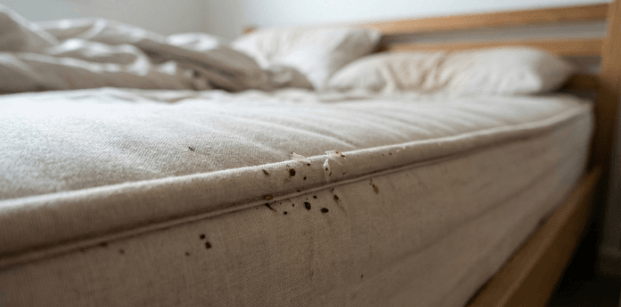
Can You See Early Signs and Evidence of Bed Bugs? How to Tell If a Mattress Has Bed Bugs With Photos So You Can Identify an Infestation Before It Spreads
That small rust-colored spot on your mattress could be your first—and most important—warning sign.
Our Jiffy Junk crews remove hundreds of infested mattresses every year, and we’ve learned something critical: homeowners who catch bed bugs early save themselves weeks of stress and thousands of dollars. The difference between a minor problem and a full-blown infestation often comes down to knowing what those early warning signs actually look like.
Based on what our teams encounter in the field, most people don’t recognize bed bug evidence until the problem has already spread to furniture, baseboards, and adjacent rooms. That’s why we’ve put together this visual guide—drawing from our firsthand experience with infested items to show you exactly what to look for during a mattress inspection.
You’ll see clear photos of bed bug eggs, shells, fecal stains, and live bugs at every life stage, along with the specific mattress locations where evidence typically appears first. We’ll also share the inspection checklist our own crews use to assess whether a mattress can be treated or needs safe removal and disposal.
Whether you’ve noticed suspicious bites or simply want peace of mind, this guide gives you the knowledge to act quickly—before a small problem becomes a big one.
Quick Answers
Early signs of bed bugs on a mattress
Based on our experience removing hundreds of infested mattresses, these warning signs appear before you’ll ever see a live bug:
Visual evidence to look for:
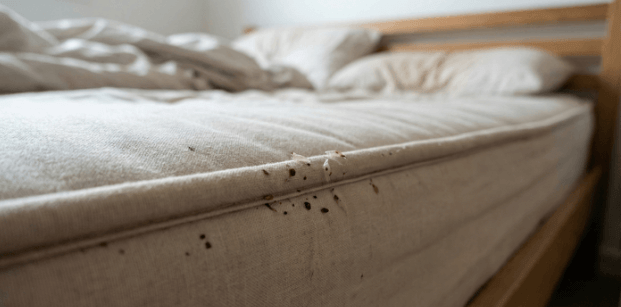
- Dark fecal spots along mattress seams (look like ink dots)
- Pale yellow shed skins in corners and crevices
- Tiny white eggs (1mm) clustered near piping and tags
- Rusty or reddish smears from crushed bugs
Where signs appear first:
- Mattress seams and piping, especially corners
- Manufacturer tags and handle loops
- Box spring dust cover underneath
Key insight: Fecal spotting is typically the earliest indicator—but most homeowners mistake it for dirt until the infestation spreads. A quick test: dab suspicious spots with a damp cloth. Bed bug excrement smears like ink; regular dirt wipes clean.
Bottom line: If you spot these signs, act quickly. Early detection is the difference between a minor treatment and a full mattress replacement.
Top Takeaways
- Evidence appears before bites do.
- Fecal spots, shed skins, and eggs show up first
- Skin reactions can take up to 14 days, or never appear
- Visual inspection beats waiting for bites
- Most infestations are caught too late.
- Only 29% of Americans can identify bed bugs
- 84% of cases are initially misidentified as fleas
- Knowing what to look for gives you a critical head start
- Location matters.
- Check seams, corners, tags, and handles first
- Focus on the head of the bed—that’s where evidence appears earliest
- Don’t skip the box spring dust cover
- Early detection saves thousands.
- Week one: targeted treatment
- Week six: full mattress replacement
- A five-minute inspection prevents major expenses
- If the mattress needs to go, do it right.
- Contain in plastic before moving
- Label clearly as infested
- Call Jiffy Junk for safe, responsible removal
Table of contents
- Can You See Early Signs and Evidence of Bed Bugs? How to Tell If a Mattress Has Bed Bugs With Photos So You Can Identify an Infestation Before It Spreads
- Quick Answers
- Top Takeaways
- What Do Bed Bugs Actually Look Like?
- The Earliest Signs Most People Miss
- Where to Inspect Your Mattress: A Field-Tested Approach
- Stains and Markings: What Each Type Tells You
- Bites: A Clue, But Not Confirmation
- When to Take Action: Early vs. Established Infestations
- Safe Mattress Disposal: Preventing the Spread
- Take Back Your Peace of Mind
- Essential Resources
- Your Next Steps: Trusted Resources for Bed Bug Identification and Action
- 1. Confirm What You’re Looking At with the EPA’s Visual Guide
- 2. Get the Real Health Facts from the CDC
- 3. Get Expert Identification Help from Purdue University
- 4. Understand What Professional Treatment Looks Like
- 5. Explore Safe, Effective Options You Can Try Yourself
- 6. Protect Your Home with Proven Prevention Strategies
- 7. Travel Smarter with Hotel Inspection Tips
- Ready to Clear Out an Infested Mattress? We’ve Got You.
- Supporting Statistics: What the Data Tells Us—And What We’ve Seen in the Field
- Final Thought: Why Early Detection Is the Most Underrated Home Maintenance Habit
- FAQ on “Early Signs of Bed Bugs on Mattress”
- Spotted the Early Signs? Let Jiffy Junk Handle What Comes Next.
What Do Bed Bugs Actually Look Like?
Adult bed bugs are about the size of an apple seed—roughly 5 to 7 millimeters long—with flat, oval-shaped bodies that turn reddish-brown after feeding. Before a blood meal, they appear flatter and more tan or light brown in color.
What surprises most homeowners is how visible bed bugs actually are to the naked eye. They’re not microscopic. The challenge isn’t size—it’s knowing where to look and recognizing them at different life stages. Nymphs (young bed bugs) start nearly translucent and no bigger than a pinhead, making them easy to overlook against light-colored bedding. As they mature through five molting stages, they darken and grow more recognizable.
Our crews frequently find that homeowners spotted something suspicious weeks before calling us, but dismissed it because they expected bed bugs to be invisible or black. Knowing the actual appearance at each stage is your first advantage in early detection.
The Earliest Signs Most People Miss
Bed bugs leave evidence long before you’ll likely see a live bug crawling across your sheets. These early indicators often appear in the seams, piping, and tags of your mattress—areas most people never think to inspect.
Fecal spots are among the first signs to appear. These look like small dark brown or black ink dots, roughly the size of a marker tip. They’re actually digested blood, and they tend to bleed slightly into fabric, creating a smeared appearance. If you see clusters of tiny dark spots along mattress seams, that’s a red flag worth investigating further.
Shed skins are another early sign. As nymphs grow, they molt and leave behind translucent shell-like casings. These are delicate and easy to miss, but if you find even one or two in the crevices of a mattress, this would indicate the development of active bed bugs in the vicinity.
Eggs and egg casings represent the earliest possible evidence. Bed bug eggs are white or pearl-colored, about 1 millimeter long, and often found in clusters. They’re sticky when first laid, so they adhere to fabric fibers in hidden spots. Empty egg casings indicate eggs have already hatched, meaning nymphs are present somewhere in your home.
Where to Inspect Your Mattress: A Field-Tested Approach
Based on what our Jiffy Junk teams encounter during mattress removals, bed bugs follow predictable patterns when establishing themselves. They prefer tight, protected spaces close to their food source—you.
Start your inspection with the mattress seams and piping. Run your fingers along every edge while looking closely for fecal spots, shed skins, or live bugs. Pay particular attention to the corners, where seams meet and create small pockets.
Next, check the mattress tag and handles. Bed bugs frequently harbor in the folds of manufacturer tags and inside the fabric loops of built-in handles. These spots offer protection and often go completely unchecked.
Flip the mattress and examine the underside thoroughly. The bottom surface, especially along seams and any tears or worn areas, provides ideal hiding spots. If your mattress sits on a box spring, inspect that as well—the gauze-like dust cover on the bottom of most box springs is a common infestation site our crews encounter.
Finally, don’t neglect the headboard and bed frame. Bed bugs don’t live exclusively in mattresses. Screw holes, joints, and cracks in wooden frames frequently harbor bugs and eggs. Evidence in these areas often indicates the infestation has progressed beyond the mattress itself.
Stains and Markings: What Each Type Tells You
The stains bed bugs leave behind tell a story about the severity and timeline of an infestation. Learning to read these markings helps you assess how quickly you need to act.
Rusty or reddish smears typically indicate crushed bed bugs. These stains occur when an engorged bug is accidentally squashed, leaving behind the blood it recently consumed. Finding these smears on your sheets or mattress surface suggests bugs have been feeding actively.
Dark spotting in clusters points to established harborage areas. When you see concentrated groupings of fecal spots—sometimes dozens in a small area—you’ve likely found a location where multiple bugs have been hiding and digesting meals over time. The more concentrated the spotting, the longer bugs have been present.
Bloodstains on sheets can result from bites that continue bleeding after a bug finishes feeding or from crushing a fed bug while sleeping. While bloodstains alone don’t confirm bed bugs (they could have other causes), combined with other evidence, they support the diagnosis.
Our teams frequently evaluate the severity of the infestation based on the extent of spread and concentration of these markings. Isolated spotting in one area is a sign of early-stage activity, and widespread staining in the mattress, box spring, and nearby furniture is a sign of an established problem that needs more aggressive action.
Bites: A Clue, But Not Confirmation
Waking up with itchy red welts naturally raises bed bug concerns, but bites alone can’t confirm an infestation. Bed bug bites often appear in lines or clusters—sometimes called the “breakfast, lunch, and dinner” pattern—but they can also appear randomly. The challenge is that reactions vary dramatically between people. Some individuals show no visible reaction at all, while others develop significant welts.
Additionally, bed bug bites closely resemble bites from mosquitoes, fleas, and other insects. Without physical evidence—bugs, eggs, shells, or fecal spots—you can’t diagnose bed bugs from bites alone.
If you’re waking up with unexplained bites, use that as motivation to conduct a thorough inspection using the methods above. The physical evidence will give you a definitive answer.
When to Take Action: Early vs. Established Infestations
The timeline for action depends on what your inspection reveals.
Early-stage indicators—a few fecal spots, one or two shed skins, or a single live bug—suggest you’ve caught the problem before it’s spread significantly. At this stage, professional pest treatment combined with thorough cleaning may resolve the issue without replacing your mattress.
Established infestation signs— widespread staining, multiple live bugs, visible eggs in several locations, or signs on furniture other than the bed – indicate a more serious problem. In these cases, treatment alone may not be adequate. Heavily infested mattresses may contain hundreds of bugs and eggs in seams, tears, and internal batting where a treatment cannot fully penetrate.
From our experience handling infested mattress removals, attempting to save a heavily infested mattress often prolongs the problem. Eggs survive many treatments, and re-infestation from a contaminated mattress can undermine even professional pest control efforts.
Safe Mattress Disposal: Preventing the Spread
If your inspection confirms a significant infestation, safe disposal becomes critical—both for eliminating bugs from your home and preventing spread to neighbors or others who might encounter a discarded mattress.
Simply dragging an infested mattress to the curb creates problems. Bed bugs can fall off during transport, spreading through hallways and common areas. Others may unknowingly pick up the mattress, bringing the infestation into their own homes.
Proper disposal involves:
Wrap the mattress completely in plastic wraps before moving it. Purpose-made mattress disposal bags seal the mattress and any bugs within it, preventing their escape during transport.
Definitely identifying the mattress as infested. This is required by law in many areas, and the responsible thing to do anyway.
Arranging prompt removal so the mattress doesn’t sit curbside, where others might take it.
Jiffy Junk provides full-service mattress removal that handles these concerns for you. Our crews arrive equipped to safely encase, remove, and properly dispose of infested mattresses, ensuring bugs don’t spread through your home during removal or end up at donation centers where they could affect others.
Take Back Your Peace of Mind
Identifying bed bugs early puts you in control. Now that you know what to look for—and where to look—you can inspect your mattress with confidence and catch problems before they escalate.
If your inspection tells you that you indeed have an infestation, don’t let a contaminated mattress ruin your treatment efforts. Jiffy Junk’s White Glove Treatment ensures safe, hassle-free removal so that you can continue reclaiming your space. We take care of the heavy lifting, proper disposal and all of the work – you just point to what needs to go.

“In our experience removing hundreds of infested mattresses each year, we’ve found that homeowners who act on the first signs—a few dark spots along a seam, a single shed skin—avoid the full-scale infestations that eventually spread to furniture, baseboards, and neighboring rooms. The evidence is almost always there early; most people just don’t know what they’re looking at until it’s too late.” — Jiffy Junk Team
Essential Resources
Your Next Steps: Trusted Resources for Bed Bug Identification and Action
Discovering signs of bed bugs can feel overwhelming, but you don’t have to figure this out alone. We’ve gathered the most reliable resources to help you confirm what you’re seeing, understand your options, and take confident action. Whether you need identification help, treatment guidance, or prevention tips, these trusted sources have you covered.
1. Confirm What You’re Looking At with the EPA’s Visual Guide
Not sure whether to check out those spots as evidence of bed bugs? The EPA’s identification guide takes you step by step through what exactly to be on the lookout for – complete with lifeless pictures of poop stains, sloughed skins, eggs, and live ones at say and. It’s the easiest thing you can do to know for sure before taking the next steps as well.
Source: U.S. Environmental Protection Agency
URL: https://www.epa.gov/bedbugs/how-find-bed-bugs
2. Get the Real Health Facts from the CDC
Worried about health risks? The CDC provides straightforward, medically accurate information about bed bug bites and what they mean for your well-being. Here’s the good news: bed bugs don’t transmit diseases. Their guide helps you understand what to expect and how to respond.
Source: Centers for Disease Control and Prevention
URL: https://www.cdc.gov/bed-bugs/about/index.html
3. Get Expert Identification Help from Purdue University
Found a bug, but not 100% sure what it is. Purdue’s entomology team offers detailed identification resources—and even free specimen identification services. They’ll help you tell the difference between bed bugs and look-alikes like carpet beetles, so you can move forward with confidence.
Source: Purdue University Extension Entomology
URL: https://www.extension.entm.purdue.edu/bedbugs/identification.php
4. Understand What Professional Treatment Looks Like
Considering calling (in the pros)? Within a guide by the National Pest Management Association called Best Practices, they tell you precisely what effective treatment entails – from heat treatments to post treatment inspections. Use it to find a qualified professional and know what to expect every step of the way.
Source: National Pest Management Association (PestWorld.org)
URL:https://www.pestworld.org/all-things-bed-bugs/best-practices/
5. Explore Safe, Effective Options You Can Try Yourself
Want to do some of this on your own? The National Pesticide Information Center has everything on what does work, what doesn’t work, and when to call for backup. Their unbiased advice helps you to make smart choices without spending your time and money on ineffective products.
Source: National Pesticide Information Center (Oregon State University / EPA)
URL: https://npic.orst.edu/pest/bedbug/index.html
6. Protect Your Home with Proven Prevention Strategies
Ready to make sure this doesn’t happen again? The University of Minnesota’s prevention guide covers everything from inspecting secondhand furniture to post-travel laundry routines. Simple steps that save you from future headaches—and keep your home bed-bug-free.
Source: University of Minnesota Extension
URL: https://extension.umn.edu/bed-bugs/bed-bug-prevention-and-control-home
7. Travel Smarter with Hotel Inspection Tips
Love to travel, but worried about bringing home unwanted guests? PestWorld’s travel guide shows you exactly how to inspect hotel rooms, protect your luggage, and keep bed bugs from hitching a ride home. A few simple precautions go a long way.
Source: National Pest Management Association (PestWorld.org)
URL: https://www.pestworld.org/all-things-bed-bugs/bed-bug-prevention/tips-for-travelers/
Ready to Clear Out an Infested Mattress? We’ve Got You.
If your inspection confirms it’s time for that mattress to go, we’re here to make removal simple and stress-free. Our Jiffy Junk crews arrive with proper containment materials, handle all the heavy lifting, and ensure responsible disposal—so you don’t have to worry about spreading the situation or affecting others.
Just point to what needs to go, and we’ll take care of the rest. That’s our White Glove Treatment.
Supporting Statistics: What the Data Tells Us—And What We’ve Seen in the Field
Research confirms what our Jiffy Junk crews witness weekly: bed bug infestations are widespread, frequently misidentified, and almost always caught later than they should be.
1. 84% of Bed Bug Cases Are Initially Misidentified
84 percent of pest control professionals were initially contacted about a different type of pest before identifying them as bed bugs. The majority of these contacts (71 percent) were about fleas, followed by cockroaches (28 percent).
What we see in the field:
- Homeowners consistently tell us, “I thought it was fleas” or “I assumed it was a rash.h”
- By the time they identify the real problem, infestations have typically spread beyond the mattress.
- A few weeks of delay can turn a manageable situation into a full-scale cleanout.
Source: National Pest Management Association
URL: https://www.pestworld.org/all-things-bed-bugs/bed-bug-facts-statistics/
2. Only 29% of Americans Can Identify Bed Bugs
Only 29% of Americans know how to identify bed bugs, PR Newswire—leaving most households unable to recognize an infestation when they see one.
What we see in the field:
- Customers frequently point to evidence they’d noticed weeks earlier but didn’t recognize
- Dark spots along seams get dismissed as dirt
- Shed skins and fecal matter get wiped away as “dust.”
- One customer cleaned what she thought was debris from her mattress seams for over a month before realizing it was bed bug evidence.
Source: The Harris Poll / National Pest Management Association (April 2025)
URL: https://www.pestworld.org/news-hub/pest-articles/bed-bug-survey-results-facts/
3. Bed Bugs Are a Federally Recognized Public Health Pest
The Environmental Protection Agency (EPA), the Centers for Disease Control and Prevention (CDC), and the United States Department of Agriculture (USDA) all consider bed bugs a public health pest. EPA
Health impacts include:
- Secondary skin infections from scratching
- Chronic sleep loss and insomnia
- Anxiety and psychological stress
- Lasting emotional toll on affected households
What we see in the field:
- Homeowners often express relief mixed with embarrassment—even though bed bugs have nothing to do with cleanliness.
- We’ve removed infested mattresses from immaculate homes and luxury apartments
- Many customers avoid having guests over for weeks or months before calling us.
- Removing infested items helps people reclaim their sense of normalcy
Source: U.S. Environmental Protection Agency
URL: https://www.epa.gov/bedbugs/bed-bugs-public-health-issue
The Bottom Line
The data confirms:
- Bed bugs are common across all demographics and housing types
- Most people can’t identify them, and misidentification delays action
- Bite reactions are unreliable indicators of infestation
- Federal agencies classify bed bugs as a public health concern
Our experience confirms:
- Early detection saves weeks of stress and thousands in costs
- Visual evidence appears long before most people notice bites
- A few minutes of inspection can prevent a major infestation
Need to Remove an Infested Mattress?
Jiffy Junk makes it simple:
- Crews arrive with proper containment materials
- We handle all the heavy lifting
- Responsible disposal prevents spread to others
Final Thought: Why Early Detection Is the Most Underrated Home Maintenance Habit
After years of removing infested mattresses from homes across the country, we’ve developed a perspective that might surprise you: bed bugs aren’t the real problem—delayed detection is.
What This Guide Comes Down To
- Bed bug evidence appears early. Fecal spots, shed skins, and eggs show up long before bites or live bugs.
- Most people don’t recognize it. Only 29% of Americans can identify bed bugs, so most infestations go unnoticed during the critical early window.
- Waiting is expensive. A small problem becomes a multi-room infestation in weeks, turning a minor fix into a major expense.
Our Honest Take from the Field
Bed bugs carry an unfair stigma. We’ve removed infested mattresses from spotless homes and luxury apartments. Cleanliness has nothing to do with it. Bed bugs travel on luggage, secondhand furniture, and through shared walls. They’re opportunists—not indicators of poor housekeeping.
Embarrassment delays action. Homeowners often wait too long because they’re ashamed to admit there’s a problem. That hesitation gives bed bugs exactly what they need: time to multiply.
Bites are an unreliable detection method. We hear it constantly: “No one was getting bitten.” Meanwhile, the mattress seams tell a different story. Some people don’t react to bites, or reactions take two weeks to appear. Visual inspection catches problems sooner.
A five-minute inspection can save thousands. The difference between catching bed bugs in week one versus week six often means the difference between targeted treatment and replacing everything in your bedroom.
What We’d Tell a Friend
- Inspect your mattress quarterly. When you flip or rotate it, take five minutes to check the seams, tags, and piping.
- Know the early signs. Dark fecal spots. Tiny pale shed skins. Small white eggs in clusters. These appear before you’ll see live bugs.
- Check after travel. Inspect luggage before bringing it inside. Wash travel clothes on high heat immediately.
- Don’t panic—but don’t wait. Early-stage infestations are treatable. Established ones require aggressive intervention and often mattress replacement.
- If the mattress needs to go, do it right. Proper containment and disposal protect your household and your neighbors.
Our Commitment to You
We created this guide because informed homeowners make better decisions—and because we’ve seen too many people suffer through infestations that could have been caught earlier.
What we offer:
- Safe, responsible mattress removal with proper containment
- Crews who handle all the heavy lifting
- No lectures, no shame—just a team that gets the job done
That’s our White Glove Treatment. It’s what everyone dealing with this situation deserves.
FAQ on “Early Signs of Bed Bugs on Mattress”
Q: What are the earliest signs of bed bugs on a mattress?
A: Evidence appears long before you’ll see a live bug. Based on what our crews encounter during mattress removals, look for these early indicators:
- Fecal spots – Dark brown/black ink-like dots along seams
- Shed skins – Pale yellow, translucent casings from molting nymphs
- Eggs – Tiny white ovals (1mm) clustered in hidden crevices
- Rusty stains – Reddish-brown smears from crushed bugs or blood
What we hear most often: “I saw those spots weeks ago, but thought it was dirt.”
Fecal spotting typically appears first. Without knowing what it is, most people wipe it away—giving the infestation time to spread.
Q: Where on a mattress should I look for early bed bug signs?
A: Bed bugs prefer tight spaces close to their food source. After examining countless infested mattresses, here’s where we find evidence first:
Priority inspection areas:
- Seams and piping – Especially corners where seams meet (most common location)
- Manufacturer tags – Folded fabric creates perfect hiding spots
- Handles – Built-in loops offer protected crevices
- Underside edges – Flip the mattress; check the bottom seams and worn areas
- Box spring dust cover – Gauze-like fabric underneath harbors frequent infestations
Pattern we’ve noticed: Evidence appears heaviest near the head of the bed first. Carbon dioxide from breathing attracts them.
Short on time? Start at the top corners and work down.
Q: How can I tell the difference between bed bug signs and other stains or insects?
A: Misidentification is extremely common. Industry data shows 84% of cases are initially mistaken for other pests. Our experience confirms this.
Bed bugs vs. fleas:
- Flea dirt scatters randomly; bed bug spots cluster along seams
- Fleas jump; bed bugs only crawl
- Flea bites hit the lower legs; bed bug bites appear on the upper body and face
Bed bug stains vs. mold or dirt:
- Fecal spots bleed when dabbed with a damp cloth (definitive test)
- Mold is fuzzy or raised; fecal spots are flat
- Dirt wipes clean; fecal matter smears
Bed bugs vs. carpet beetles:
- Carpet beetle larvae are fuzzy with bristles; bed bugs are smooth
- Carpet beetles don’t leave fecal spotting patterns
- Carpet beetles damage fabric; bed bugs don’t
When uncertain:
- Collect the sample in a sealed plastic bag
- Local extension offices often identify specimens for free
- Pest control professionals confirm within minutes
Proper identification before treatment saves time, money, and stress.
Still Have Questions?
If your mattress needs to go, Jiffy Junk handles safe, responsible removal.
What we provide:
- Proper containment materials
- Complete removal and heavy lifting
- Responsible disposal
- No judgment, no hassle
Spotted the Early Signs? Let Jiffy Junk Handle What Comes Next.
Now that you know how to identify bed bug evidence on your mattress, don’t let an infested mattress undermine your efforts to reclaim your space. Call 844-JIFFY-JUNK or book online at jiffyjunk.com/booking for safe, hassle-free mattress removal with our White Glove Treatment.