How Big Is a 10 Cubic Yard Dumpster? Understanding Size Dimensions and Rental Cost So You Know Exactly What You’re Getting Before You Book
Wondering if a 10 cubic yard dumpster is the right fit for your project? After hauling thousands of loads since 2014, we can tell you exactly what this size handles best—and when you’d be better off going with a larger or smaller size.
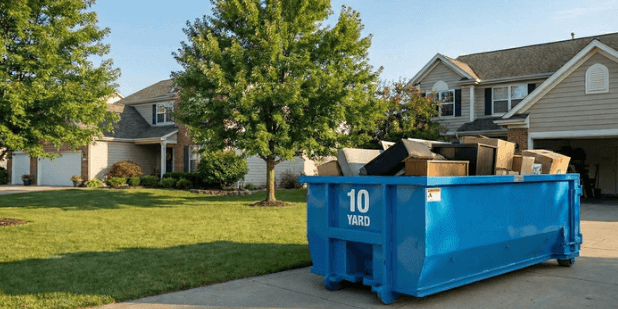
A 10 cubic yard dumpster measures approximately 12 feet long, 8 feet wide, and 4 feet tall—roughly three pickup truck loads. Based on our experience, this size hits the sweet spot for single-room renovations, garage cleanouts, and moderate landscaping debris. We’ve found that most homeowners overestimate what they need, paying for unused capacity, while others underestimate and end up scheduling a second haul.
This guide shares what we’ve learned from real jobs: actual dimensions so you can check your driveway clearance, transparent rental costs with no hidden fees, weight limits that catch people off guard, and the project types where 10 yards works perfectly versus where it falls short.
The quote we give you is the price you pay—that’s our promise. And if you’d rather skip the dumpster altogether, our White Glove Treatment means we handle everything: loading, hauling, and responsible disposal while you relax.
Quick Answers
10-yard dumpster
A 10-yard dumpster is a roll-off container that holds 10 cubic yards of debris—approximately 12 feet long × 8 feet wide × 4 feet tall.
Key facts:
- Capacity: 3 pickup truck loads or 50–70 trash bags
- Weight limit: 1–2 tons (2,000–4,000 lbs)
- Rental cost: $250–$450 for 7–10 days
- Best for: Single-room renovations, garage cleanouts, small roofing jobs, moderate landscaping
What we’ve learned from thousands of jobs: Most homeowners overestimate volume but underestimate weight. A 10-yarder rarely fills up—it maxes out on weight first, especially with heavy materials like concrete, tile, or shingles.
Quick rule: If your project involves one room or one contained area with standard household debris, 10 yards typically handles it. If you’re asking, “Will this be enough?”—size up. The cost difference is usually smaller than a second haul.
Top Takeaways
- Size and capacity: 12 × 8 × 4 feet. Holds three pickup truck loads. Best for single-room projects, garage cleanouts, and moderate landscaping.
- Weight matters more than space: Limit is typically 1–2 tons. Heavy materials (concrete, tile, shingles) max out weight long before you run out of room.
- True cost goes beyond the quote: Rentals range $250–$450. Always ask about:
- Weight allowances
- Overage fees
- Permit requirements
- Hidden charges
- Know before you load: These items are always prohibited:
- Batteries and electronics
- Refrigerants and AC units
- Tires and paint
- Hazardous materials
- When in doubt, size up—or call us: Upgrading to 15–20 yards costs just $50–$100 more. That’s cheaper than a second rental. Or skip the guesswork—our White Glove Treatment handles everything in one visit.
Table of contents
- How Big Is a 10 Cubic Yard Dumpster? Understanding Size Dimensions and Rental Cost So You Know Exactly What You’re Getting Before You Book
- Quick Answers
- Top Takeaways
- Exact Dimensions: What a 10 Cubic Yard Dumpster Looks Like
- How Much Can You Actually Fit Inside?
- What Does a 10 Cubic Yard Dumpster Rental Cost?
- Best Projects for a 10 Yard Dumpster
- When to Consider a Different Size
- Everything You Need to Make a Confident Dumpster Decision
- 1. See How 10 Yards Stacks Up Against Other Sizes
- 2. Estimate Your Debris Weight Before You Load
- 3. Check What You Can and Can’t Toss Inside
- 4. Find Out If You Need a Placement Permit
- 5. Locate Safe Disposal for Hazardous Materials
- 6. Understand What Drives Rental Pricing
- 7. Picture Capacity in Terms You Can Actually Visualize
- Supporting Statistics: What a Decade of Hauling Has Taught Us
- Final Thought: Is a 10 Yard Dumpster Actually the Right Call?
- Next Steps: Your Action Plan
- FAQ on “10 Yard Dumpster”
- Ready to Clear Your Space Without the Guesswork?
Exact Dimensions: What a 10 Cubic Yard Dumpster Looks Like
A standard 10 cubic yard dumpster measures approximately 12 feet long, 8 feet wide, and 4 feet tall. The low profile makes it easy to load without a ladder—most people can toss items over the side comfortably.
For driveway planning, you’ll need a footprint roughly the size of a parking space plus a few extra feet on each side for door clearance. We recommend measuring your space before booking, especially if you have a narrow driveway or low-hanging trees.
How Much Can You Actually Fit Inside?
Think of 10 cubic yards as approximately three full pickup truck loads. In practical terms, that translates to the contents of a single-car garage, one room’s worth of renovation debris, or a moderate deck demolition.
From our experience on thousands of jobs, here’s what typically fills a 10-yarder:
- 2,000–3,000 square feet of old roofing shingles
- Flooring and drywall from a single-room remodel
- A garage full of accumulated junk and boxes
- Yard waste from a weekend landscaping project
- Old furniture, mattresses, and appliances from one area of your home
The key limitation isn’t usually space—it’s weight. Most 10-yard rentals include a weight allowance between 2,000 and 4,000 pounds, depending on your provider and location.
What Does a 10 Cubic Yard Dumpster Rental Cost?
Rental costs vary by location, rental duration, and disposal fees in your area. Nationally, 10 cubic yard dumpster rentals typically range from $250 to $450 for a standard rental period of 7 to 10 days.
Factors that affect your final price include delivery distance, the type of debris you’re disposing of, weight overages, and extended rental periods. Heavy materials like concrete, brick, or dirt often require specialized pricing due to landfill fees.
We believe in transparent pricing with no hidden fees. When you request a quote from Jiffy Junk, we factor in everything upfront so the price we give you is the price you pay—no surprises when the truck pulls away.
Best Projects for a 10 Yard Dumpster
Based on what we see daily, a 10 cubic yard dumpster works perfectly for:
- Single-room renovations: Bathroom or kitchen remodels generate debris that fits comfortably without paying for excess capacity.
- Garage or attic cleanouts: Years of accumulated items from one storage area typically max out around this size.
- Small roof replacements: A 1,500 square foot roof usually stays within the 10-yard range.
- Landscaping projects: Shrub removal, sod replacement, or small tree trimming fit well.
- Moving cleanouts: Downsizing or clearing unwanted items before a move.
When to Consider a Different Size
A 10-yard dumpster isn’t right for every project. Here’s what we’ve learned:
Go smaller (6 yards) if you’re cleaning out a single closet, removing a small amount of yard debris, or handling a minor bathroom update. No sense paying for space you won’t use.
Go bigger (15–20 yards) if you’re tackling a whole-house cleanout, multiple-room renovation, or large construction project. We’ve seen customers fill a 10-yarder halfway through a job and wish they’d sized up from the start. The cost difference between sizes is often smaller than scheduling a second haul.
Skip the dumpster entirely if you’d rather not deal with loading, permits, or rental timelines. Our White Glove Treatment junk removal service means our licensed and insured team does all the heavy lifting—we show up, load everything, and haul it away while you point and relax.
“After a decade of hauling junk across the country, we’ve found that most homeowners overestimate what they need—a 10-yard dumpster handles about 90% of single-room projects, but the real factor people overlook isn’t space, it’s weight. Heavy materials like tile and concrete can max out your limit long before you fill the container.” — Jiffy Junk Team
Everything You Need to Make a Confident Dumpster Decision
We believe in transparent service—and that starts before you even book. These seven resources will help you avoid surprises, stay within weight limits, and handle your project like a pro. Consider this your homework before rental day.
1. See How 10 Yards Stacks Up Against Other Sizes
Wondering if 10 cubic yards is the sweet spot—or if you’d be better off sizing up? This visual comparison breaks down dimensions, weight limits, and ideal project types for every standard roll-off size. A few minutes here can save you from ordering a second container later.
Source: Dumpsters.com
URL: https://www.dumpsters.com/sizes/roll-off-dumpster-sizes
2. Estimate Your Debris Weight Before You Load
Here’s something we’ve learned from thousands of jobs: it’s rarely space that catches people off guard—it’s weight. This calculator helps you estimate tonnage for common materials like shingles, drywall, concrete, and carpet so you can choose the right weight allowance upfront.
Source: Budget Dumpster
URL: https://www.budgetdumpster.com/resources/dumpster-weight-calculator.php
3. Check What You Can and Can’t Toss Inside
Some items simply aren’t allowed in roll-off containers—and tossing them in anyway can result in extra fees or rejected loads. This guide covers universally prohibited materials (batteries, refrigerants, tires, chemicals) plus items that vary by location, like electronics and mattresses. Quick read, big savings.
Source: Dumpsters.com
URL: https://www.dumpsters.com/resources/prohibited-items
4. Find Out If You Need a Placement Permit
If your driveway won’t accommodate a container and you need to place it on the street, most cities require a permit first. This resource walks you through when permits apply, what they typically cost ($20–$150), and how to navigate HOA guidelines—so delivery day goes smoothly.
Source: Budget Dumpster
URL: https://www.budgetdumpster.com/resources/permits.php
5. Locate Safe Disposal for Hazardous Materials
Paints, cleaners, pesticides, and batteries require special handling—they can’t go in any dumpster. The EPA’s searchable database helps you find household hazardous waste collection programs nearby, so you can dispose of these items responsibly without holding up your project.
Source: U.S. Environmental Protection Agency
URL: https://www.epa.gov/hw/household-hazardous-waste-hhw
6. Understand What Drives Rental Pricing
Not all quotes are created equal. This pricing guide explains the national average ($250–$450), what’s typically included in a rental, and how factors like location, debris type, and weight allowance affect your final cost. Use it to compare apples to apples when evaluating options.
Source: Hometown Dumpster Rental
URL: https://www.hometowndumpsterrental.com/blog/10-yard-dumpster-guide
7. Picture Capacity in Terms You Can Actually Visualize
“Ten cubic yards” doesn’t mean much until you can see it. This guide translates dumpster sizes into pickup truck loads and large trash bags—making it simple to match your debris estimate to the right container without second-guessing yourself.
Source: Waste Connections
URL: https://www.wasteconnections.com/dumpster-sizes/
Supporting Statistics: What a Decade of Hauling Has Taught Us
After removing junk from thousands of homes since 2014, we’ve seen where debris actually ends up. Here’s what the data confirms—and what it means for your project.
600 Million Tons of C&D Debris Generated Annually
The EPA reports that construction and demolition debris in the U.S. totals 600 million tons per year—more than double all household trash combined.
What we see on the job:
- A single bathroom renovation generates roughly 500 pounds of debris
- Demolition accounts for over 90% of all C&D waste
- Over 76% of C&D materials were diverted from landfills in 2018
Why it matters: When our crews sort and recycle materials from your cleanout, we’re keeping resources in circulation—not burying them underground.
Source: EPA – Sustainable Management of C&D Materials
50% of Waste Still Goes to Landfills
Americans generate 292.4 million tons of trash annually—about 4.9 pounds per person, per day. Half of it ends up buried.
What we’ve learned:
- Most homeowners want to do the right thing—they just don’t know how
- Perfectly good furniture, appliances, and materials get trashed unnecessarily
- The difference comes down to whether someone takes time to sort properly
Our approach: We identify what can be recycled, what can be donated, and what genuinely needs disposal. Cutting that 50% landfill rate starts with individual jobs like yours.
Source: EPA – National Overview: Facts and Figures on Materials, Wastes and Recycling
2,600+ Landfills—With Limited Runway
The EPA tracks more than 2,600 active municipal landfills nationwide. Capacity varies dramatically by region.
The reality:
- Some states have decades of landfill capacity remaining
- Others are actively scrambling to site new facilities
- As landfills fill, tipping fees rise—costs that get passed to customers
Our perspective: Every cubic yard we divert through recycling or donation extends landfill life and helps keep disposal costs manageable for everyone.
Source: EPA – LMOP Landfill and Project Database
The Bottom Line
These numbers reflect what we see every day:
- Massive debris volumes from renovation and cleanout projects
- Significant recycling potential that often goes unrealized
- A system that works better when people make informed choices
We recycle and donate because it’s the right approach—not because it’s the easiest one. That commitment is part of our promise.
Final Thought: Is a 10 Yard Dumpster Actually the Right Call?
After a decade of hauling debris across the country, here’s our honest take on when a 10-yard dumpster makes sense—and when it doesn’t.
Quick Recap
A 10 cubic yard dumpster measures roughly 12 × 8 × 4 feet, holds about three pickup truck loads, and costs $250–$450 to rent. It works well for single-room projects, garage cleanouts, and moderate landscaping jobs.
Before booking, make sure you:
- Calculate debris weight—not just volume
- Check local permit requirements
- Know what materials are prohibited
- Confirm 10 yards is the right size
When a 10 Yard Dumpster Makes Sense
A dumpster rental is a solid choice if:
- Your project is clearly defined and contained to one area
- You’re comfortable estimating weight and managing limits
- Your timeline is flexible (7–10 day rental periods work for you)
- You have driveway space and won’t need street permits
- You’re willing to handle all the loading yourself
When It’s Probably Not Your Best Option
Consider an alternative if:
- You’re unsure how much debris you’ll actually generate
- Your project involves heavy materials (concrete, tile, roofing)
- You’d rather avoid permits, placement logistics, and scheduling
- You have items that should be sorted for recycling or donation
- Your time is worth more than the potential savings
What we’ve seen: Too many customers rent a 10-yarder, underestimate the weight, and pay overage fees that erase any cost advantage. Others overestimate, pay for unused capacity, and wish they’d called for a single-visit removal instead.
The Bigger Picture
The numbers tell a clear story:
- 600 million tons of C&D debris are generated annually
- 50% of municipal solid waste still goes to landfills
- 75% of construction debris is potentially recyclable
When you rent a dumpster, sorting is on you. Mixed loads go to landfills. Recyclable materials get buried. Donatable items never reach people who need them.
When you work with us, separation happens at the source. We pull metals for recycling, route usable items to donation partners, and ensure that recyclability potential gets realized—not wasted.
The Choice Is Yours
Option 1: Rent a dumpster. If you’ve done the math, checked permits, and feel confident managing the rental—go for it. Use the resources above to book smart.
Option 2: Call us. We show up, load everything, sort for recycling and donation, and haul it away—usually in one visit.
- No rental periods
- No weight surprises
- No permits to pull
- No heavy lifting on your end
That’s our White Glove Treatment. It’s why customers keep calling us back.
Ready to Decide?
For dumpster rentals: Use the resources in this guide to book with confidence.
For full-service removal: Call 844-JIFFY-JUNK or visit www.jiffyjunk.com/booking.
Either way, you’ve got everything you need to make the right choice. And remember—we’re not happy until you are.
Next Steps: Your Action Plan
You’ve got the information. Here’s exactly what to do with it
Path A: Renting a Dumpster
1. Measure Your Space
- Confirm 12 × 8 feet of clearance for the container
- Check for overhead obstructions (trees, wires, awnings)
- Verify 60 feet of clearance for delivery truck access
2. Estimate Your Debris
- List everything you plan to dispose of
- Use a weight calculator for heavy materials
- Remember: weight limits (1–2 tons) matter more than space
- When in doubt, size up
3. Check Local Requirements
- Call your city about permit requirements
- Review HOA rules if applicable
- Allow 1–2 weeks for permit processing
4. Review Prohibited Items
- No batteries or electronics
- No refrigerators or AC units (unless Freon removed)
- No tires, paint, or chemicals
- Find disposal options: Learn the Basics of Hazardous Waste
5. Get Multiple Quotes
- Ask about the included weight allowance
- Confirm rental period length
- Clarify overage fees
- Check for hidden charges
Path B: Calling Jiffy Junk
1. Schedule Your Appointment
- Call: 844-JIFFY-JUNK (844-543-3966)
- Or book online: www.jiffyjunk.com/booking
- Takes about 60 seconds
2. Show Us What Needs to Go
- Walk us through the items
- Point out anything heavy or hard to reach
- Let us know what should be donated
3. Get Your Upfront Quote
- We assess the job and provide a firm price
- No hidden fees—ever
- Approve it, and we start immediately
4. Relax
- We handle all loading and heavy lifting
- We sort for recycling and donation
- We clean up the removal area completely
5. Enjoy Your Space
- No rental periods to track
- No permits to pull
- No second trips to schedule
Quick Decision Guide
Choose a dumpster if:
- You have 7–10 days for your project
- You’re comfortable loading yourself
- Your debris type is straightforward
- You’ve calculated the weight accurately
- You have easy driveway access
Choose Jiffy Junk if:
- You want it done in one visit
- You’d rather not lift anything
- You have mixed items needing sorting
- You’re unsure about quantities
- Permits or placement are complicated
Still Have Questions?
About dumpster rentals: Review the Essential Resources section above.
About Jiffy Junk:
- Call: 844-JIFFY-JUNK
- Visit: www.jiffyjunk.com
- Book: www.jiffyjunk.com/booking
No pressure—just honest guidance based on a decade of experience.
Ready When You Are
Whatever you decide, you’re now equipped to make an informed choice. That puts you ahead of most people tackling their first project.
FAQ on “10 Yard Dumpster”
Q: What are the dimensions of a 10-yard dumpster?
A: A standard 10-yard dumpster measures approximately:
- Length: 12 feet
- Width: 8 feet
- Height: 4 feet
The low 4-foot height is a major advantage. You can load items over the side without a ladder or ramp.
Pro tip from experience: Measure your driveway before booking. We’ve seen 10-yarders that technically fit but left no room to walk past or open car doors. Allow at least 2 feet of clearance on each side.
Q: How much does a 10-yard dumpster hold?
A: A 10-yard dumpster holds 10 cubic yards of debris. That translates to:
- 3 pickup truck loads
- 50–70 large trash bags
- Contents of a single-car garage
What we’ve learned: Capacity depends on what you’re tossing.
- Bulky furniture eats space fast.
- Boxes and bags compress well.
- Construction debris packs tightly if broken down
Bottom line: If you’re clearing one contained area, 10 yards typically handles it. Most homeowners overestimate what they need.
Q: How much does it cost to rent a 10 yard dumpster?
A: Expect to pay $250–$450 for a 7–10 day rental. Final cost depends on:
- Your location
- Debris type
- Included weight allowance
- Delivery distance
The insider perspective: Base price rarely tells the whole story.
We’ve seen customers pay $275 upfront, then get hit with $150 in overage fees. Others paid $400 for an all-inclusive quote and came out ahead.
Questions to ask before booking:
- What’s the included weight allowance?
- What are the overage fees per ton?
- Are delivery and pickup included?
- Is there a fuel surcharge?
The cheapest headline number isn’t always the cheapest total cost.
Q: What is the weight limit for a 10-yard dumpster?
A: Most providers set weight limits between 1–2 tons (2,000–4,000 pounds) for a 10-yard container.
This is the biggest gotcha we see. People focus on volume when they should focus on weight.
How fast weight adds up:
- 1 square of asphalt shingles (100 sq ft): 200–350 lbs
- Small bathroom’s worth of ceramic tile: ~500 lbs
- Concrete: 150 lbs per cubic foot
The math: A 10 yarder filled with cardboard weighs almost nothing. That same container, half-full of concrete, blows past 2 tons easily.
Our advice:
- Use a weight calculator before booking
- When borderline, pay for extra tonnage upfront
- Upfront overage is almost always cheaper than surprise fees
Q: What project is a 10-yard dumpster best for?
A: After a decade in debris removal, here’s where 10 yards hits the sweet spot:
Ideal projects:
- Single-room renovations (bathroom, kitchen)
- Garage cleanouts (one space, years of stuff)
- Small roofing jobs (up to 1,500 sq ft)
- Moderate landscaping (shrub removal, sod replacement)
- Pre-move decluttering
Where it falls short:
- Whole-house cleanouts
- Multi-room renovations
- Significant demolition projects
What we’ve seen: Customers fill their 10-yarder halfway through day one, then scramble for a second container—which costs more than sizing up from the start.
Our rule of thumb: If you’re asking “will 10 yards be enough?”—the answer is probably no. The jump to 15 or 20 yards typically costs just $50–$100. That’s almost always cheaper than a second rental.
Ready to Clear Your Space Without the Guesswork?
Now that you know exactly what a 10-yard dumpster holds, what it costs, and whether it fits your project—skip the rental headaches and let Jiffy Junk handle everything instead. Call 844-JIFFY-JUNK or book online at www.jiffyjunk.com/booking for upfront pricing, same-day availability, and our signature White Glove Treatment.