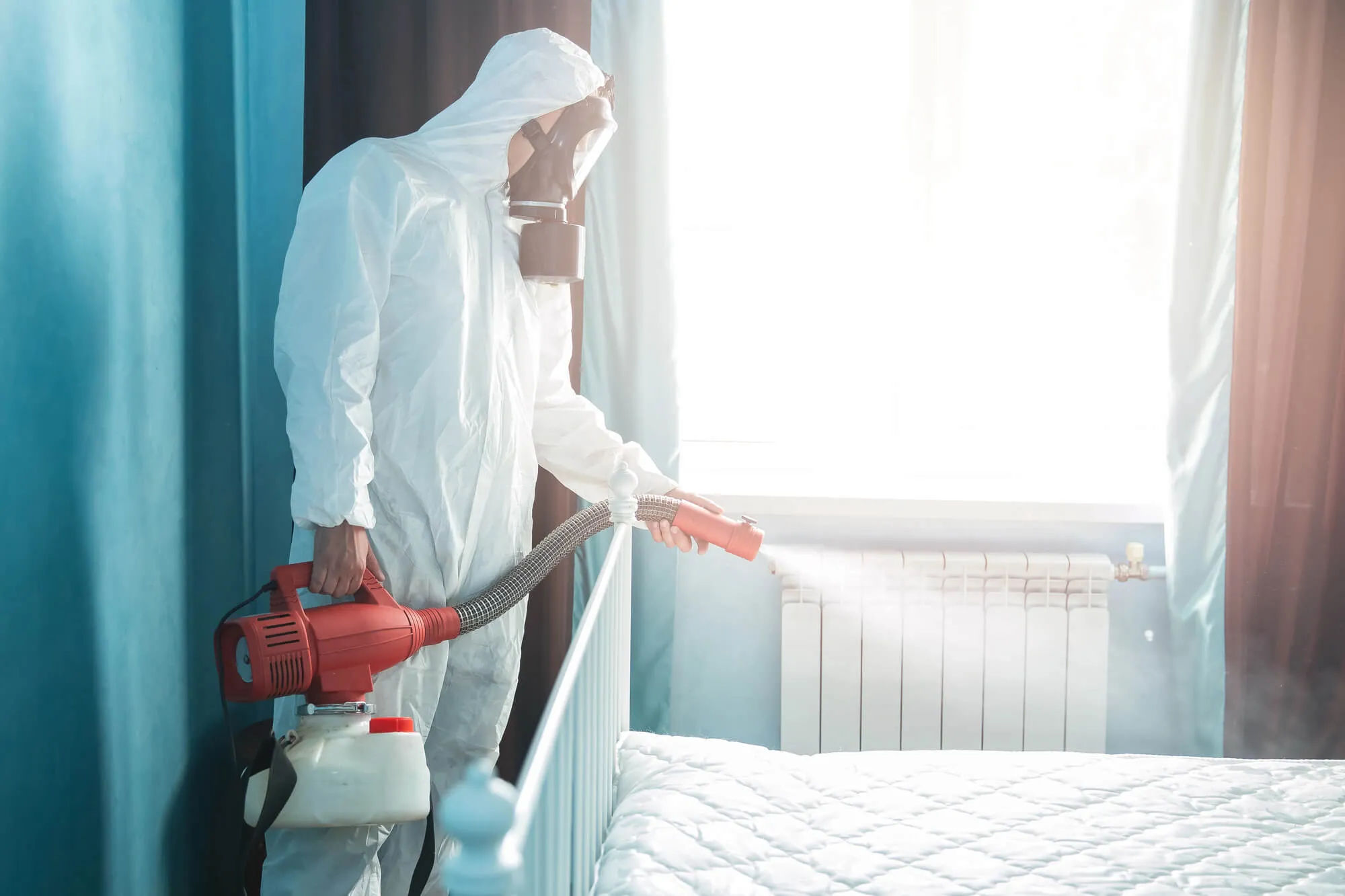
How Much Does Bed Bug Removal Cost? Treatment, Exterminator, and Furniture Removal Price with Affordable Options Explained
Discovering these pests in your home is jarring—and the price tag for getting rid of them can feel just as brutal. From what we deal with every day at Jiffy Junk, most homeowners underestimate one major line item: hauling out and replacing affected furniture. Extermination on its own can run anywhere from a few hundred to several thousand dollars, depending on how far things have spread, but our crews consistently find that customers save more over time by clearing out heavily compromised mattresses, sofas, and upholstered pieces rather than shelling out for round after round of treatment that never quite finishes the job.
We’ve carted away pest-damaged furniture from thousands of homes across the country, and that ground-level experience has given us a vantage point most pricing guides don’t have. In the breakdown below, we’ll walk you through what professional treatment and extermination actually cost, when it makes more financial sense to pull furniture out rather than retreat it, and how to keep your total spend as lean as possible. No hidden charges, no vague estimates—just the transparent pricing insight you’d expect from our White Glove Treatment approach.
TL;DR: Quick Answers
How much does it cost to eliminate these pests?
Short answer: Most homeowners land somewhere between $1,000 and $5,000 all-in when you add up extermination, follow-up visits, and furniture disposal. But your actual number hinges on three things: treatment method, how severe the infestation has gotten, and whether the affected furniture needs to leave the house entirely.
What most pricing guides overlook: Drawing from our experience hauling compromised furniture out of thousands of homes, the real cost driver isn’t which treatment you pick—it’s how long you sit on the problem. Homeowners who jump on it at the first sign and pull out heavily affected pieces early almost always spend less than those who keep paying for retreatments, hoping to salvage items that are too far gone.
The bottom line: Move fast, get at least two exterminator quotes, and if your pest control pro says a piece of furniture has to go—listen to them. That call usually saves you the most money down the road. Renters: look into your state’s tenant protections first. Your landlord may be on the hook for the entire bill.
Top Takeaways
- Hesitation is the most expensive mistake—not the treatment itself. The longer these pests go unchecked, the further they spread. Acting quickly is the single most effective way to keep your bill manageable.
- Hauling out affected furniture often costs less than trying to save it. We’ve watched this play out thousands of times: customers who clear out badly compromised items early spend less overall than those who pay for two or three rounds of treatment on the same pieces.
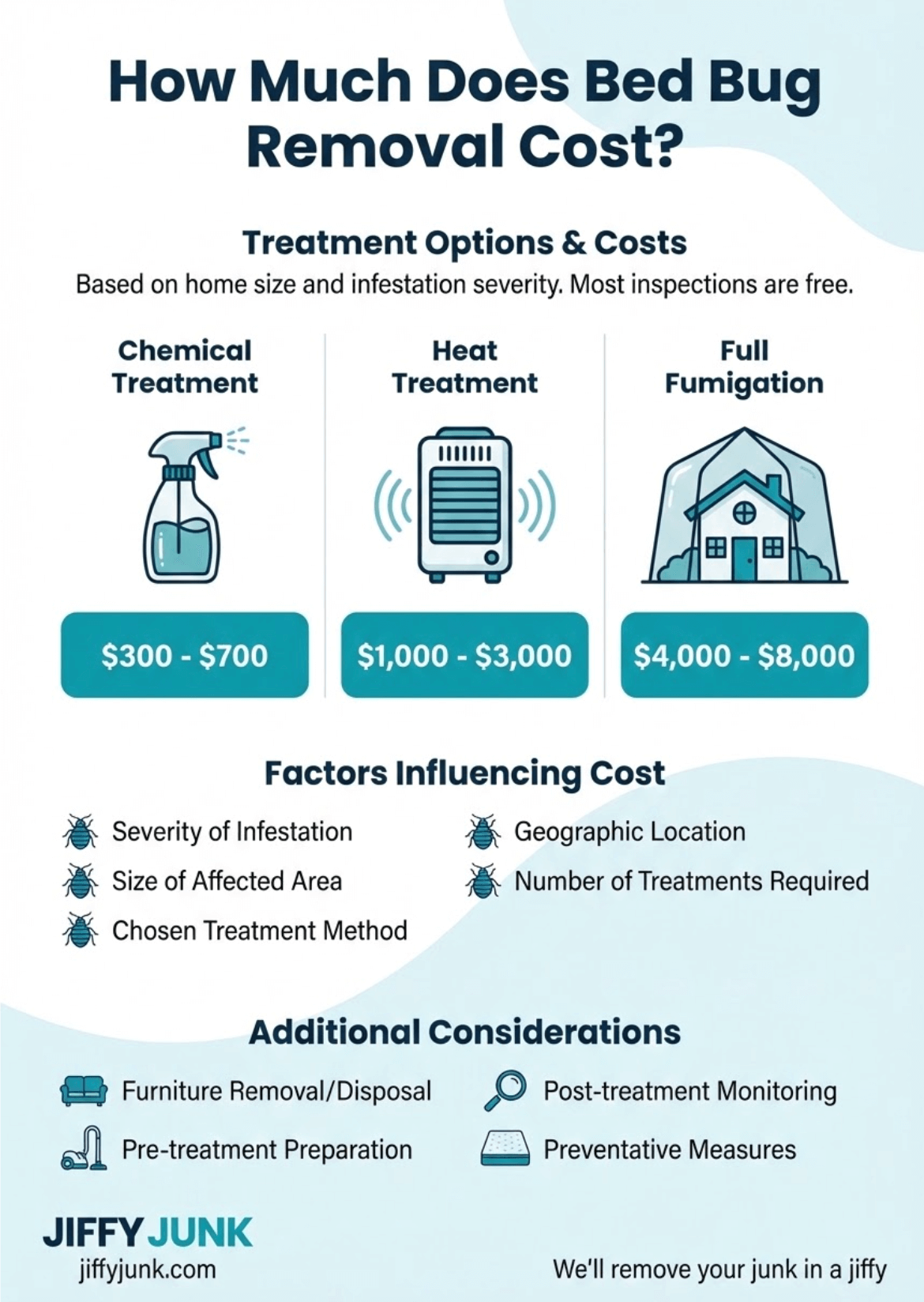
- Extermination runs $300 to $5,000+. Chemical treatments go for $300–$700 per room. Heat treatments cost $1,000–$3,000+ for an entire home. Fumigation starts at $4,000–$8,000+ in severe cases.
- Only 29% of Americans can actually identify these insects on sight. Most colonies grow undetected for weeks or months—turning a manageable expense into a serious one. If you have any suspicion, get a professional inspection now.
- Renters: your landlord may owe the entire bill. In most states, landlords bear legal responsibility for pest treatment and furniture disposal costs. Know your rights before you open your wallet.
How Much Does Professional Extermination Actually Cost?
If you’re staring down an infestation, the first thing you want to know is the damage to your bank account. The straight answer? It varies. Most homeowners wind up spending somewhere between $300 and $5,000 on professional treatment. That’s a big window, and where you land comes down to a handful of factors: square footage, how entrenched the colony has become, and which approach your exterminator thinks will actually work.
A handful of these critters in one bedroom is a world apart from a situation that’s colonized three rooms and a hallway closet. Here’s a realistic look at what each method tends to run.
Chemical Treatment: $300–$700 per room
This is the route most people take. Your exterminator applies EPA-registered pesticides to targeted spots—crevices, baseboards, bed frames, the works—then schedules two or three return visits over the following weeks. Those callbacks aren’t optional. Chemicals don’t touch eggs. If you skip the follow-ups, the next generation hatches and you’re back to square one.
Heat Treatment: $1,000–$3,000+ for a whole home
This one takes a different approach entirely. Industrial-grade heaters crank the temperature in your home to levels that are lethal at every life stage—adults, nymphs, eggs, all of it. The upside is speed. Most jobs wrap in a single day with no follow-up appointments hanging over your head. The downside? Your checkbook feels it. You’re paying a premium for that one-and-done convenience.
Fumigation: $4,000–$8,000+ for severe cases
Think of fumigation as the last resort. The whole structure gets tented, sealed, and flooded with gas. It works, but it’s expensive and massively disruptive—you’ll need to clear out of the property entirely for a stretch. Most pest control pros only recommend this for extreme situations or multi-unit buildings where the colony has wormed its way between walls and floor cavities.
One thing worth filing away: the majority of pest control companies will come inspect your home for free. So before you commit to a dime, have somebody come take a look and give you an actual number based on your situation. And resist the urge to pick whoever’s cheapest. We’ve watched too many homeowners go the bargain route only to pay for a second and third round when the first one fell short.
When Does Hauling Furniture Out Make More Sense Than Treating It?
We field this question constantly, and it’s one we can actually answer from years in the trenches. Our crews partner with pest control professionals on these jobs week in, week out—hundreds of them by now—and there’s a pretty unmistakable tipping point where getting rid of the affected furniture becomes the smarter financial play.
Here are the situations where we’d say disposal beats retreatment:
- The pests have burrowed deep into upholstered pieces. Mattresses, box springs, couches, recliners—these insects are drawn to seams, folds, and internal padding like magnets. Once they’ve established themselves in there, even a thorough pesticide application can miss them. You treat the surface, feel relieved for a week, and then the bites start up again.
- You already paid for one round, and the problem circled back. Retreatment bills stack up in a hurry. If one particular piece keeps re-seeding the infestation, pulling it out of the house cuts the problem off at the source.
- The furniture was already on its last legs. Dropping $500 or more on treating a mattress that’s sagging and a decade past its prime doesn’t pencil out—particularly when a replacement runs about the same.
- You need it gone for your own sanity. This one’s tougher to quantify, but it’s real. A huge number of our customers tell us that once the compromised items are physically out of the house, they can finally sleep again. That kind of relief has value you can’t put on a spreadsheet.
On these jobs, our team wraps and bags everything right where it sits so nothing migrates during the process. We carry it all out and handle responsible disposal. You never have to lay a hand on any of it.
What Does It Cost to Have Affected Furniture Hauled Away?
Your price depends on what’s going on, how much of it there is, and a few practical details like staircases and narrow doorways. At Jiffy Junk, we price based on how much truck space your items occupy, and we lock in a firm number before anything moves. No invoice surprises when the work is done.
Rough ranges to plan around:
- A single piece—one mattress or sofa—usually falls between $100 and $250
- A complete bedroom setup (mattress, box spring, frame) typically lands in the $200–$450 neighborhood
- Clearing out several rooms? Budget $400–$800 or more, depending on volume
Stack that against the cost of repeated extermination treatments on those same items, and disposal frequently wins. Fold in the hours you’d spend dealing with a lingering problem, the anxiety of it, the parade of follow-up appointments—and the calculation gets even more lopsided.
Every Jiffy Junk crew is fully licensed and insured, and we stick to proper handling protocols for compromised items. That detail matters more than people realize. The last thing you want is these pests catching a ride to a neighbor’s unit or winding up in a shared trash area.
Budget-Friendly Strategies to Shrink Your Total Cost
Nobody’s excited about writing these checks. Here are the approaches we’ve seen make a genuine difference for our customers over the years:
Schedule extermination and furniture disposal together
Get your pest control company and a hauling service like Jiffy Junk on the calendar for the same window. When compromised furniture leaves the house before or during treatment, your exterminator has a dramatically easier time—and a much higher first-visit success rate. Fewer callbacks means less money walking out the door.
Zero in on the worst areas
If the colony is concentrated in one or two rooms, a targeted treatment costs a fraction of a whole-home approach. Any competent exterminator will do a detailed inspection and pinpoint exactly where things are worst. Take their word for it—full-scale fumigation isn’t always warranted.
Act now, not next month
If we could give homeowners one single piece of advice, this would be it. These insects multiply at a startling clip. A contained situation in one bedroom can colonize your entire house in weeks. Every day you wait inflates the final bill.
Ask about bundled pricing
Getting multiple pieces hauled out at once? Ask about volume rates. At Jiffy Junk, bigger jobs generally come with better per-item pricing. One full-service pickup almost always beats calling us out three separate times for individual items.
Check whether local assistance is available
This catches a lot of people off guard, but certain municipalities, housing authorities, and public health agencies offer subsidized pest control for qualifying residents. A five-minute phone call to your local health department can tell you whether help is available in your area.
Why Homeowners Call Jiffy Junk for Pest-Related Furniture Disposal
We get it—dealing with an infestation is draining. It’s not just a scheduling inconvenience. It messes with your sleep, your comfort in your own home, and your peace of mind. That’s exactly why we approach these jobs with a level of care that goes beyond just loading a truck.
Our White Glove Treatment is more than marketing copy. It means we arrive on time, give you a straight price before anything moves, treat your belongings with respect, and leave your space clean when we walk out. In practice, that looks like this:
- Upfront pricing with zero hidden fees—the number we quote is the number you pay
- Licensed and insured crews trained to handle compromised items without spreading the problem
- Responsible, eco-conscious disposal—we recycle and donate unaffected items whenever possible
- Same-day and next-day scheduling in most metro areas nationwide
- We handle every bit of lifting, carrying, and loading—your only job is pointing
Whether it’s one mattress or a full-home cleanout in the wake of a serious infestation, we’ve done it before, and we’re standing by to help. Give us a ring or book online, and let’s get your space feeling like yours again.
“After removing bed-bug-infested furniture from thousands of homes, one thing is clear—most people spend more money reattaching items they should have hauled out after the first round of extermination. The fastest way to stop the cycle and the costs is to get the source out of your home entirely.” — Jiffy Junk Team
7 Resources to Help You Make the Smartest Decision
You’ve got enough weighing on you right now—tracking down trustworthy information shouldn’t pile on the stress. We’ve rounded up the most credible resources out there so you can confirm what you’re dealing with, weigh your options clearly, and budget with real numbers. Consider this your reference shelf for every phase of the process.
1. Confirm what you’re actually dealing with before spending anything — CDC Identification Guide
Here’s something we run into all the time: homeowners shell out for treatments before anyone has verified the pest. The CDC’s visual guide helps you recognize these insects by appearance, understand what their bites look like, and rule out impostors like carpet beetles or fleas. Ten minutes with this page could spare you hundreds of dollars.
Best for you if: You suspect an infestation but haven’t gotten a confirmed ID yet.
Source: CDC — About Bed Bugs
2. Understand every treatment method on the table — EPA Integrated Pest Management Guide
Not every approach works the same way, and a solid game plan usually blends more than one tactic. The EPA’s guide breaks down each method—heat, chemical, steam, desiccants, and beyond—so you can walk into any exterminator consultation knowing what questions to ask and what the answers should sound like.
Best for you if: You’re fielding quotes and want to decode what each company is actually proposing.
Source: EPA — Controlling Bed Bugs Using Integrated Pest Management
3. Benchmark what you should actually be paying — HomeAdvisor Cost Breakdown
Nobody likes sticker shock, and we certainly don’t build our business around it. HomeAdvisor’s cost tool gives you real pricing data by method, room count, and severity level. Pull it up before you sign anything so you can gut-check that any quote you receive is in the right ballpark.
Best for you if: You’ve got a quote in hand and want to verify it’s competitive.
Source: HomeAdvisor — Bed Bug Treatment Cost
4. Avoid DIY approaches that backfire — EPA Safety Guide
When these pests show up, the impulse to grab anything off the shelf and go to war is strong. But some common home remedies aren’t just useless—they can be genuinely hazardous. The EPA flags specific products and methods to steer clear of, directs you toward registered treatments that deliver results, and keeps you safe while you’re sorting things out.
Best for you if: You’re considering tackling part of this on your own, or you want to double-check that your exterminator’s plan uses approved products.
Source: EPA — Stay Legal and Safe in Treating for Bed Bugs
5. Renters: find out whether your landlord should be paying — Nolo Tenant Rights Guide
If you’re renting, here’s a detail that could save you thousands: the treatment bill might not be yours to cover. Nolo’s guide lays out how habitability statutes work in most states, spells out your landlord’s obligations, and explains how to push back if they’re dragging their feet. Read it before you sign anything or crack open your checkbook.
Best for you if: You rent your home and need to figure out who’s legally on the hook.
Source: Nolo — Landlord Responsibility for Bed Bugs
6. Prep your home properly and cut down on repeat visits — EPA Preparation Checklist
This one quietly saves people a fortune. One of the top reasons pest treatments fail—driving costs through the roof—is that the home wasn’t prepped correctly beforehand. The EPA’s checklist walks you through vacuuming, crack-sealing, mattress encasements, and laundering at high heat so your exterminator can do their best work on the first pass.
Best for you if: You’ve got a treatment date on the books and want to give it the strongest chance of working without a callback.
Source: EPA — Preparing for Treatment Against Bed Bugs
7. Get compromised furniture out safely — Jiffy Junk’s White Glove Service
When a mattress, couch, or upholstered item is past the point of saving, it needs to leave your home the right way. Our licensed and insured teams wrap and bag affected pieces right where they sit—zero risk of spreading anything to hallways, neighboring units, or shared spaces. We handle every ounce of heavy lifting, and the price we quote is the price you pay. Just show us what goes, and consider it handled.
Best for you if: You’re ready to clear out furniture that treatment can’t rescue and want it done quickly, safely, and at a fair price.
Source: Jiffy Junk — Book Your Removal
What the Data Shows — And What We See in the Field
The national statistics on these pests are eye-opening on their own. But when you’ve been inside thousands of homes pulling out affected furniture firsthand, the numbers land differently.
1. A Federally Recognized Public Health Pest
The U.S. EPA and CDC jointly classify these insects as a public health pest with documented physical, mental, and financial consequences, including allergic reactions that range from mild irritation to rare anaphylaxis, secondary skin infections stemming from bite reactions, and widespread anxiety, insomnia, and emotional distress in affected households.
What we see in the field: Our crews regularly walk into homes where customers haven’t slept in their own bed for weeks. Most have already sunk money into treatments that didn’t fully resolve things. By the time they pick up the phone and call us, the emotional toll has compounded the financial one—and getting those items out of the house becomes as much about reclaiming peace of mind as managing cost.
Source: U.S. EPA — Bed Bugs: A Public Health Issue
2. 82% of Pest Pros Treated These Pests Last Year — But Most Homeowners Can’t Spot Them
A 2025 survey from the NPMA and University of Florida revealed that over 82% of pest control professionals handled infestations in the past twelve months. Of those, 89% were in single-family homes and 88% in apartments and condos. Meanwhile, a 2025 Harris Poll found that just 29% of Americans can correctly pick one of these insects out of a lineup.
What we see in the field: That 29% tracks exactly with what we encounter on the job. The vast majority of customers who call us say the colony had been building for weeks—sometimes months—before they figured out what was going on. A situation that might have cost a few hundred dollars to resolve early had mushroomed into a multi-room problem requiring both extermination and full furniture disposal.
Our read: The gap between when these pests move in and when homeowners finally recognize them is where costs spiral fastest. Jump on it at the first hint of trouble. Don’t wait until you’re certain.
Source: NPMA — Bed Bug Survey Results & Facts (PestWorld.org)
3. Urban Renters Face 3x the Exposure — And They Need Professional Disposal Most
NPMA research consistently shows that infestation rates run three times higher in cities than in rural areas. One in five Americans has personally dealt with the problem or knows someone who has. Renters and younger adults in urban settings report the highest encounter rates by a wide margin.
What we see in the field: A substantial share of our pest-related furniture jobs come from apartment renters in metro areas. The pattern we’ve picked up over the years:
- The colony almost never stays in one unit—it migrates through shared walls
- By the time a renter reaches out to us, they’ve typically been through at least one unsuccessful treatment
- Their pest control company has told them the mattress or sofa needs to go before retreatment stands a chance
- Affected items can’t just be muscled through a shared hallway—they have to be wrapped, sealed, and carried out properly to protect neighbors
The takeaway for renters: Professional disposal isn’t a nice-to-have in apartment buildings—it’s a necessity. And in most states, your landlord is legally responsible for covering both treatment and disposal. Always check before you foot the bill yourself.
Source: NPMA — Six Facts You Didn’t Know About Bed Bugs
Final Thought: The Real Cost Isn’t the Treatment — It’s the Waiting
After helping thousands of homeowners get pest-damaged furniture out of their homes, we’ve landed on a conclusion most pricing guides won’t spell out for you: the biggest expense isn’t the extermination invoice. It’s the time people burn before they take decisive action.
We’ve watched the same sequence unfold more times than we can count:
- Someone notices a few bites and chalks it up to mosquitoes
- A week or two drifts by before they confirm what’s actually going on
- They pay for a first round of chemical treatment
- They wait a few more weeks to see if it took
- It didn’t—so they pay for round two
- Months after that first bite, they finally call us to haul out the furniture that was harboring the colony all along
The result: a situation that could have been wrapped up for a few hundred bucks in targeted treatment plus a single furniture pickup turns into a multi-thousand-dollar saga—spanning repeated exterminator visits, lost sleep, missed work, and replacement furniture on top of everything else.
Our Honest Take
If a pest control professional tells you a piece of furniture is too heavily colonized to save, take them at their word. We know that’s tough to hear—especially when it’s a newer mattress or a couch with memories attached. But here’s what our experience consistently bears out:
- Customers who pull out affected items early and pair that with professional extermination almost always spend less in total
- Customers who try to salvage everything often end up retreating the same pieces two or three times—and writing a bigger check in the end
That doesn’t mean you need to gut your entire house. A skilled exterminator will tell you exactly which items can be treated and which ones need to go. Our job is to make that second part—the hauling—fast, safe, and affordable so you’re not trying to wrestle a wrapped mattress down three flights of stairs without spreading the problem.
The Bottom Line
These costs are real, but they’re manageable when you have the right information (which is the whole reason we put this guide together), act early before a small problem snowballs into an expensive one, and work with professionals you trust for both the extermination and the cleanup.
If you’re in the thick of it right now, take a breath. You have solid options. And when you’re ready to get compromised furniture out of your home the proper way, we’re one call away.
FAQ on “How Much Does Bed Bug Removal Cost”
Q: How much does it cost to hire a professional bed bug exterminator?
A: Professional extermination typically costs $300 to $5,000+. Pricing depends on treatment method, home size, and severity.
- Chemical treatment: $300–$700 per room
- Heat treatment: $1,000–$3,000+ for a full home
- Fumigation: $4,000–$8,000+ for severe cases
What most guides don’t tell you: The first-visit quote rarely tells the full story. From working alongside exterminators on thousands of jobs, we consistently see customers who budgeted for one round end up spending double when the problem persists. Always ask how many follow-up visits are included in the price — and get at least two quotes.
Q: Is it cheaper to treat bed-bug-infested furniture or remove it?
A: Removal wins financially more often than people expect. We’ve watched this pattern repeat hundreds of times:
- Customer pays $500+ to treat a mattress
- Bugs return within weeks
- The customer pays for a second treatment
- Customer calls us to haul it out anyway
The math: A single furniture removal starts at $100–$250 with Jiffy Junk. Two or three extermination visits on the same piece can easily exceed $1,000. If your exterminator says a piece is too far gone, trust that assessment. We say that as the company that benefits from removal, not more treatment, and it still saves you money.
Q: Who pays for bed bug treatment — the tenant or the landlord?
A: In most states, your landlord is responsible. The implied warranty of habitability generally requires landlords to cover pest treatment and removal costs.
What we’ve noticed working with renters nationwide: Many tenants don’t know this. We’ve had customers tell us they spent $2,000+ on treatment and furniture replacement before learning their landlord should have covered it.
Protect yourself:
- Notify your landlord in writing at the first sign of infestation
- Check your state’s tenant rights through the Nolo landlord responsibility guide
- Don’t pay anything out of pocket until you know your rights
Q: How can I reduce my total bed bug removal cost?
A: After years of seeing what works, the single biggest cost factor we’ve identified is speed. The customers who spend the least act at the first sign of trouble — not the ones who find the cheapest treatment.
Four moves that make the most consistent difference:
- Prep your home before the exterminator arrives. Follow the EPA’s preparation checklist. Our pest control partners tell us a well-prepped home can cut treatment time nearly in half — fewer visits, lower bills.
- Schedule removal and treatment on the same day. Tip straight from our field teams: when the exterminator can treat a cleared room, chemicals and heat reach more surfaces, reducing the chance of a callback.
- Get multiple quotes. Benchmark them against the HomeAdvisor cost guide. Pricing varies significantly by region.
- Ask about volume pricing for removal. At Jiffy Junk, larger jobs come with better per-item value. Bundled removal is almost always more cost-effective than handling items one at a time.
Q: How much does Jiffy Junk charge to remove bed-bug-infested furniture?
A: Pricing is based on truck space. We always provide an upfront quote before we begin — the price we give you is the price you pay, period.
- Single item (mattress or couch): $100–$250
- Bedroom set (mattress, box spring, bed frame): $200–$450
- Multiple rooms of furniture: $400–$800+
What makes us different: We wrap and bag every item on-site before it leaves your room — not in the hallway, not at the curb, but right where it sits. That’s how you prevent bed bugs from spreading to other parts of your home or your neighbor’s unit. Every crew is licensed and insured. Disposal is always responsible.
Don’t Let Bed Bug Removal Costs Keep You Up at Night — Let Jiffy Junk Handle the Heavy Lifting
Now that you know what bed bug treatment, extermination, and furniture removal actually cost, the smartest move is the fastest one. Book online in 60 seconds, call 844-JIFFY-JUNK (844-543-3966), or get a free quote — our White Glove Treatment team is ready to help you reclaim your space today.