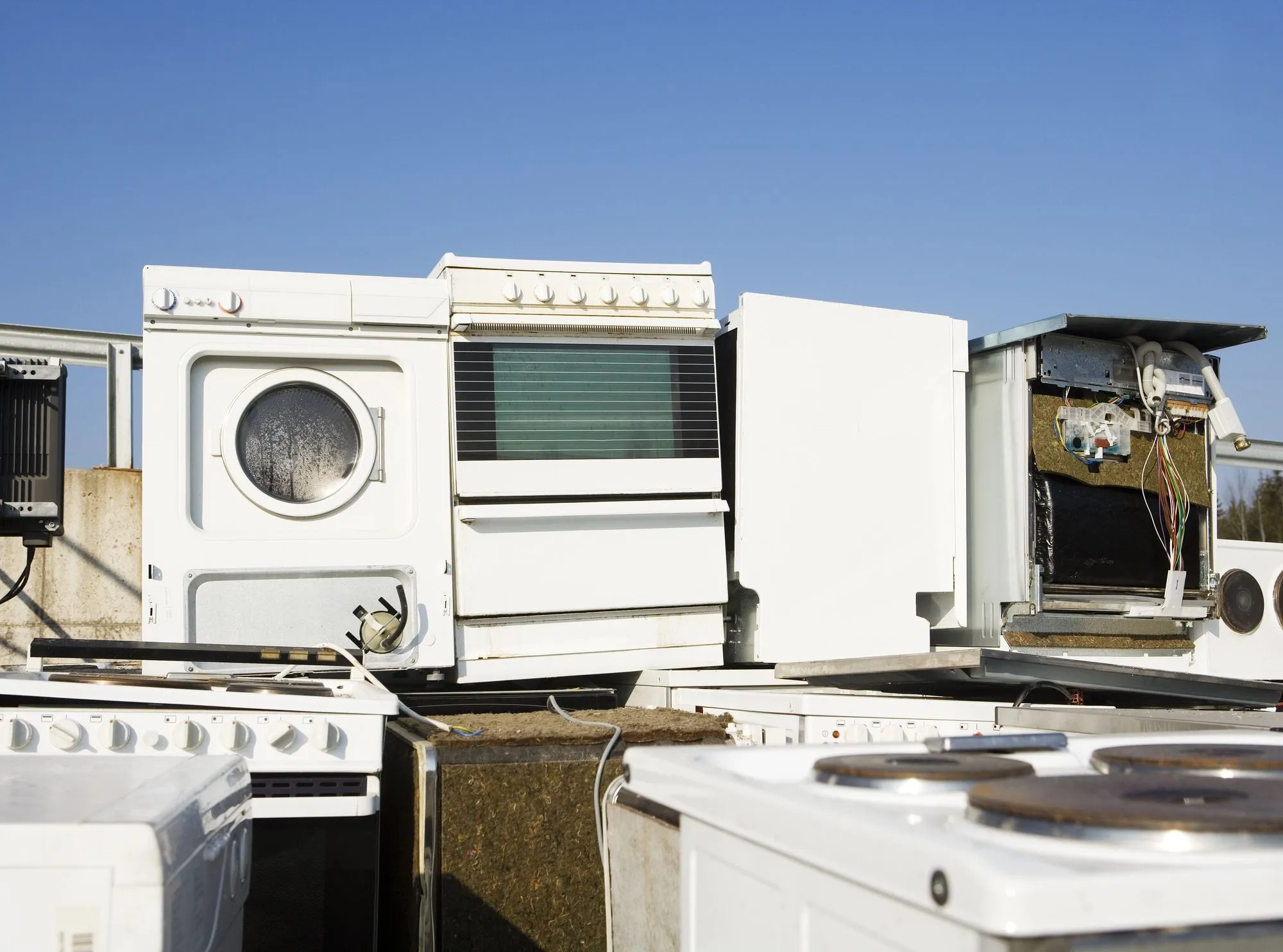
Old Appliance Removal and Haul Away Near Me: Free Pickup, Disposal, Old Refrigerator, Washer, and Dryer Options Explained
That old refrigerator isn’t going to move itself — and after hauling away thousands of appliances nationwide, we can tell you firsthand: people almost always underestimate how complicated disposal gets. Refrigerators contain refrigerants that demand EPA-compliant handling. Washers and dryers are heavy, awkward, and usually crammed into tight spots. And those “free pickup” programs? Customers tell us all the time they waited weeks just to find out their appliance didn’t even qualify.
We started Jiffy Junk back in 2014 with a pretty straightforward idea: junk removal should be effortless for the customer. In the years since, we’ve tackled every appliance removal scenario you can think of — double-wide fridges trapped in finished basements, stacked washer-dryer combos bolted to laundry room walls, you name it. All of that hands-on work is exactly what led us to build our White Glove Treatment approach: licensed, insured crews who handle disconnection, heavy lifting, and eco-friendly disposal so you don’t have to figure any of it out yourself.
What we’ve laid out below covers every realistic option for getting rid of old appliances — municipal pickup programs, retailer haul-away deals, donation routes, and professional removal services like ours — along with straight talk about what each one actually involves, what it’ll cost, and where the trade-offs hide. The right call depends on your situation, and you deserve the full picture before making it.
TL;DR: Quick Answers
What are my options for old appliance removal and haul away?
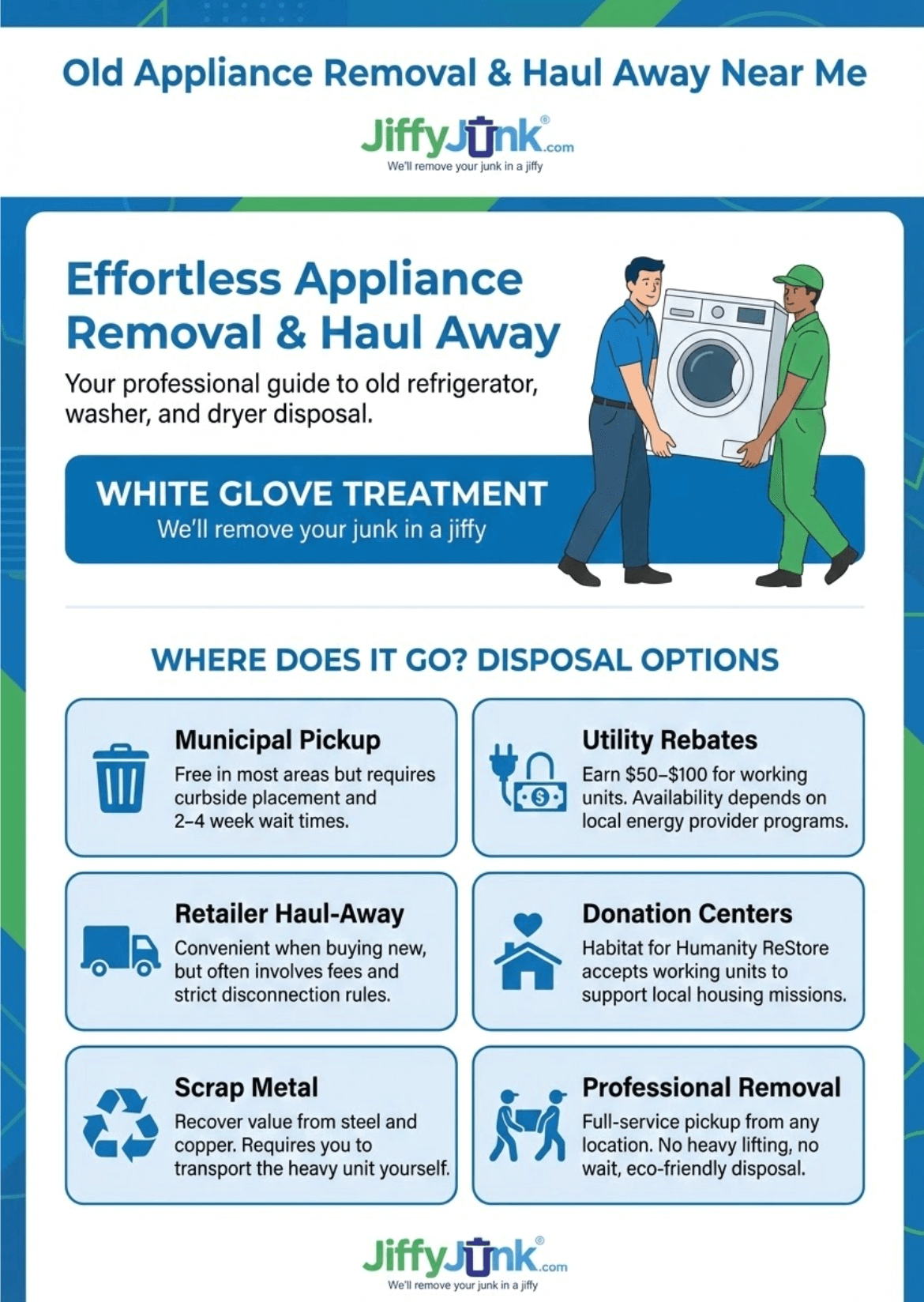
You have six main paths to get rid of an old refrigerator, washer, dryer, or other large appliance:
- Municipal bulky item pickup — Free in most areas. Requires curbside placement and advance scheduling. Wait times average 2–4 weeks.
- Utility recycling programs — Free pickup with $50–$100 cash rebates for working refrigerators and freezers. Search by ZIP code at ENERGY STAR’s Recycling Finder.
- Retailer haul-away — $0–$50 through Lowe’s, Home Depot, or Best Buy. Only available when purchasing a replacement appliance.
- Donation — Working appliances can be donated to Habitat for Humanity ReStore. Many locations offer free pickup.
- Scrap metal recycling — Drop off non-working units at a local scrap yard. You provide transportation.
- Professional junk removal — Full-service pickup from any location in your home. No replacement purchase required.
Important: Refrigerators, freezers, and AC units contain EPA-regulated refrigerants. Federal law requires certified recovery before disposal, regardless of which option you choose.
Our recommendation after removing thousands of appliances since 2014: Match your choice to your timeline, budget, and effort level. Free options work well if you have flexibility and can get the unit curbside. When speed, convenience, or difficult-access locations are factors, professional removal with Jiffy Junk’s White Glove Treatment is the fastest way to go from cluttered to clean — no heavy lifting, no hidden fees, no waiting.
Top Takeaways
- Not all appliances can be tossed curbside. Refrigerators, freezers, and AC units contain federally regulated refrigerants. EPA-compliant handling is required before disposal. Know what’s inside your appliance before choosing a removal method.
- Free doesn’t always mean easy. Municipal programs, utility rebates, and retailer haul-away all come with trade-offs:
- Multi-week wait times
- Curbside placement requirements
- Item and condition restrictions
- Replacement purchase may be required
- Factor in your timeline and effort level — not just cost.
- Your old appliance is more recyclable than you think.
- 88% steel recycling rate for appliances
- 3.1 million tons of major appliances were recycled in a single year
- Steel, copper, and aluminum all have strong recovery value when routed to the right facility
- The highest cost is delay. The pattern we see most after thousands of jobs: homeowners put off removal for months because the process feels complicated. Meanwhile, the appliance takes up space and drives up energy bills. The best plan is the one you act on today.
- Professional removal eliminates every barrier at once.
- No weeks-long wait for a pickup slot
- No dragging a 300-pound fridge to the curb
- No new purchase required
- Jiffy Junk’s White Glove Treatment covers disconnection, heavy lifting, and eco-friendly disposal — on your schedule, with upfront pricing and no hidden fees
Table of Contents
- Old Appliance Removal and Haul Away Near Me: Free Pickup, Disposal, Old Refrigerator, Washer, and Dryer Options Explained
- TL;DR: Quick Answers
- Top Takeaways
- What to Know Before You Get Rid of an Old Appliance
- Free Appliance Pickup Programs: What’s Actually Out There
- Retailer Haul-Away: Handy, With a Few Strings Attached
- Donating Old Appliances: A Second Chance for Something That Still Works
- Scrap and Recycling: There’s Still Value in a Dead Appliance
- Professional Appliance Removal: Just Get It Done
- Picking the Right Option Comes Down to Three Things
- 7 Resources to Help You Get Rid of Old Appliances the Right Way
- 1. Know the Rules Before You Start — EPA Appliance Disposal Guide
- 2. Understand Refrigerant Recovery Requirements — EPA Section 608
- 3. Find Free Pickup and Cash Rebates in Your Area — ENERGY STAR Recycling Finder
- 4. Give Your Working Appliance a Second Life — Habitat for Humanity ReStore
- 5. Locate a Local Recycler for Non-Working Appliances — Earth911 Search Tool
- 6. Review Retailer Haul-Away Policies Before You Buy — Lowe’s Appliance Delivery & Haul Away
- 7. Get Full-Service Appliance Removal Without the Wait — Jiffy Junk
- Supporting Statistics: What the Numbers Tell Us — and What We See on the Ground
- Final Thought: The Real Cost of Putting Off Appliance Removal
- FAQ on Old Appliance Removal and Haul Away
- Q: How much does it cost to have an old appliance removed and hauled away?
- Q: Can I put an old refrigerator or freezer out with my regular trash?
- Q: Will Lowe’s, Home Depot, or Best Buy pick up my old appliance without buying a new one?
- Q: What is the most eco-friendly way to dispose of an old washer, dryer, or dishwasher?
- Q: How do I get a heavy appliance out of my basement, upstairs room, or tight space?
- Stop Searching for Old Appliance Removal and Haul Away Near You — We’re Already Here
What to Know Before You Get Rid of an Old Appliance
Getting rid of an old appliance sounds simple enough — until you’re standing in front of a 300-pound refrigerator wondering how it’s supposed to get from your kitchen to anywhere else. And that’s before you even think about what’s inside it.
Refrigerators, freezers, and AC units all contain refrigerants that fall under EPA regulation through the Clean Air Act. You can’t just wheel one to the curb and walk away. These units need certified handling before anyone can legally dispose of them. Washers, dryers, and dishwashers don’t carry the same regulatory baggage, but they bring their own headaches — they’re bulky, connected to water lines or gas hookups, and sometimes hardwired into electrical circuits that shouldn’t be touched without knowing what you’re doing.
Knowing what you’re up against before you start makes the whole process go smoother. Here’s an honest rundown of what’s out there.
Free Appliance Pickup Programs: What’s Actually Out There
Plenty of cities and towns run bulky item pickup at no cost, usually on a set schedule. Some utility companies have their own appliance recycling programs too, particularly for old refrigerators and freezers. The logic is simple — pulling inefficient appliances off the grid saves energy across the board.
Here’s the catch, though. Our customers tell us the same thing over and over: these programs sound great on paper but come with real drawbacks. Wait times can run two to four weeks. You’re usually responsible for getting the appliance to the curb on your own. And eligibility rules can be surprisingly narrow — certain items, certain brands, certain conditions might not qualify. It’s worth a phone call to confirm exactly what they’ll take before you plan your day around it.
Retailer Haul-Away: Handy, With a Few Strings Attached
Buying a new fridge from Home Depot, Lowe’s, or Best Buy? Most big retailers will haul your old appliance away when the delivery crew shows up with the replacement. One trip, two birds — hard to argue with that.
But there are limits. This perk almost always requires a new purchase of the same type of appliance. Want someone to just come grab your old washer without buying a new one? That’s usually off the table. Fees land somewhere between $15 and $50, and don’t be surprised if the crew passes on removal when your old dryer is wedged into a second-floor laundry closet at the top of a narrow staircase. Difficult access and disconnection needs are common deal-breakers.
Donating Old Appliances: A Second Chance for Something That Still Works
Got a working appliance you’re replacing just because you want an upgrade? Donation might be the most satisfying route. Habitat for Humanity ReStores, Salvation Army, and plenty of smaller local organizations accept functioning refrigerators, washers, dryers, and dishwashers. A number of them will even pick up for free if the item qualifies.
This is something we care about deeply at Jiffy Junk. Eco-friendly disposal isn’t a marketing line for us — it’s woven into the way we work on every single job. When we pick up an appliance that still has useful life left in it, we go out of our way to route it toward donation or recycling instead of sending it straight to a landfill. That’s been part of the playbook since we started.
Scrap and Recycling: There’s Still Value in a Dead Appliance
Even when an appliance is completely shot, the metal inside it is worth something. Local scrap yards accept old washers, dryers, and dishwashers regularly, and depending on weight, they might even hand you a few dollars for the trouble. Refrigerators and freezers are trickier — the scrap facility has to be equipped for refrigerant recovery before they can break down the unit.
The sticking point? Getting a 250-pound washing machine to the scrap yard yourself. Unless you own a truck or can borrow a trailer, you’re looking at a rental on top of the effort.
Professional Appliance Removal: Just Get It Done
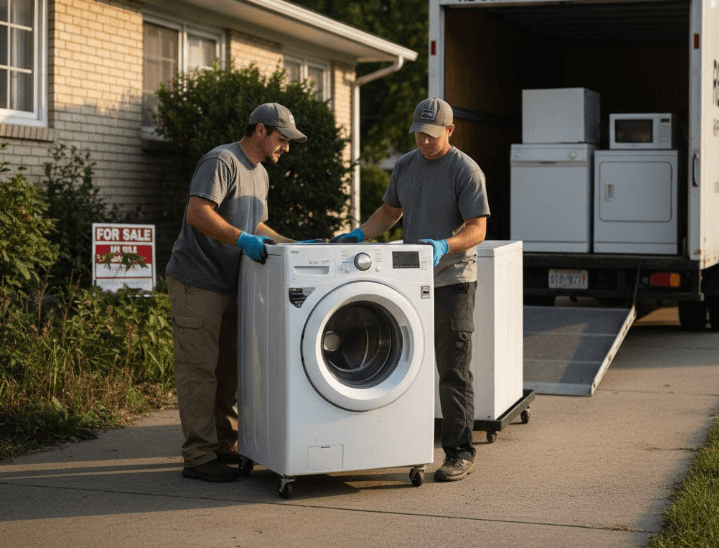
Sometimes you don’t want to coordinate schedules, rent a truck, or wrestle a dishwasher down a flight of stairs. You just want the thing gone. That’s where a full-service junk removal company earns its keep — they handle the scheduling, the disconnection, the heavy lifting, the hauling, and the disposal. You don’t touch a thing.
This is the bread and butter of what we do at Jiffy Junk. Our White Glove Treatment means a licensed, insured crew shows up at your door and pulls the appliance from wherever it’s sitting — basement, upstairs laundry room, cramped garage corner, doesn’t matter. No dragging anything curbside yourself. No waiting a month for the city to show up. We give you an upfront quote before any work starts, and there are no hidden fees tacked on at the end. That’s not a new policy; that’s how we’ve operated since day one.
We’ve done everything from single refrigerator pickups to full kitchen teardowns during renovations. And because we serve communities across the country, there’s a good chance we’re already in your area.
Picking the Right Option Comes Down to Three Things
Your timeline, your budget, and how much sweat you feel like putting in.
If you’ve got a couple of weeks and the appliance is already near the curb, a free municipal program could work out fine. Buying a replacement anyway? Tack on the retailer haul-away and keep it simple. If the unit still runs, put it in someone else’s hands through a donation. And if you want the whole thing handled from start to finish — no heavy lifting, no scheduling headaches, no guesswork on disposal — that’s exactly what Jiffy Junk’s White Glove Treatment was built for.
“After removing thousands of appliances from every situation imaginable — chest freezers wedged in finished basements, stacked units bolted into closets, vintage refrigerators still running on outdated refrigerants — the one thing we’ve learned is that no two jobs are the same, which is exactly why we built Jiffy Junk around a White Glove approach that adapts to the customer, not the other way around.” — Jiffy Junk Team
7 Resources to Help You Get Rid of Old Appliances the Right Way
Getting rid of an old refrigerator, washer, or dryer doesn’t have to be complicated. We’ve pulled together seven trusted resources that cover everything from free pickup programs and federal disposal rules to donation options and full-service removal. Whether you’re tackling a single appliance or clearing out an entire property, these will help you find the smartest path forward.
1. Know the Rules Before You Start — EPA Appliance Disposal Guide
Here’s something most people don’t realize: you can’t just toss an old fridge or freezer in a dumpster. Federal law requires specific handling. The EPA outlines consumer responsibilities for safely disposing of appliances that contain ozone-depleting substances and hydrofluorocarbons, including refrigerators, freezers, and air conditioners. Take five minutes to review this page first — it’ll save you headaches down the road.
Source: U.S. Environmental Protection Agency
URL: https://www.epa.gov/sites/default/files/2020-01/documents/rad-communicating-rad-program-benefits.pdf
2. Understand Refrigerant Recovery Requirements — EPA Section 608
If your appliance has a cooling system, there are specific federal rules about how refrigerant must be handled before disposal. Under Section 608 of the Clean Air Act, refrigeration and air-conditioning equipment must have refrigerant recovered in accordance with EPA requirements before it can be disposed of. This is the resource to check if you want to make sure whoever removes your appliance is doing it by the book. We follow these guidelines on every job — it’s part of how we do business.
Source: U.S. Environmental Protection Agency — Section 608, Subpart F
URL: https://www.epa.gov/section608/stationary-refrigeration-safe-disposal-requirements
3. Find Free Pickup and Cash Rebates in Your Area — ENERGY STAR Recycling Finder
Did you know your local utility company might pick up your old fridge for free — and pay you for it? ENERGY STAR connects consumers with utility-sponsored recycling programs and retail partners, some offering cash rebates and others providing utility bill credits for turning in old appliances. Just enter your ZIP code to see what’s available near you. It’s a great option if your appliance still runs and you’ve got a flexible timeline.
Source: ENERGY STAR — Fridge & Freezer Recycling Program Finder
URL: https://www.energystar.gov/products/recycle/find_fridge_freezer_recycling_program
4. Give Your Working Appliance a Second Life — Habitat for Humanity ReStore
If your old appliance still works, donating it is one of the most rewarding ways to let it go. Habitat ReStores accept gently used appliances and offer free pickup of large items at most locations, with all proceeds supporting Habitat for Humanity’s affordable housing mission. Search by ZIP code to find your nearest ReStore and confirm what they’re currently accepting. At Jiffy Junk, we’re committed to recycling and donating items whenever possible — it’s built into our process, not an afterthought.
Source: Habitat for Humanity — ReStore Donation Center Locator
URL: https://www.habitat.org/restores/donate-goods
5. Locate a Local Recycler for Non-Working Appliances — Earth911 Search Tool
Got an appliance that’s beyond repair? It still has value as a recyclable material. Steel accounts for roughly 75 percent of the average appliance, and home appliances represent about 10 percent of all steel recycled in the U.S. annually. Earth911’s search tool lets you find nearby scrap yards, municipal drop-off sites, and certified recyclers by ZIP code. Just keep in mind — you’ll need a way to transport a several-hundred-pound appliance to the facility yourself.
Source: Earth911 — Recycling Center Search
URL: https://search.earth911.com
6. Review Retailer Haul-Away Policies Before You Buy — Lowe’s Appliance Delivery & Haul Away
Buying a new appliance? Your retailer might take the old one off your hands at the same time. But it’s worth reading the fine print first. At Lowe’s, haul away is an additional purchase that must be paired one-for-one with a new appliance, and customers need to uninstall, empty, and unplug the old unit before the delivery team arrives. Home Depot and Best Buy offer similar programs with their own requirements and fees. A quick review before checkout helps you avoid surprises on delivery day.
Source: Lowe’s — Appliance Delivery, Installation & Haul Away
URL: https://www.lowes.com/l/help/appliance-delivery-haulaway
7. Get Full-Service Appliance Removal Without the Wait — Jiffy Junk
Sometimes you just need it gone — fast, easy, and without jumping through hoops. That’s exactly what we’re here for.
Our White Glove Treatment means a licensed and insured team shows up on your schedule, removes the appliance from wherever it sits — basement, upstairs laundry room, tight garage corner — and handles eco-friendly disposal so you don’t have to. No new purchase required. No dragging anything to the curb. No waiting weeks for a municipal pickup slot.
We’ll give you an upfront quote before we begin, with no hidden fees. That’s how we’ve done it since 2014, and it’s why customers trust us to handle everything from a single refrigerator to a full property cleanout.
Supporting Statistics: What the Numbers Tell Us — and What We See on the Ground
After more than a decade of removing appliances from homes and businesses nationwide, we’ve seen the scope of this challenge firsthand. These three statistics from authoritative U.S. sources confirm what our teams experience every day.
1. 11–13 Million Refrigerated Appliances Are Disposed of Annually in the U.S.
Every time our crew disconnects an aging refrigerator or hauls a chest freezer out of a finished basement, we’re handling one small piece of a massive national disposal challenge. The EPA estimates that 11 to 13 million refrigerated household appliances reach end-of-life each year in the United States.
What we’ve learned handling these units firsthand:
- Every refrigerator, freezer, and AC unit contains refrigerants requiring EPA-compliant recovery
- Many older models also contain mercury switches, PCBs, or contaminated compressor oil
- At this volume, improper disposal creates real environmental consequences — not hypothetical ones
This is exactly why we invest in trained, licensed teams and proper disposal protocols on every job.
Source: U.S. Environmental Protection Agency — Appliance Disposal
URL: https://www.epa.gov/section608/appliance-disposal
2. 3.1 Million Tons of Major Appliances Were Recycled in a Single Year
Most homeowners don’t realize how recyclable their old appliances actually are. That rusted washer in your garage isn’t worthless — it’s packed with recoverable material. The EPA reports that 3.1 million tons of major appliances were recycled in 2018, making them one of the most-recycled product categories in the U.S. waste stream.
What this looks like on a typical job:
- A single kitchen tearout — refrigerator, dishwasher, and range — can yield hundreds of pounds of recyclable metal
- Steel, copper, and aluminum all have strong recovery value when routed to the right facility
- The difference isn’t whether the material can be recycled — it’s whether the hauler takes the time to do it
Our commitment to recycling and donating whenever possible is a logistics decision we make on every pickup, not a marketing line.
Source: U.S. Environmental Protection Agency — National Overview: Facts and Figures on Materials, Wastes, and Recycling
3. The Recycling Rate for Appliance Steel Is Approximately 88%
Steel accounts for roughly 75% of the weight of a typical large appliance — and our crews feel every pound when carrying a side-by-side fridge up a narrow basement staircase. The upside to all that weight? It’s among the most efficiently recycled materials in the country. The U.S. Geological Survey estimates the appliance steel recycling rate at approximately 88%, rivaling the automotive sector.
What that 88% means in practice:
- Nearly 9 out of every 10 pounds of steel in your old appliance gets recovered
- Recycled appliance steel becomes new products — bridge beams, car frames, even new appliances
- The job doesn’t end when the appliance leaves your home; where it goes next matters just as much
We’ve seen this cycle firsthand at the recycling facilities we work with, and it’s why responsible routing is built into our process.
Source: U.S. Geological Survey — Mineral Commodity Summaries: Iron and Steel Scrap
URL: https://pubs.usgs.gov/periodicals/mcs2021/mcs2021-iron-steel-scrap.pdf
Final Thought: The Real Cost of Putting Off Appliance Removal
After removing thousands of appliances from every type of property imaginable — single-family homes, rental units, commercial buildings, estate cleanouts, and full renovation teardowns — we’ve noticed something that rarely gets talked about in disposal guides like this one: most people wait too long.
Not because they’re lazy. Because the process feels overwhelming.
Here’s what the delay cycle typically looks like:
- You find a free municipal program, but the next slot is three weeks out and requires curbside placement
- You look into retailer haul-away, but you’re not buying a replacement right now
- You consider a scrap yard, but you don’t have a truck
- So the old appliance stays right where it is — for weeks, months, sometimes years
Meanwhile, it takes up space, collects dust, and — if it’s a cooling unit still plugged in — quietly drives up your energy bill.
What we’ve seen firsthand since 2014:
- Garages where families stepped around a dead dryer for over a year
- Basements with three generations of appliances stacked because no one knew who to call
- And in nearly every case, the same reaction afterward: “I wish I’d done this sooner.”
Our honest take? The highest cost of appliance removal isn’t the service itself. It’s the cost of delay.
Every option we covered on this page is a legitimate path:
- Free municipal pickup programs
- Utility-sponsored recycling with cash rebates
- Retailer haul-away when purchasing a replacement
- Donation through organizations like Habitat for Humanity ReStore
- Scrap metal recycling for non-working units
- Professional full-service removal with Jiffy Junk
The right choice depends on your timeline, your budget, and how much of the process you want to handle yourself.
But if there’s one piece of advice we’d offer from experience: pick one and act on it. The plan you execute today beats the free option you’re still researching next month. Your space, your time, and your peace of mind are worth more than the appliance that’s taking them away from you.
And if you’d rather not think about it at all — if you just want someone to show up, handle everything, and leave you with a clean, clutter-free space — that’s exactly what our White Glove Treatment was built for.
FAQ on Old Appliance Removal and Haul Away
Q: How much does it cost to have an old appliance removed and hauled away?
A: After handling thousands of removal jobs since 2014, we can tell you it depends on how much of the work you’re willing to do yourself.
- Free municipal pickup — No cost, but you move the appliance curbside and wait 2–4 weeks
- Utility recycling programs — Free with $50–$100 rebates for qualifying working units
- Retailer haul-away — $0–$50, only when purchasing a replacement
- Scrap yard drop-off — Free or small payment, but you provide the truck
- Professional removal — Varies by appliance type, quantity, and location in your home
What we’ve learned talking to customers daily: Most people focus on sticker price and overlook the cost of their own time, effort, and weeks of delay. At Jiffy Junk, we provide an upfront quote before work begins. The price we give is the price you pay. No hidden fees.
Q: Can I put an old refrigerator or freezer out with my regular trash?
A: No. This is one of the most common misconceptions we encounter on the job.
Why it matters:
- Refrigerators, freezers, and AC units contain refrigerants regulated under the EPA’s Clean Air Act
- Federal law requires certified recovery of these substances before disposal
- Most municipalities won’t accept refrigerant-containing appliances through standard bulk pickup
What we see firsthand: Homeowners regularly assume standard pickup applies, only to find out their unit requires professional refrigerant removal first. Our licensed, insured teams handle refrigerant-containing appliances daily. EPA-compliant disposal isn’t an extra step for us — it’s standard procedure on every job.
Q: Will Lowe’s, Home Depot, or Best Buy pick up my old appliance without buying a new one?
A: Generally, no. This is the question that catches people off guard most often. Retailer haul-away is only available when purchasing a replacement, one-for-one.
What customers often don’t realize until delivery day:
- You must unplug, empty, and disconnect the old unit before the crew arrives
- Gas appliances typically need professional disconnection in advance
- Delivery teams may refuse removal from tight stairwells, upper floors, or difficult-access spots
- Fees range from $0–$50 depending on retailer and membership tier
What we hear regularly: Customers book a retailer haul-away, then the crew leaves the old appliance behind because it was still connected or in an inaccessible spot. That’s often when they call us. Jiffy Junk removes appliances on your schedule — no replacement purchase required, and we don’t turn down a job because the stairway is narrow.
Q: What is the most eco-friendly way to dispose of an old washer, dryer, or dishwasher?
A: After years of routing appliances to recycling facilities, donation centers, and scrap processors, we follow a clear hierarchy on every job:
- If it works — donate it. Organizations like Habitat for Humanity ReStore give your unit a second life and fund affordable housing.
- If it doesn’t work — recycle it. Certified facilities recover steel, copper, and aluminum. The national appliance steel recycling rate is approximately 88%.
- Whatever you do, avoid unverified haulers. We’ve seen competitors dump appliances at the nearest landfill without separating recyclable materials.
Our approach: Eco-friendly routing is built into our process. We assess every appliance for donation, recycling, or responsible disposal — and follow through. It’s one of the things that separates White Glove Treatment from a truck and a strong back.
Q: How do I get a heavy appliance out of my basement, upstairs room, or tight space?
A: This is the number one reason people call us instead of trying another option first.
The problem with other options:
- Free municipal programs require curbside placement
- Retailer haul-away expects ground-floor access
- Scrap yards need you to deliver the unit yourself
None of those solves the real issue when your dead washer is in a second-floor laundry closet, or your chest freezer is wedged behind shelving in a finished basement.
What our teams have handled firsthand:
- Narrow spiral staircases
- Doorways requiring a full-size fridge angled at a 45-degree tilt
- Basement bulkhead exits are barely wider than the unit itself
After thousands of these jobs, very few surprises our crews. That’s the whole point of White Glove Treatment — we come to wherever the appliance is, handle every bit of the heavy lifting, and figure out how to get it out. You just show us where it is.
Stop Searching for Old Appliance Removal and Haul Away Near You — We’re Already Here
Whether you need a single refrigerator hauled out of your basement or an entire property cleared of old washers, dryers, and everything in between, Jiffy Junk’s White Glove Treatment handles it all —book online now or call 844-JIFFY-JUNK (844-543-3966) for a free, no-obligation quote.