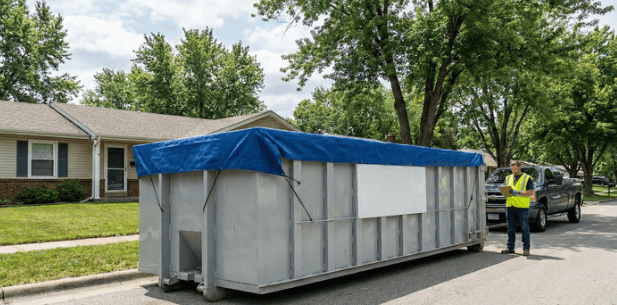
What Are the Cheapest Roll Off Dumpster Rental Prices Near Me? How to Find Affordable Container Rentals in Your Area Without Sacrificing Quality or Service
Roll off dumpster rental prices in most areas range from $250 to $800—but after completing thousands of jobs nationwide, we’ve learned that the lowest quote rarely means the best deal. Hidden fees for delivery, overage charges, and extended rental periods can quickly turn a “budget” option into your most expensive mistake.
From our experience serving homeowners and contractors across the country, here’s what actually drives your final cost: container size, debris type, local disposal fees, and rental duration. Most customers overestimate the size that they need, while others underestimate and end up paying for a second haul. Our teams have seen it all too many times not to ensure we provide upfront and transparent quotes before any work starts. The price we give you is what you pay.
This guide contains the pricing knowledge we’ve accumulated from real jobs in real neighborhoods to help you compare quotes with confidence, select the right container size the first time, and avoid surcharges that catch most renters off guard.
Quick Answers
Roll off dumpster rental prices near me.
Typical price range: $250–$800 depending on container size, location, debris type, and rental duration.
What we’ve learned from thousands of jobs: The lowest quote is rarely the best deal. Hidden fees for delivery, disposal, and overages often turn “budget” rentals into the most expensive option.
What affects your local price:
- Municipal landfill fees (vary 30%+ between neighboring towns)
- Permit requirements ($0–$100+)
- Distance from disposal facilities
- Debris weight and type
How to get the best value:
1. Request quotes that include all costs upfront
2. Compare total price, not just base rate
3. Size up slightly to avoid overage fees
4. Ask about weight limits and per-ton overage rates
Jiffy Junk difference: The price we quote is the price you pay. No hidden fees, no surprises, just transparent pricing and reliable service.
Top 5 Takeaways
- Lowest quote ≠ , best deal. Hidden fees for delivery, disposal, and overages often make “budget” rentals the most expensive option. Compare total costs, not base prices.
- Most homeowners underestimate debris volume. Renovations generate up to 6 lbs of waste per square foot. A 1,500 sq ft project = 4–5 tons of material. Size up to avoid overage fees.
- Location impacts pricing significantly. Landfill rates and permit costs vary by municipality. We’ve seen $150+ price differences between neighboring towns for identical projects.
- Transparent pricing should be standard. Complete quotes include: container rental, delivery, pickup, disposal, and weight allowance. Vague answers = red flag.
- Responsible disposal matters. Recycling prevents nearly 200 million metric tons of carbon emissions annually. Choose providers who prioritize eco-friendly disposal.
Table of contents
- What Are the Cheapest Roll Off Dumpster Rental Prices Near Me? How to Find Affordable Container Rentals in Your Area Without Sacrificing Quality or Service
- Quick Answers
- Top 5 Takeaways
- What Factors Determine Roll Off Dumpster Rental Prices in Your Area?
- Understanding Container Sizes: How to Choose Without Overpaying
- How to Compare Quotes and Spot Hidden Fees Before You Book
- Questions to Ask Before Booking Your Rental
- Why Quality Service Matters as Much as Price
- Essential Resources for Finding Affordable Roll Off Dumpster Rentals
- 1. See What Dumpster Rentals Actually Cost Across the Country
- 2. Find the Right Container Size for Your Project
- 3. Check Whether You Need a Permit in Your Area
- 4. Know What Can and Can’t Go in Your Dumpster
- 5. Dispose of Household Chemicals and Hazardous Materials Safely
- 6. Locate Recycling and Specialty Disposal Options Near You
- 7. Learn Simple Ways to Get the Best Value on Your Rental
- Supporting Statistics: What the Numbers Mean for Your Project
- Final Thought: Why the Lowest Price Isn’t Always the Best Deal
- FAQ on “Roll Off Dumpster Rental Prices Near Me”
- Q: What is the average cost to rent a roll-off dumpster near me?
- Q: What should be included in a roll-off dumpster rental quote?
- Q: How can I find affordable dumpster rental prices without sacrificing quality?
- Q: What factors affect roll-off dumpster rental prices in my area?
- Q: How do I avoid hidden fees when renting a roll-off dumpster?
- Get Affordable Roll Off Dumpster Rental Prices Near You—Without the Guesswork
What Factors Determine Roll Off Dumpster Rental Prices in Your Area?
Your location plays a role in pricing. Disposal fees also vary greatly by municipality – in one county, it may cost $75 per ton, in the next, it may cost $120. We’ve seen price differences of 30 or more between neighboring towns simply because of local landfill rates & permit requirements.
Beyond geography, there are four factors that influence your quote, including container size, rental duration, the type of debris, and distance to the disposal facility. Standard rentals will last 7 to 14 days, but most residential clean-outs and renovation projects are completed in a week. If you know when you need to be gone by, inquire about shorter rental options-many rental managers have special reduced rates if you are interested in quicker store turnarounds.
The type of debris is more important than most customers seem to realize. Clean concrete, yard waste, and household items all have different costs for disposing of them. Mixed loads that contain forbidden substances, such as appliances with refrigerants or mattresses, are often charged surcharges. Being up-front about what it is that you’re tossing helps save everyone time and money wasted on unexpected fees at the end.
Understanding Container Sizes: How to Choose Without Overpaying
Roll off dumpsters typically come in 10, 20, 30, and 40 cubic yard sizes. From our experience, most homeowners overestimate what they need—a 20-yard container handles the majority of residential projects, from garage cleanouts to single-room renovations.
Here’s a practical breakdown based on jobs we’ve completed:
A 10-yard container works well for small cleanouts, minor landscaping debris, or a single room’s worth of furniture and belongings. Think of it as roughly equivalent to three pickup truck loads.
A 20-yard container suits medium renovations, whole-garage cleanouts, or flooring removal from an average-sized home. This is our most commonly requested size for homeowners tackling weekend projects.
A 30-yard container handles larger construction projects, whole-house cleanouts, or commercial jobs with significant volume. Contractors renovating multiple rooms or removing structural materials typically land here.
A 40-yard container serves major construction sites, complete property cleanouts, or commercial demolition projects. Unless you’re managing a large-scale job, this size is likely more than you need.
When in doubt, describe your project to your rental provider. A company invested in earning your repeat business will recommend the right size, not the biggest one.
How to Compare Quotes and Spot Hidden Fees Before You Book
Not all quotes are created equal. A $299 rental that balloons to $500 after delivery fees, environmental charges, and overage penalties isn’t a deal—it’s a pricing trap. We’ve built our reputation on transparent pricing because we’ve heard too many customers describe frustrating experiences with bait-and-switch quotes from other providers.
When comparing options, ask whether the quote includes delivery, pickup, disposal fees, and a clearly defined weight allowance. Request the per-ton overage rate in writing. Some companies bury these details in fine print, knowing most customers won’t discover them until the invoice arrives.
Watch for these common add-ons: fuel surcharges, administrative fees, extended rental charges that kick in automatically, and penalties for “prohibited items” that weren’t clearly communicated upfront. A reputable provider discloses everything before you commit.
At Jiffy Junk, the price we quote is the price you pay—period. We believe transparent pricing builds trust, and trust builds relationships that last beyond a single job.
Questions to Ask Before Booking Your Rental
Arm yourself with these questions to ensure you’re comparing apples to apples:
What’s included in the quoted price? Confirm that delivery, pickup, disposal, and a reasonable weight allowance are covered. If the representative can’t give you a straight answer, consider it a red flag.
What’s the weight limit, and what happens if I exceed it? Most containers include a set tonnage. Knowing the overage rate upfront helps you decide whether to rent a larger size or plan for a potential additional charge.
Are there any prohibited materials? Items like paint, batteries, tires, and appliances with refrigerants often carry restrictions or surcharges. Clarify this before loading begins.
What’s the rental period, and is there flexibility? If your project timeline shifts, understanding extension policies prevents surprises.
Is the company licensed and insured? This protects you from liability if something goes wrong during delivery, pickup, or disposal. Any reputable provider will confirm this without hesitation.
Why Quality Service Matters as Much as Price
The cheapest option on paper doesn’t always deliver the best value. Late deliveries derail project timelines. Damaged driveways create repair bills that dwarf any rental savings. Unresponsive customer service leaves you stuck with a container you can’t get picked up.
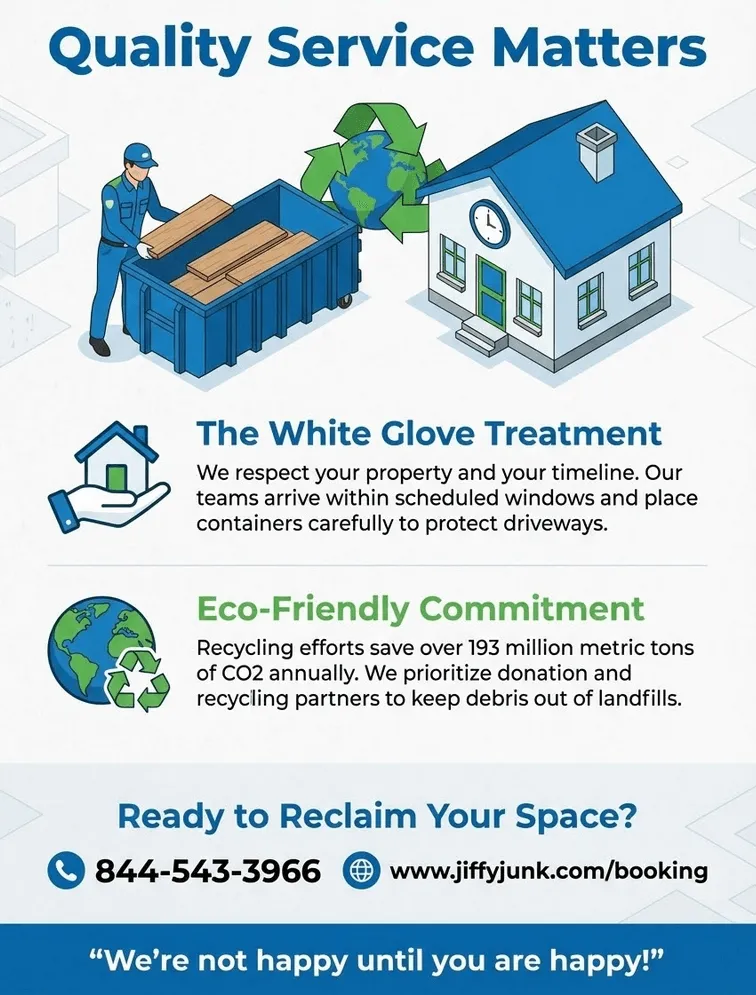
Our teams arrive within scheduled windows, place containers carefully to protect your property, and respond promptly when you’re ready for pickup. We handle everything with the professionalism and care that defines our White Glove Treatment—whether you’re renting a dumpster for a renovation or booking a full-service cleanout.
Finding affordable roll-off dumpster rental prices near you shouldn’t mean sacrificing reliability. When you work with Jiffy Junk, you get competitive pricing backed by a nationwide team that treats your property and your time with respect.
“After thousands of jobs nationwide, we’ve seen the same pattern: customers who chase the lowest initial quote often pay more in the end once hidden fees for delivery, disposal, and overages get added to the invoice. We built our pricing on transparency because the real savings come from knowing your true cost before you book—not after.” — Jiffy Junk Operations Team
Essential Resources for Finding Affordable Roll Off Dumpster Rentals
We know that researching dumpster rental prices can feel overwhelming—every company quotes differently, and it’s tough to know if you’re getting a fair deal. That’s why we’ve gathered seven trusted resources to help you compare costs confidently, choose the right container size, and handle any materials that need special disposal. Consider this your roadmap to a smooth, stress-free rental experience.
1. See What Dumpster Rentals Actually Cost Across the Country
Before you book, it helps to know what others are paying. This resource breaks down current pricing by container size, debris type, and location so you can spot a competitive quote—and recognize when something doesn’t add up.
Resource: Dumpsters.com – Roll Off Dumpster Prices
URL: https://www.dumpsters.com/pricing/roll-off-dumpster-prices
2. Find the Right Container Size for Your Project
Here’s something we’ve learned from thousands of jobs: most customers either overestimate or underestimate what they need. Getting the size right the first time saves you money and keeps your project on track. This guide matches container dimensions to real-world projects—from garage cleanouts to full renovations.
Resource: Budget Dumpster – Dumpster Sizes Guide
URL: https://www.budgetdumpster.com/budget-dumpster-sizes.php
3. Check Whether You Need a Permit in Your Area
Permit requirements vary from town to town, and placing a dumpster without one can lead to fines or delays. This resource walks you through when permits are required, what they typically cost, and how to apply—so you can plan ahead and avoid surprises.
Resource: Dumpsters.com – Dumpster Permit Guide
URL: https://www.dumpsters.com/resources/dumpster-permits
4. Know What Can and Can’t Go in Your Dumpster
Not everything belongs in a roll-off container. Items like refrigerators, batteries, tires, and certain chemicals require special handling—and tossing them in can result in extra fees. Review this guide before you start loading so you know exactly what’s accepted.
Resource: Dumpsters.com – Prohibited Items List
URL:https://www.dumpsters.com/resources/prohibited-items
5. Dispose of Household Chemicals and Hazardous Materials Safely
Paints, cleaners, automotive fluids, and pesticides need to be handled separately from your regular cleanout materials. The EPA provides straightforward guidance on identifying these items and finding community collection programs near you. It’s the responsible way to clear out your space.
Resource: U.S. Environmental Protection Agency – Household Hazardous Waste
URL: https://www.epa.gov/hw/household-hazardous-waste-hhw
6. Locate Recycling and Specialty Disposal Options Near You
We’re committed to recycling and donating whenever possible—and we encourage our customers to do the same. For materials that can’t go in a dumpster, this searchable database helps you find local recycling centers, hazardous waste facilities, and eco-friendly disposal options in your neighborhood.
Resource: Earth911 – Recycling Center Search
URL: https://search.earth911.com/
7. Learn Simple Ways to Get the Best Value on Your Rental
The lowest quote isn’t always the best deal once delivery fees, overage charges, and rental extensions get added in. This independent resource shares practical tips for comparing pricing structures and getting quality service at a fair price—without cutting corners.
Resource: Hometown Dumpster Rental – Price Guide
URL: https://www.hometowndumpsterrental.com/blog/roll-off-dumpster-prices
Supporting Statistics: What the Numbers Mean for Your Project
After thousands of jobs nationwide, we’ve seen how quickly debris adds up during renovations and cleanouts. These statistics from trusted government sources confirm what our teams experience daily—and explain why accurate planning matters for both cost and environmental impact.
600 Million Tons of C&D Debris Generated Annually
The EPA reports that Americans generated 600 million tons of construction and demolition debris in 2018. That’s more than twice the volume of regular household trash.
What we’ve learned on the job:
- A single renovation or property cleanout fills containers faster than most customers expect
- What looks like “a few rooms of stuff” often weighs far more than anticipated
- Discussing project scope before selecting a dumpster size prevents costly surprises
Source: U.S. EPA – Sustainable Management of Construction and Demolition Materials
URL: https://www.epa.gov/smm/sustainable-management-construction-and-demolition-materials
Recycling Prevented 193 Million Metric Tons of Carbon Emissions
The EPA reports that 2018 recycling and composting efforts saved over 193 million metric tons of CO2 equivalent—comparable to removing 42 million cars from the road for one year.
How we put this into practice:
1. On-site sorting – Our crews identify materials that can be diverted from landfills
2. Donation partnerships – Furniture and appliances with remaining life go to organizations that can use them
3. Recycler coordination – Construction materials are directed to processors whenever possible
We’ve seen the difference this approach makes across thousands of jobs. Every project—regardless of size—deserves that level of care.
Source: U.S. EPA – National Overview: Facts and Figures on Materials, Wastes and Recycling
Only 32% of Solid Waste Is Currently Recycled or Composted
Despite progress over the decades, the national recycling rate reached just 32.1% in 2018. Roughly 146 million tons still ended up in landfills.
The opportunity we see:
- Most homeowners don’t have time to research which materials can be recycled
- Contractors often lack access to convenient diversion options
- Every job is a chance to improve those numbers
What we do differently:
- Separate materials on-site when possible
- Partner with local recyclers in the communities we serve
- Donate usable items to give them a second life
When you work with Jiffy Junk, you’re getting a team that cares about where your materials end up—not just a dumpster drop-off.
Source: U.S. EPA – Advancing Sustainable Materials Management: 2018 Fact Sheet
URL: https://www.epa.gov/sites/default/files/2021-01/documents/2018_ff_fact_sheet_dec_2020_fnl_508.pdf
Final Thought: Why the Lowest Price Isn’t Always the Best Deal
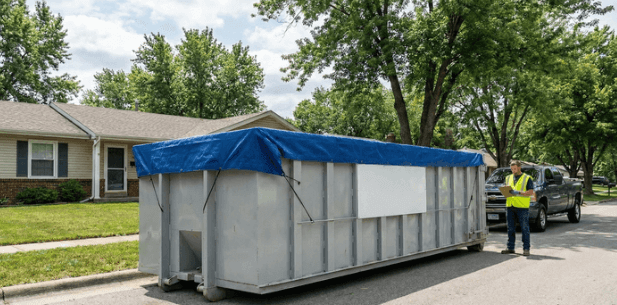
After years of serving homeowners, contractors, and property managers across the country, we’ve reached a conclusion that might seem counterintuitive: the cheapest dumpster rental quote you find is rarely your best option.
We understand why price comes first. Budgets are tight. Cleanout projects carry unexpected costs. When comparing quotes, it’s natural to gravitate toward the lowest number.
But here’s what thousands of jobs have taught us: customers who focus exclusively on finding the cheapest rate often end up paying more in the end.
The Hidden Cost of “Cheap”
The pattern repeats across the industry. A homeowner books the lowest-priced rental available, then discovers the quote excluded:
- Delivery and pickup fees
- Disposal costs
- Reasonable weight allowances
- Fuel surcharges
By the time overage charges and extended rental fees get added, that $299 “deal” has ballooned into something far more expensive than a transparent quote would have cost.
What happens when service quality gets sacrificed for price:
- Late deliveries – Project timelines derailed, crews standing idle
- Damaged driveways – Repair bills that exceed any rental savings
- Unresponsive support – Full containers with no pickup in sight
- Surprise restrictions – Rejected loads and additional fees for materials were never communicated as prohibited
These aren’t hypothetical scenarios. They’re stories we hear regularly from customers who come to us after frustrating experiences elsewhere.
What Sets Quality Service Apart
In our view, the real value isn’t just the container or the hauling. It’s the expertise, communication, and care that come with it.
Accurate sizing saves money. A five-minute conversation about your project scope can save hundreds of dollars by preventing overage fees or unnecessary second rentals.
Transparent pricing builds trust. The quote you receive should be the price you pay. No hidden fees. No surprise surcharges. No fine print. This isn’t complicated—but it’s surprisingly rare in our industry.
Reliable scheduling protects your timeline. On-time delivery and pickup keep your project on track. Delays cost money.
Responsible disposal matters. Where your materials end up reflects on you and impacts your community. Recycling and donation over landfilling means your project contributes to something positive.
Finding Affordable Quality
Budget matters. Finding competitive rates is smart. But “affordable” and “quality” aren’t mutually exclusive.
The goal isn’t finding the cheapest option—it’s finding the best value.
Best value means:
1. Getting an accurate quote that includes all costs upfront
2. Choosing the right container size for your actual project scope
3. Working with a responsive team that answers questions and solves problems
4. Knowing your materials will be handled responsibly from pickup to disposal
When you evaluate providers through this lens, the lowest initial quote often isn’t the smartest choice.
FAQ on “Roll Off Dumpster Rental Prices Near Me”
Q: What is the average cost to rent a roll-off dumpster near me?
A: Most homeowners pay between $250 and $800. Your actual price depends on four factors:
- Container size – 10-yard ($250–$400) to 30-yard ($600–$800+)
- Location – Landfill rates vary significantly by municipality
- Debris type – Heavy materials cost more to dispose of
- Rental duration – Standard periods run 7–14 days
What we’ve seen firsthand:
We’ve completed jobs in neighboring towns where landfill rates differed by $45 per ton. That’s a $200+ swing on identical rentals. Some municipalities charge $100+ for permits; others charge nothing.
Our recommendation: Get a quote that includes everything. At Jiffy Junk, the price we quote is the price you pay.
Q: What should be included in a roll-off dumpster rental quote?
A: A complete quote includes five components:
1. Container rental fee
2. Delivery
3. Pickup
4. Disposal fees
5. Weight allowance (tonnage included)
If any are missing or vague, you don’t have a full price.
What customers have told us:
- $299 rentals that became $550 invoices after hidden charges
- $75 “fuel recovery fees” were never mentioned until the final bill
- Delivery and disposal are billed separately from the “rental price.”
Our approach: When we quote a price, it includes everything. No surprises. No fine print.
Q: How can I find affordable dumpster rental prices without sacrificing quality?
A: Compare total costs, not base prices. The lowest quote often isn’t the best deal.
What separates good deals from costly mistakes:
| Factor | What to Look For |
| Weight allowance | A higher base price with generous tonnage often beats a low price with tight limits |
| Service reliability | Late deliveries and damaged driveways create costs not included in the quote |
| Sizing accuracy | Right-sized container first time beats overage fees or second rental |
What we’ve seen:
- Overage fees adding $150–$300 to final invoices
- Customers who sized up saving money vs. those who squeezed into smaller containers
- “Cheap” rentals cost more after service failures
Our belief: Affordable and quality aren’t mutually exclusive. Transparent pricing and reliable service should be standard—not premium upgrades.
Q: What factors affect roll-off dumpster rental prices in my area?
A: Four primary factors drive price variation:
1. Location (biggest variable)
- Landfill tipping fees differ by municipality.
- Permit costs range from $0 to $100+
- Distance from disposal facilities affects pricing
- We’ve quoted identical projects in adjacent counties with a $150+ price difference
2. Container size
- Larger containers cost more upfront
- Sizing up often saves money vs. overage fees
- Match size to project scope, not just budget
3. Debris type
- Clean concrete, mixed debris, and household items are processed differently
- Heavy materials (roofing, brick) carry higher per-ton fees
- We ask what you’re disposing of because it directly impacts the price
4. Rental duration
- Standard: 7–14 days
- Most residential projects finish within one week
- Shorter periods may qualify for reduced rates
Bottom line: Being upfront about project details helps us quote accurately—and protects you from surprise fees.
Q: How do I avoid hidden fees when renting a roll-off dumpster?
A: Ask direct questions before booking. Get answers in writing.
Essential questions to ask:
1. What’s the per-ton overage rate?
2. Are delivery, pickup, and disposal included?
3. What items are prohibited?
4. Is there a daily charge for extended rentals?
5. Are there fuel, environmental, or administrative fees not listed?
Red flags to watch for:
- Vague responses about what’s included
- Reluctance to provide itemized quotes
- Prices are dramatically lower than those of competitors
- Verbal assurances without written confirmation
What we’ve learned from customer stories:
After years of hearing about billing surprises from customers who came to us after bad experiences, we built our pricing on transparency.
Our commitment:
- The price we give is the price you pay
- All costs are included upfront
- No hidden fees, no fine print
This should be standard practice. Based on what customers tell us about experiences elsewhere, it’s not as common as it should be.
Get Affordable Roll Off Dumpster Rental Prices Near You—Without the Guesswork
Stop searching for pricing that hides the true cost. Contact Jiffy Junk today at 844-543-3966 or visitwww.jiffyjunk.com/booking to get a transparent quote that includes everything—because quality service and affordable pricing should come standard.