Finding bed bugs in your furniture demands fast, safe removal—but in our experience serving thousands of customers nationwide, we’ve seen how the wrong approach can make a bad situation worse. Improper handling spreads infestations to other rooms. Curbside dumping creates liability issues. And emergency pricing from some haulers can exceed the cost of the furniture itself.
At Jiffy Junk, we’ve developed specialized protocols for contaminated furniture removal based on years of hands-on work with homeowners facing exactly this challenge. Our teams arrive with protective equipment, use containment methods during extraction, and ensure proper disposal that eliminates re-infestation risk—all at straightforward, upfront pricing with no emergency surcharges.
Here’s what we’ve learned matters most: discretion, speed, and doing the job right the first time. That’s our White Glove Treatment applied to one of the most stressful situations a homeowner can face. On this page, you’ll find everything you need to know about scheduling fast, affordable bed bug furniture removal you can trust.
Quick Answers
What is bed bug furniture removal?
Bed bug furniture removal is the safe extraction, containment, and disposal of furniture infested with bed bugs—including mattresses, box springs, sofas, upholstered chairs, and bed frames.
Why it matters: Improper removal spreads infestations. Professional removal contains the problem.
What’s involved:
- Wrapping and sealing items before they leave the room
- Careful transport through living spaces without spreading bugs
- Disposal at facilities equipped for contaminated materials
What we’ve learned from thousands of removals:
| Factor | Why It Matters |
| Containment | Prevents spread to other rooms and neighbors |
| Speed | Delays increase infestation risk, especially in apartments |
| Coordination | Works best alongside professional pest treatment |
| Proper disposal | Ensures bugs don’t end up in someone else’s home |
Key insight: Not all infested furniture needs removal. A professional pest inspection first can save thousands in unnecessary replacement costs.
When to call for bed bug furniture removal:
- Pest control has identified items that can’t be treated
- Infestation is severe or deeply embedded in furniture
- You’re in a multi-unit building and need fast, contained removal
- Items are old and replacement makes more sense than treatment
Top Takeaways: Bed Bug Furniture Removal
The most important points to remember:
1. Professional Removal Prevents Further Spread
- Improper removal is a leading cause of infestations spreading
- Containment (wrapping and sealing) should be standard practice
- How furniture exits your home matters as much as speed
2. You’re Not Alone
- 1 in 5 American households has been affected
- Bed bugs don’t discriminate by cleanliness or income
- EPA, CDC, and USDA recognize this as a public health concern
- No reason for embarrassment—every reason to act quickly
3. Not Everything Needs to Go
- Many infested items can be treated and saved
- Always get a professional pest inspection first
- A qualified exterminator identifies what’s worth keeping
- This can save thousands in unnecessary replacement costs
4. Speed Matters—Especially in Apartments
- Urban areas face 3x higher infestation rates
- Every hour contaminated furniture sits increases spread risk
- Same-day or next-day removal is often essential in multi-unit buildings
5. Coordinate with Pest Control
- Removal and treatment work best together
- Ask your exterminator about timing and which items need to go
- Best outcomes happen when everyone works toward the same goal
Table of contents
- Quick Answers
- Top Takeaways: Bed Bug Furniture Removal
- Why Professional Bed Bug Furniture Removal Matters
- What Our Bed Bug Furniture Removal Service Includes
- Affordable Pricing Without Compromising Safety
- Why Homeowners Trust Jiffy Junk for Contaminated Furniture Removal
- 7 Helpful Resources to Make Your Bed Bug Furniture Removal Easier
- 1. Learn How to Safely Clear Infested Items with the EPA’s Official Guide
- 2. Get Reliable Health Information You Can Trust from the CDC
- 3. Discover What the Professionals Recommend Through NPMA Best Practices
- 4. Prepare Your Home the Right Way with Purdue University’s Expert Guide
- 5. Understand Your Rights as a Renter with This Helpful Legal Guide
- 6. Know Your Protections in Assisted Housing with HUD’s Official Guidelines
- 7. Find Licensed, Trustworthy Professionals Through the University of Minnesota Extension
- Ready for Professional Help? We’re Here for You.
- Supporting Statistics – What the Data Confirms—And What We’ve Seen Firsthand
- The Bottom Line
- Our Perspective: What We’ve Learned About Bed Bug Furniture Removal
- Your Action Plan for Bed Bug Furniture Removal
- FAQ on Bed Bug Furniture Removal
- Schedule Bed Bug Furniture Removal
Why Professional Bed Bug Furniture Removal Matters
We’ve seen it happen too many times: a homeowner tries to save money by dragging an infested mattress to the curb—only to discover bed bugs in their hallway, car, or kids’ rooms weeks later.
Here’s the reality. Bed bug infestations spread fast, and contaminated furniture is usually the source. Without proper containment, bugs drop off during transport and establish new colonies before you even realize what’s happened.
What we tell every customer:
- The path furniture takes through your home matters just as much as getting it out
- Many municipalities have disposal rules for infested items—violations can mean fines
- Your neighbors shouldn’t inherit your problem because of improper curbside dumping
DIY removal might seem simpler. In our experience, it usually makes things worse.
Professional removal eliminates these concerns. When our Jiffy Junk teams handle bed bug furniture, we use protective wrapping and containment practices that prevent spread during extraction. We’ve refined these methods through years of working alongside pest control professionals who call us after treatment to remove the items that can’t be saved. That real-world experience has taught us exactly how to get infested furniture out of your home without creating additional problems.
What Our Bed Bug Furniture Removal Service Includes
From the moment you book with Jiffy Junk, we handle every detail so you don’t have to. Our process begins with a free, upfront quote—typically provided within minutes based on photos or a brief description of the items. There are no surprise fees and no emergency surcharges, even when you need same-day service.
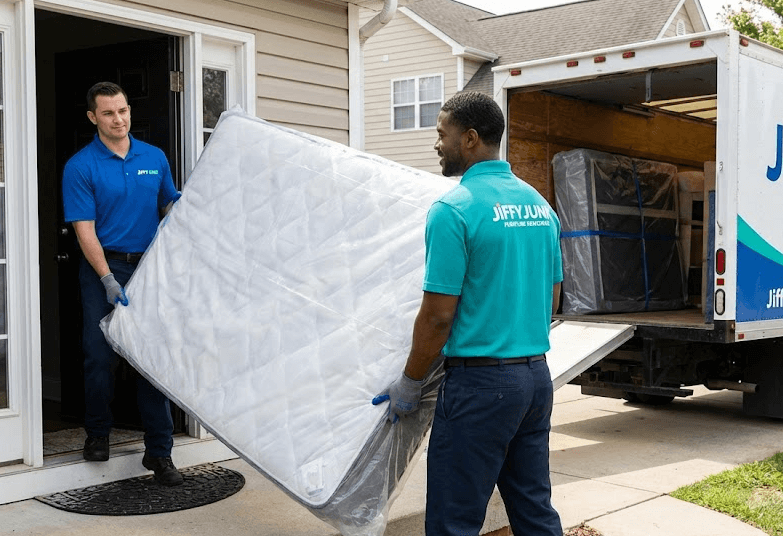
On removal day, our licensed and insured team arrives within your scheduled window fully equipped for the job. We carefully wrap and contain each piece before moving it through your home, protecting your floors and walls in the process. Once loaded, items are transported directly to appropriate disposal facilities that accept contaminated materials. We can also coordinate timing with your pest control provider if you’re scheduling removal as part of a larger treatment plan.
The entire process is handled with discretion. Our trucks are clean and professional, our team members wear uniforms rather than hazmat gear that draws attention, and we work efficiently to minimize disruption to your household.
Affordable Pricing Without Compromising Safety
The “low-cost” in bed bug furniture removal shouldn’t mean cutting corners on safety—and with Jiffy Junk, it doesn’t. We keep prices competitive by operating efficiently, not by skipping the precautions that protect your home.
Our quotes are based on the volume of items being removed, and we’ll always confirm the price before any work begins. Many customers are surprised to find that professional removal costs less than they expected, especially when factoring in the potential costs of spreading an infestation or violating local disposal regulations. We also offer flexible scheduling, including same-day and next-day appointments in most service areas, so you’re not paying premium rates simply because you need help quickly.
Why Homeowners Trust Jiffy Junk for Contaminated Furniture Removal
Dealing with bed bugs is stressful enough without worrying whether your removal company will show up on time, handle items properly, or surprise you with hidden fees. That’s why we built Jiffy Junk around a simple promise: we’re not happy until you are.
Our teams are fully licensed and insured, which means you’re protected if anything goes wrong. We serve communities nationwide, bringing consistent White Glove Treatment standards to every job regardless of location. And our commitment to transparent pricing means the quote we provide is the price you pay—period.
Beyond the logistics, we understand this is a difficult situation. Our team members are trained to work respectfully and efficiently, treating your home and belongings with care even when those belongings need to go. Whether you’re removing a single mattress or clearing multiple rooms after a severe infestation, we’re here to help you move forward.
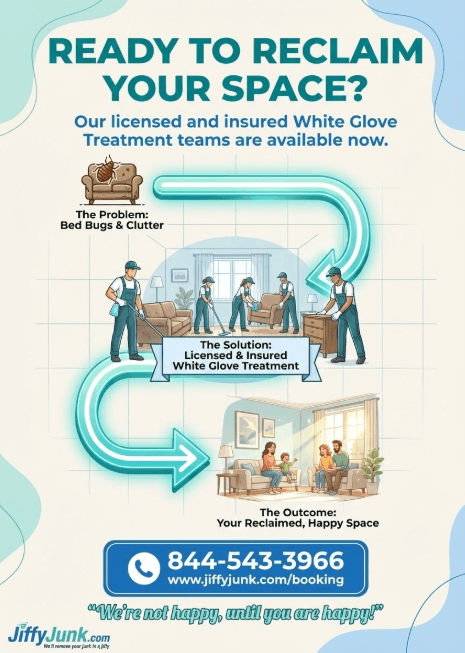
“What we’ve seen time and again is that homeowners dealing with bed bugs are already overwhelmed, so our job isn’t just removing furniture—it’s giving people confidence that the problem is being handled properly so they can focus on getting their lives back to normal.”
— Jiffy Junk Removal Team
7 Helpful Resources to Make Your Bed Bug Furniture Removal Easier
Making informed decisions about bed bug furniture removal requires access to reliable, authoritative information. The following seven resources—compiled from government agencies, university experts, and industry professionals—provide trusted guidance on this important topic.
These resources cover:
- Safe disposal practices and containment methods
- Tenant rights and landlord responsibilities
- Professional treatment and removal coordination
- Next steps for various infestation scenarios
For homeowners ready to schedule professional removal with proper containment and responsible disposal, Jiffy Junk’s licensed and insured White Glove Treatment teams are available for same-day and next-day appointments in most service areas.
1. Learn How to Safely Clear Infested Items with the EPA’s Official Guide
The U.S. Environmental Protection Agency provides straightforward, easy-to-follow guidance on containing and disposing of bed bug-infested furniture the right way. You’ll learn how to protect your neighbors and prevent spreading the situation to other areas of your home—plus when items can actually be saved instead of discarded.
Source: U.S. Environmental Protection Agency URL:https://www.epa.gov/bedbugs/do-it-yourself-bed-bug-control
2. Get Reliable Health Information You Can Trust from the CDC
When bed bugs show up, it’s natural to have questions about your family’s health and safety. The Centers for Disease Control and Prevention offers clear, medically accurate answers—from identifying bites to understanding when a reaction needs attention. This is the resource to help you separate real concerns from unnecessary worry.
Source: Centers for Disease Control and Prevention URL:https://www.cdc.gov/bed-bugs/about/index.html
3. Discover What the Professionals Recommend Through NPMA Best Practices
Here’s something that might save you money: not all infested furniture needs to go. The National Pest Management Association’s Best Practices guide explains how professionals evaluate what can be treated versus what truly needs removal. It’s a helpful resource for understanding your options before making any big decisions.
Source: National Pest Management Association URL:https://www.pestworld.org/all-things-bed-bugs/best-practices/
4. Prepare Your Home the Right Way with Purdue University’s Expert Guide
Proper preparation makes all the difference in successful bed bug treatment. Purdue University’s research-backed resource walks you through exactly what to do—step by step—to get your space ready and keep the situation from coming back. Clear instructions, no confusing jargon, just practical guidance you can follow.
Source: Purdue University Extension URL:https://extension.entm.purdue.edu/bedbugs/
5. Understand Your Rights as a Renter with This Helpful Legal Guide
If you’re renting, you shouldn’t have to navigate this situation alone—or pay for something that isn’t your responsibility. This straightforward legal resource explains what landlords are required to do, who covers treatment and removal costs, and how to protect yourself throughout the process. Knowledge is power, and this guide puts it in your hands.
Source: Nolo Legal Encyclopedia URL:https://www.nolo.com/legal-encyclopedia/landlord-responsibility-bed-bugs.html
6. Know Your Protections in Assisted Housing with HUD’s Official Guidelines
For residents in HUD-assisted properties, there are specific rules in place to protect you. This official notice from the U.S. Department of Housing and Urban Development outlines exactly what property owners must do—and what support you’re entitled to—when bed bugs are discovered. It’s important information that helps ensure you’re treated fairly.
Source: U.S. Department of Housing and Urban Development URL:https://www.hud.gov/sites/documents/11-20hsgn.pdf
7. Find Licensed, Trustworthy Professionals Through the University of Minnesota Extension
Working with qualified experts makes a real difference in getting this situation resolved properly. This university resource not only explains effective prevention and control methods but also connects you with verified, licensed pest management professionals in your area. It’s a great starting point for finding help you can count on.
Source: University of Minnesota Extension URL:https://extension.umn.edu/bed-bugs/bed-bug-prevention-and-control-home
Ready for Professional Help? We’re Here for You.
When you’ve done your research and you’re ready to have infested furniture removed safely and efficiently, Jiffy Junk is just a call away. Our licensed and insured teams specialize in handling these sensitive situations with the care and discretion you deserve—and we’ll provide an upfront quote with no hidden fees before we begin.
That’s our White Glove Treatment promise: we’re not happy until you are.
Supporting Statistics – What the Data Confirms—And What We’ve Seen Firsthand
After years of helping homeowners deal with bed bug-infested furniture, we’ve developed a clear picture of how widespread this challenge has become. The national statistics confirm what our teams encounter every day.
Bed Bugs Are a Recognized Public Health Concern
In 2002, three federal agencies—the EPA, CDC, and USDA—jointly classified bed bugs as a “pest of significant public health importance.”
Health effects include:
- Allergic reactions (mild to severe)
- Secondary skin infections
- Anxiety and insomnia
- Overall quality of life impacts
What this means for our work: We’re not just hauling away unwanted items—we’re addressing a federally recognized health concern. That’s why every job includes containment protocols and protective measures.
Source: U.S. Environmental Protection Agencyhttps://www.epa.gov/bedbugs/bed-bugs-are-public-health-pests
1 in 5 American Households Has Been Affected
According to the National Pest Management Association, 20% of Americans have experienced a bed bug infestation or know someone who has.
What we’ve observed:
- Customers often feel embarrassed or isolated when they call
- We receive calls from every type of neighborhood—urban apartments to suburban homes
- Bed bugs don’t discriminate, and neither should the stigma
When we share how common this situation is, customers often express relief. You’re far from alone.
Source: National Pest Management Associationhttps://www.pestworld.org/all-things-bed-bugs/bed-bug-facts-statistics/
Urban Areas Face 3x Higher Infestation Rates
NPMA research shows bed bug infestations are three times more common in cities than rural areas.
Contributing factors:
- Higher population density
- Apartment and multi-unit living
- Frequent movement of people and belongings
What our experience confirms: A significant portion of our calls come from apartment buildings. We’ve learned that timing matters enormously in these settings.
Why speed and containment are critical:
- Infested furniture in hallways creates spread opportunities
- Bed bugs can travel between units through walls and outlets
- The difference between containing and spreading often comes down to removal speed
That’s why we prioritize same-day scheduling and wrap items before they leave the room.
Source: National Pest Management Associationhttps://www.pestworld.org/all-things-bed-bugs/bed-bug-facts-statistics/
Only 29% of Americans Can Identify Bed Bugs
A 2025 Harris Poll revealed that fewer than 1 in 3 people can correctly identify bed bugs. Most homeowners don’t recognize infestations until they’ve already spread.
What this tells us: Many customers who contact us aren’t entirely sure what they’re dealing with. They’ve seen something concerning or had a pest professional confirm their suspicions—but they’re unsure which items are affected.
Our recommendation:
- Get a professional pest inspection before deciding what stays and what goes
- We’d rather you make an informed decision than remove furniture that could be saved
- When items clearly need to go, we’re equipped to handle them safely—often the same day
Source: National Pest Management Association & Harris Poll (April 2025)https://www.pestworld.org/news-hub/pest-articles/bed-bug-survey-results-facts/
The Bottom Line
What the numbers show:
- Bed bug infestations are common
- They’re frequently misidentified
- They spread rapidly when furniture isn’t removed properly
What our experience has taught us:
- Technical execution (containment, transport, disposal) is half the job
- The other half is understanding what families are going through
- Discretion, speed, and respect matter as much as the removal itself
Our commitment to every bed bug furniture removal:
- Show up on time within your scheduled window
- Provide honest, upfront pricing with no surprises
- Work quickly and discreetly
- Treat your home with respect—even when removing problem items
- Dispose of everything properly to prevent further spread
That’s our White Glove Treatment applied to one of the most challenging situations a homeowner can face.
Our Perspective: What We’ve Learned About Bed Bug Furniture Removal
After helping thousands of homeowners navigate bed bug infestations, we’ve come to understand something statistics alone can’t capture: this isn’t just about removing furniture—it’s about restoring peace of mind.
What the Facts Tell Us
The research we’ve shared paints a clear picture:
- Bed bugs are a recognized public health concern (EPA, CDC, USDA)
- 1 in 5 American households has been directly affected
- Urban areas face 3x higher infestation rates
- 97% of pest professionals treated bed bugs last year
- Only 29% of people can correctly identify bed bugs
These numbers are sobering. But they don’t show the relief on a customer’s face when the last infested item leaves their home—or the gratitude we hear when families can finally sleep soundly again.
Our Honest Opinion
We believe the bed bug furniture removal industry has a responsibility problem.
Too many companies treat this as just another hauling job. They show up, throw items in a truck, and drive away—often spreading the very problem they were hired to solve.
We’ve seen the aftermath:
- Neighboring apartments were infested weeks later
- Customers are calling us to fix what another company made worse
- Families are more stressed after removal than before
What Needs to Change
- Containment should be standard, not optional. Every infested item should be wrapped and sealed before moving through a home. This isn’t premium service—it’s basic responsibility.
- Speed matters more than people realize. The longer contaminated furniture sits waiting, the greater the spread. Same-day service shouldn’t be a luxury.
- Transparency builds trust. Homeowners are already stressed. Surprise fees and vague timelines make things worse. Upfront pricing should be the bare minimum.
- This work requires empathy, not just equipment. Discretion, respect, and genuine care aren’t soft skills here. They’re essential.
What We’ve Learned Firsthand
Most furniture doesn’t need to be thrown away. We’ve seen customers ready to discard entire bedroom sets when treatment could have saved them thousands. Always get a professional pest inspection first. Our job isn’t to haul away as much as possible—it’s to help you make the right call.
The emotional toll is real and underestimated. Customers often apologize to our teams, as if they’ve done something wrong. They haven’t. Bed bugs can happen to anyone, in any home, regardless of cleanliness or income. Part of our job is helping people understand that.
Proper removal is the final step in solving the problem. Pest treatment eliminates the bugs. Furniture removal eliminates the source. When either step is done poorly, the whole effort can fail. That’s why pest control professionals across the country trust us to handle the removal side correctly.
The details matter more than people expect.
- How items are wrapped
- How they’re carried through common areas
- Where they’re disposed of
- Whether trucks are cleaned between jobs
These small decisions determine whether an infestation ends with your removal—or continues spreading. We obsess over these details because we’ve seen what happens when companies don’t.
Our Commitment
On every bed bug furniture removal job, we promise to:
- Arrive on time, fully equipped, ready to work
- Provide clear, upfront pricing before we begin
- Contain and wrap all items before removal
- Work quickly and discreetly
- Dispose of materials responsibly
- Treat your home—and your situation—with respect
We call it our White Glove Treatment. For bed bug furniture removal, it means doing the job the way we’d want it done in our own homes.
Your Action Plan for Bed Bug Furniture Removal
Dealing with infested furniture can feel overwhelming. These six steps break the process into manageable actions.
Step 1: Confirm the Infestation
Before removing anything, verify you’re dealing with bed bugs.
Signs to look for:
- Small reddish-brown bugs (apple seed size)
- Tiny white eggs or pale yellow shed skins
- Dark spots on mattresses or furniture seams
- Unexplained bites in lines or clusters
Our recommendation: Contact a licensed pest control professional first. They’ll identify which items are infested and which can be saved—potentially saving you thousands in unnecessary replacement costs.
Step 2: Coordinate with Pest Control
Furniture removal and treatment work best together.
Ask your exterminator:
- Which items need removal versus treatment?
- Should removal happen before or after treatment?
- Are there specific timing requirements?
- Do neighboring units need inspection?
Apartment residents: Notify your landlord immediately and ask about building-wide protocols.
Step 3: Prepare for Removal Day
Do this:
- Clear a path from items to nearest exit
- Remove personal belongings from furniture
- Keep items in their current location
- Notify building management about elevator/common area use
Don’t do this:
- ❌ Drag furniture through the house
- ❌ Place items in hallways before pickup
- ❌ Wrap or bag items yourself
- ❌ Spray furniture with pesticides
Step 4: Schedule Your Removal
Get Affordable, Safe Bed Bug Furniture Removal You Can Count On
When you need trusted, low-cost bed bug furniture removal with proper containment and responsible disposal, Jiffy Junk’s White Glove Treatment team is ready to help. Call 844-543-3966 or book online at www.jiffyjunk.com/booking for a free, upfront quote—same-day appointments available.
FAQ on Bed Bug Furniture Removal
Answers informed by thousands of bed bug furniture removals across the country.
Q: What furniture items can be removed during bed bug furniture removal?
A: Professional removal covers virtually any infested item.
Most frequently removed:
- Mattresses and box springs (most common)
- Bed frames and headboards
- Sofas, loveseats, and sectionals
- Upholstered chairs and recliners
- Dressers, nightstands, and wooden furniture with crevices
What experience has taught us: Customers often assume everything must go. That’s rarely true.
Key insight: A pest control inspection first can save thousands in unnecessary replacement costs.
Q: How should I prepare furniture for bed bug removal?
A: What happens before arrival significantly impacts results.
Do this:
- Keep infested items exactly where they are
- Clear a path to the nearest exit
- Remove personal belongings from furniture
- Notify building management about elevator use (if applicable)
Avoid this:
- ❌ Moving furniture to other rooms (spreads infestations)
- ❌ Wrapping items yourself (professional materials required)
- ❌ Spraying with pesticides before removal
- ❌ Placing items in hallways before pickup
What we’ve learned: Containment must happen in the room—not the hallway or truck. This single detail prevents most secondary spread.
Q: Can bed bug furniture removal happen the same day?
A: Yes. Same-day and next-day appointments are available—and often make a meaningful difference.
Why speed matters:
- Every hour increases spread risk
- Delays turn single-unit problems into building-wide issues
- Pest treatments work best with coordinated removal
What we’ve observed: A 48-hour delay in apartments can be the difference between containment and widespread infestation.
When scheduling, have ready:
- Item count and sizes
- Access details (floor, elevator, parking)
- Pest control coordination needs
- Urgency indication
Q: Is bed bug furniture removal safe for other items in my home?
A: With proper containment, professional removal poses minimal risk to unaffected areas.
Standard protocols include:
- Wrapping and sealing items before leaving the room
- Protecting floors and walls during transport
- Using designated pathways
- Cleaning trucks between contaminated jobs
What to avoid:
- ❌ DIY removal without containment (highest spread risk)
- ❌ Dragging unwrapped items through living spaces
- ❌ Using general haulers unfamiliar with bed bug protocols
Field insight: The extraction path matters as much as the removal. We’ve seen new infestations in rooms that furniture simply passed through when other services “grabbed and went” without containment.
Q: How is bed bug furniture disposal handled after removal?
A: Responsible disposal is critical—and often overlooked.
Our process:
- Direct transport to facilities equipped for contaminated materials
- No curbside drop-offs or transfer station dumping
- Furniture rendered unusable to prevent scavenging
- Full compliance with local disposal regulations
Why it matters: Improper disposal doesn’t end the problem—it relocates it.
What we’ve heard too often: Infestations starting because someone picked up “free” curbside furniture.
Steps we take that many skip:
- Clean trucks between contaminated jobs
- Track disposal to proper facilities
- Never leave items where they could be taken
Our standard: The infestation ends with us—not in someone else’s home.
Schedule Bed Bug Furniture Removal
📞 Call: 844-543-3966 (844-JIFFY-JUNK)
🌐 Book Online: www.jiffyjunk.com/booking
Service includes:
- Same-day and next-day availability
- Upfront quotes, no hidden fees
- Licensed, insured, containment-equipped teams
Our promise: White Glove Treatment on every job. The infestation ends with us.