Treadmill removal typically costs between $75 and $200, and after hauling thousands of them from basements, bonus rooms, and garage corners, we’ve learned exactly why professional help is worth every penny.
Here’s what we see regularly: a 300-pound treadmill wedged in a narrow space, an owner with a sore back from the last attempt to move it, and no clear path to get it out the door. Most customers tell us they spent weeks dreading this project before calling. Donation centers won’t pick up fitness equipment, bulk trash won’t take it, and that “free treadmill” listing sat untouched for months.
Our teams at Jiffy Junk have developed efficient techniques specifically for heavy fitness equipment removal. We have also used spiral stairs, narrow passages, and odd angles, too, which would have appeared impossible–all in the service of your floors, walls, and door frames. Through our White Glove Treatment, you show us the issue of the treadmill, and we do the rest: disconnections, heavy lifting, loading, and responsible disposal by recycling or donation as far as possible.
This guide is free and will provide helpful data. No extras, no shocks, no secrets, it is simple solutions after that you realize you are back in your space without trouble.
Quick Answers
What is a treadmill removal service?
A treadmill removal service is a professional junk removal solution that handles the complete pickup, hauling, and responsible disposal of unwanted fitness equipment from your home.
What’s included:
- Removal from any location (basements, upstairs, tight spaces)
- Disconnection and careful navigation through your home
- Loading, hauling, and transportation
- Eco-friendly disposal through donation or recycling
Typical cost: $75 to $200, depending on location and accessibility
Why it matters: Treadmills weigh 200-400 pounds and pose serious injury risks when moved without proper training and equipment. After removing thousands of them, we’ve seen too many DIY attempts end in strained backs and stuck equipment.
Who uses this service:
- Homeowners upgrading or downsizing fitness equipment
- People clearing unused home gyms
- Estate cleanout situations
- Anyone with a treadmill that’s become an expensive clothes rack
The Jiffy Junk approach: Our White Glove Treatment means you point to the treadmill and we handle everything else—safely, efficiently, and responsibly. Most jobs take under an hour from arrival to completion.
Top 5 Takeaways
- Cost: $75 to $200 for professional removal. DIY rarely saves money after truck rentals, dump fees, and injury risk.
- Pricing factor: Location matters more than weight. Basement with narrow stairs = higher cost. Ground floor near the exit = lower cost.
- Eco-friendly disposal: Most treadmills don’t belong in landfills.
- Working machines → donated
- Non-working machines → recycled for steel and components
- Injury prevention: Treadmills weigh 200-400 pounds. OSHA reports that 4 out of 5 lifting injuries affect the lower back. Let professionals handle it.
- White Glove Treatment: You do nothing. We handle:
- Disconnection
- Navigation through your home
- Loading and hauling
- Responsible disposal
- Typically under one hour
Table of contents
- Quick Answers
- Top 5 Takeaways
- What Factors Influence Treadmill Removal Costs?
- What’s Included in Professional Treadmill Removal?
- How Does Professional Removal Compare to DIY Options?
- What Other Fitness Equipment Can Be Removed?
- Where Does Your Old Treadmill Go?
- How to Get an Accurate Quote
- Essential Resources for Treadmill Removal and Disposal Decisions
- 1. Evaluate Your Options with Expert Guidance from Consumer Reports
- 2. Find Certified E-Waste Recyclers Through the EPA
- 3. Locate Recycling Centers Near You with Earth911’s Search Tool
- 4. Donate Working Treadmills to The Salvation Army
- 5. Support Affordable Housing Through Habitat ReStore Donations
- 6. Get Fitness Industry Insights from Garage Gym Reviews
- 7. Learn DIY Treadmill Recycling with Earth911’s Component Guide
- Supporting Statistics: What the Numbers Confirm About Treadmill Removal
- Final Thought: Why We Believe Professional Treadmill Removal Is Worth Every Dollar
- Next Steps: How to Schedule Your Treadmill Removal
- FAQ on “Treadmill Removal Service”
- Q: How much does treadmill removal service cost?
- Q: Do I need to disconnect or move my treadmill before the removal team arrives?
- Q: What happens to my treadmill after you remove it?
- Q: Can you remove treadmills from basements, upstairs rooms, or tight spaces?
- Q: Do you remove other fitness equipment along with treadmills?
- Get Your Treadmill Removal Quote Today
What Factors Influence Treadmill Removal Costs?
Several variables determine your final price, and understanding them helps you anticipate what you’ll pay. The treadmill’s weight and size matter, but location within your home often has the biggest impact. A ground-floor treadmill near an exit costs less to remove than one buried in a finished basement with a narrow staircase.
Your geographic location has an impact on pricing as well, with labor cost and disposal varying by geographic location. The number of things you’re taking away is also a factor – adding an elliptical, old weight bench or broken exercise bike to the same appointment will usually cost less per item than doing separate pickups. Accessibility issues such as steep driveways, multiple flights of stairs or narrow doorways may need more team members which can alter the quote.
What’s Included in Professional Treadmill Removal?
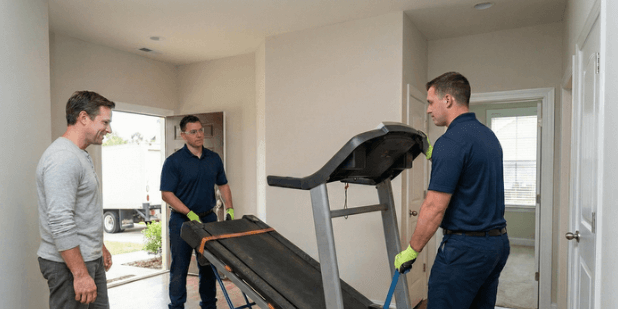
When you book with Jiffy Junk, our upfront quote covers the complete job with no surprise fees. Our team arrives at your scheduled window, assesses the situation, and confirms pricing before we touch anything. From there, we handle disconnection from power sources, careful navigation through your home using protective measures for floors and walls, loading onto our truck, and hauling everything away.
The White Glove Treatment means you don’t lift a finger. We’ve removed treadmills from every imaginable scenario—through sliding glass doors, over balcony railings with proper rigging, and yes, up those impossibly steep basement stairs. Our crews arrive equipped with the tools, dollies, and straps needed for safe removal regardless of the challenge.
How Does Professional Removal Compare to DIY Options?
Attempting treadmill removal yourself introduces risks that often outweigh any savings. Beyond the obvious physical strain and potential for injury, there’s the challenge of transportation. Most treadmills don’t fit in standard vehicles, and renting a truck adds cost and hassle. You’ll also need to find a disposal facility that accepts fitness equipment and pay any associated dump fees.
We’ve helped many customers who started the DIY route and called us midway through—sometimes with the treadmill stuck halfway down the stairs. Professional removal eliminates these headaches and typically takes our experienced teams under an hour from arrival to completion.
What Other Fitness Equipment Can Be Removed?
Treadmills represent just one piece of the home gym puzzle. Our teams regularly remove elliptical machines, stationary bikes, rowing machines, weight benches, multi-station home gyms, free weights, and even commercial-grade equipment. If you’re clearing out an entire fitness space, we can handle everything in a single appointment, which often provides better value than piecemeal removal.
Broken, outdated, or non-functional equipment poses no problem. Whether your treadmill still works or stopped running years ago, we’ll take it off your hands with the same care and efficiency.
Where Does Your Old Treadmill Go?
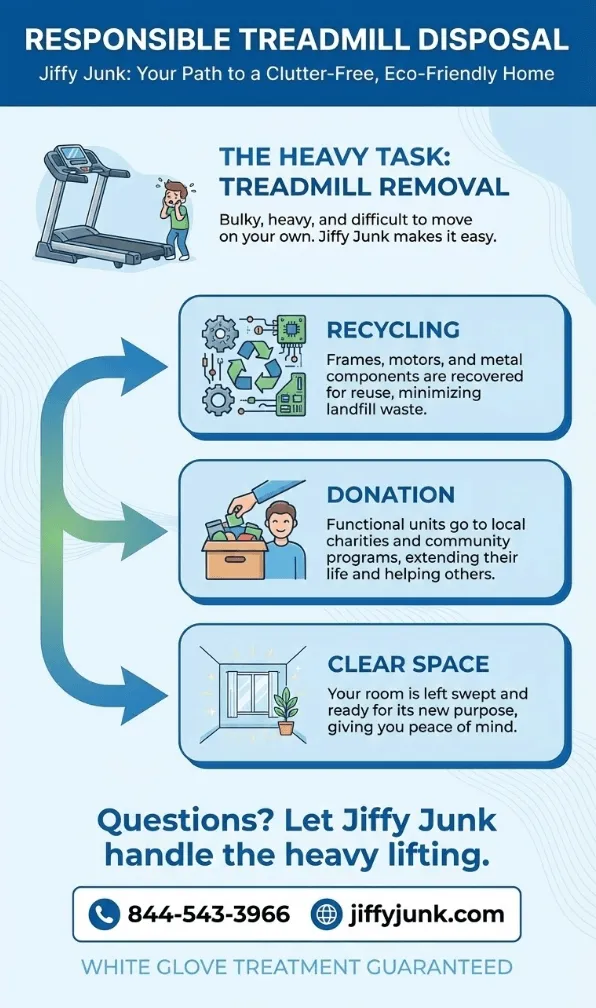
Environmental responsibility guides our disposal process. When fitness equipment remains functional, we prioritize donation to local charities, community centers, or organizations that can give it a second life. Components like metal frames and motors get recycled whenever facilities exist to process them.
We only send items to landfills as a last resort, and we handle any required disposal fees within your quoted price. You’ll know your old treadmill was disposed of responsibly, not dumped illegally or left to become someone else’s problem.
How to Get an Accurate Quote
Every treadmill removal situation differs, which is why we provide customized quotes rather than one-size-fits-all pricing. The fastest way to get your estimate is to book online or call our team directly. Share details about the equipment, its location in your home, and any access challenges, and we’ll provide transparent pricing before your appointment.
For a quicker assessment, snap a few photos showing the treadmill and the path to your nearest exit. Our team can often provide a reliable estimate from pictures alone, saving time and ensuring no surprises when we arrive.
“After removing thousands of treadmills, we’ve found that most customers aren’t just paying for muscle—they’re paying for the peace of mind that comes from watching a 300-pound problem disappear from their home in under an hour without a single scuff on their walls or strain on their back.” — Jiffy Junk Removal Team
Essential Resources for Treadmill Removal and Disposal Decisions
We know you want to make the right choice for your situation—and your budget. Whether you decide professional removal is the way to go or you’d rather explore donation and recycling options first, these seven trusted resources will help you weigh your options with confidence. We’re here to help however we can, and that includes pointing you toward the information you need to make the best decision for you.
1. Evaluate Your Options with Expert Guidance from Consumer Reports
Not sure whether to sell, donate, recycle, or call in the pros? Consumer Reports’ fitness equipment specialists walk you through how to assess your treadmill’s condition and choose the path that makes the most sense. It’s a great starting point before you decide on the next steps.
Resource: How to Get Rid of Your Old Treadmill or Other Exercise Equipment
2. Find Certified E-Waste Recyclers Through the EPA
Treadmills contain motors and electronic components that deserve responsible handling. The EPA’s official guide connects you with certified recyclers (look for R2 and e-Stewards certifications) who process fitness equipment the right way—keeping harmful materials out of landfills and recovering what can be reused.
Resource: EPA Electronics Donation and Recycling
3. Locate Recycling Centers Near You with Earth911’s Search Tool
Looking for a local facility that accepts treadmill components? Earth911’s database covers over 100,000 recycling locations nationwide. Just enter your ZIP code to find scrap metal yards, e-waste centers, and specialty recyclers in your area. It’s a quick way to explore your eco-friendly options.
Resource: Earth911 Recycling Center Search
4. Donate Working Treadmills to The Salvation Army
If your treadmill still runs well, donating it gives it a second life while supporting a great cause. The Salvation Army’s locator tool helps you find nearby donation centers and check whether pickup service is available in your area. Just make sure your equipment is clean, functional, and ready for its new home.
Resource: The Salvation Army Donation Drop-off Locator
5. Support Affordable Housing Through Habitat ReStore Donations
Habitat for Humanity ReStore locations accept gently used fitness equipment, and many offer free pickup for larger items. The best part? Your donation directly funds home-building initiatives right in your community. It’s a simple way to clear your space while making a real difference.
Resource: Habitat for Humanity ReStore Donation Guide
6. Get Fitness Industry Insights from Garage Gym Reviews
The equipment experts at Garage Gym Reviews break down your disposal options based on your treadmill’s age and condition. You’ll find helpful information on manufacturer take-back programs, component recycling, and guidance on when professional removal is your simplest path forward.
Resource: How to Dispose of a Treadmill – Garage Gym Reviews
7. Learn DIY Treadmill Recycling with Earth911’s Component Guide
Prefer a hands-on approach? Earth911 provides clear, step-by-step instructions for disassembling your treadmill and recycling individual components—metal frames, motors, running belts, wooden decks, and electronic displays. It takes some effort, but it’s a thorough way to ensure everything gets handled responsibly.
Resource: How to Recycle a Broken Treadmill – Earth911
Supporting Statistics: What the Numbers Confirm About Treadmill Removal
After years of hauling fitness equipment out of homes nationwide, we’ve seen firsthand what the data confirms. Here’s what the research says—and how it aligns with what our teams experience every day.
The Recycling Opportunity Most People Miss
The U.S. Environmental Protection Agency reports that the recycling rate for appliance materials, including ferrous metals, reached 59.8 percent in 2018. We see that potential in every treadmill we remove.
What we’ve learned on the job:
- Steel frames, motors, and metal components hold real recycling value
- Most homeowners don’t have access to proper recycling channels on their own
- Despite recycling potential, 10.5 million tons of steel still ended up in landfills that year
We’ve built relationships with local recyclers and donation centers specifically to keep the equipment we haul out of that statistic. It’s why customers tell us they feel good about calling us instead of dragging it to the curb.
Source: EPA Ferrous Metals: Material-Specific Data
The Back Injuries We Help Prevent
OSHA reports that manual materials handling is the principal source of compensable injuries in the American workforce. Four out of five of these injuries affect the lower back.
Why treadmills pose special risks:
- Average weight ranges from 200 to 400 pounds
- Awkward weight distribution makes balance difficult
- Tight corners and narrow doorways compound the challenge
- Most homeowners lack proper lifting equipment
We’ve lost count of customers who hurt themselves just trying to shift their treadmill a few inches before calling us. Our crews train specifically for these situations using proper techniques, equipment, dollies, and team coordination. When customers watch us navigate a 350-pound machine down a narrow staircase, they often say: “I’m so glad I didn’t try that myself.”
Source: OSHA Technical Manual – Section VII: Ergonomics
The Disposal Gap We’re Working to Close
The EPA reports that Americans generated 292.4 million tons of municipal solid waste in 2018. The numbers for small appliances tell a troubling story.
Small appliance disposal breakdown:
- Only 5.6% was recycled
- 75.9% ended up in landfills
- 2.2 million tons generated annually
Most people don’t know what to do with unwanted treadmills, so equipment sits in basements for years or gets dumped improperly. That’s why we’ve invested in understanding disposal options in every community we serve:
1. We know which facilities accept fitness equipment
2. We connect working machines with donation centers that want them
3. We separate recyclable components from what truly can’t be salvaged
It takes more effort than hauling everything to the dump—but it’s the right thing to do.
Source: EPA National Overview: Facts and Figures on Materials, Wastes, and Recycling
Final Thought: Why We Believe Professional Treadmill Removal Is Worth Every Dollar
After removing thousands of treadmills from homes across the country, we’ve developed a clear perspective on this service—and we think it’s worth sharing honestly.
What This Really Comes Down To
Treadmill removal isn’t complicated in theory. Disconnect it, move it out, dispose of it properly. In practice? It’s one of the most underestimated household challenges we encounter.
The $75 to $200 investment covers more than muscle:
- Experience navigating tight spaces
- Proper equipment for safe handling
- Access to recycling and donation channels
- Peace of mind watching a frustrating problem disappear in under an hour
Our Honest Take
We believe the DIY approach rarely makes sense for treadmill removal.
The math doesn’t work in your favor. Factor in truck rental, dump fees, physical toll, and hours spent on logistics—you’ve likely spent more than professional removal would have cost. And that assumes everything goes smoothly, which it rarely does with 300-pound equipment wedged in a basement.
We’ve seen too many customers who started the job themselves and called us halfway through:
- Treadmill stuck on a staircase
- Someone’s already tweaked their back
- Frustration levels through the roof
These calls cost more than if they’d contacted us first.
What Experience Has Taught Us
Every treadmill removal teaches us something. These lessons shape how we approach every job:
1. Location matters more than weight. A 250-pound treadmill on the main floor is straightforward. That same machine in a finished basement with a spiral staircase? A two-hour job requiring careful planning.
2. Most treadmills don’t belong in landfills. Working machines find new homes through donation. Non-working ones contain valuable steel and recyclable components. True landfill-only items represent a small fraction of what we haul.
3. People wait too long to call. The average treadmill we remove has been sitting unused for two to three years—first a clothes rack, then an eyesore, then a source of guilt. By the time customers reach out, they’re not just ready. They’re relieved.
The Bigger Picture
How you dispose of something matters as much as the decision to let it go.
Treadmills represent significant resources—steel, electronics, and manufacturing energy. When we remove one, we see it as our responsibility to honor that investment:
- Recycling when possible
- Donating when appropriate
- Landfilling only when no other option exists
It’s more work than hauling everything to the dump. It’s also work we’re proud to do.
Our Recommendation
If you’re staring at an old treadmill wondering what to do next, stop overthinking it.
Get a quote. Compare it to the true cost of handling it yourself. Make the decision that respects both your time and your back.
We’re not happy until you are—and nothing makes us happier than watching a customer reclaim their space while knowing their equipment was handled the right way.
Next Steps: How to Schedule Your Treadmill Removal
Ready to reclaim your space? Here’s exactly what to do next.
Three Ways to Get Started
1. Book Online — Visit jiffyjunk.com/booking to schedule in 60 seconds
2. Call Us — Reach our team at 844-543-3966 (844-JIFFY-JUNK)
3. Request a Quote — Get a no-obligation estimate at jiffyjunk.com
What to Have Ready
For an accurate quote, it helps to know:
- Location — Which floor is the treadmill on?
- Access — Any narrow stairs, tight doorways, or long hallways?
- Additional items — Other equipment or junk to remove?
- Condition — Working, broken, or unknown?
Pro tip: Snap a few photos of the treadmill and the path to your exit. We can often quote from pictures alone.
What Happens After You Book
| Step | What to Expect |
| 1 | Receive appointment confirmation |
| 2 | Get a reminder the day before |
| 3 | Team calls 15-30 minutes before arrival |
| 4 | On-site quote confirmed before work begins |
| 5 | We handle disconnection and heavy lifting |
| 6 | Area tidied, payment collected |
| 7 | Equipment goes to donation, recycling, or proper disposal |
Total time: Typically under an hour from arrival to completion.
Why Act Now?
That treadmill isn’t getting lighter. Every week it sits there means:
- Lost space you could be using
- A nagging item on your to-do list
- Ongoing risk of injury if you try moving it yourself
Most customers tell us they wish they’d called sooner.
FAQ on “Treadmill Removal Service”
Q: How much does treadmill removal service cost?
A: Based on thousands of treadmills we’ve removed, most jobs fall between $75 and $200.
What affects your price:
- Location within your home (basement vs. ground floor)
- Accessibility challenges (narrow stairs, tight doorways)
- Treadmill size and weight
- Your geographic area
What we’ve learned: Location matters more than the treadmill itself. A 300-pound machine near an exit costs less than a 200-pound unit in a basement with a narrow staircase.
Our promise: The upfront quote we give you is the price you pay. No surprises. No hidden fees.
Q: Do I need to disconnect or move my treadmill before the removal team arrives?
A: Please don’t. Leave it exactly where it is.
Why we ask this: We’ve responded to too many calls from customers who hurt themselves trying to “help” by shifting the treadmill before we arrive. One tweaked back later, they’re in more pain than when they started.
What our crews handle:
- Disconnecting power sources
- Protecting your walls and floors
- Navigating tight corners and stairs
- Loading onto our truck
Your only job: Point to what needs to go. That’s White Glove Treatment.
Q: What happens to my treadmill after you remove it?
A: This is something we genuinely care about. Here’s our approach:
For working treadmills:
- Connect with local charities and donation centers
- Partner with community fitness programs
- A place with families who can’t afford new equipment
- We’ve donated to youth organizations, senior centers, and schools
For non-working treadmills:
- Separate recyclable components (steel frames, motors, metal parts)
- Route to recycling facilities, we’ve built relationships with
- Recover valuable materials instead of burying them
Landfills? Always our last resort—and rarely needed. Most treadmills have value to someone, somewhere.
Q: Can you remove treadmills from basements, upstairs rooms, or tight spaces?
A: We specialize in the jobs other people give up on.
Spaces we’ve successfully navigated:
- Basements with steep stairs
- Second-floor bonus rooms
- Spiral staircases
- Doorways that seem too narrow
- Attics accessed only by pull-down ladders
One job that sticks with us: A commercial-grade treadmill in an attic with only ladder access. Creative problem-solving required—got it out without a scratch on the walls.
How we prepare:
- Teams train specifically for challenging scenarios
- Professional dollies and moving straps
- Protective materials for floors and walls
- Upfront planning based on the details you provide
The bottom line: Difficult locations may affect timing and pricing, but there’s rarely a situation we haven’t seen before.
Q: Do you remove other fitness equipment along with treadmills?
A: All the time—and we recommend it.
Equipment we regularly remove:
- Elliptical machines
- Stationary bikes
- Rowing machines
- Weight benches
- Full home gym systems
- Free weights
- Commercial-grade equipment
What we’ve noticed: Treadmills are rarely alone. They’re usually surrounded by other equipment that stopped getting used around the same time.
Why bundling makes sense:
- Better per-item value than separate pickups
- Clear the entire space in one visit
- Transform a cluttered “gym” back into a functional room
Our advice: Tell us what else needs to go when you book. We’ll take care of it together.
Get Your Treadmill Removal Quote Today
Now that you know what professional treadmill removal costs and what’s included, there’s only one thing left to do—schedule your pickup and let us handle the heavy lifting. Call 844-543-3966 or book online to get your free, no-obligation quote and reclaim your space without the hassle.