How Big Is a 40-Cubic-Yard Dumpster? A Look at Size Dimensions, Capacity, and Rental Cost to Help You Decide If It’s Right for You
A 40 cubic yard dumpster holds roughly 12 pickup truck loads of material—but in our experience, fewer than 20% of residential projects actually need one this large. We’ve seen customers rent the biggest container available “just to be safe,” only to pay for capacity they never use.
After thousands of cleanouts and construction hauls, we’ve found the 40-yarder hits the sweet spot for major demolitions, full roof tear-offs, and commercial buildouts. For anything smaller, you’re likely overspending. This guide covers exact dimensions, real-world capacity, current rental costs, and the project types where this size genuinely makes sense—based on what we see work every day on job sites, not just manufacturer specs.
TL;DR Quick Answers
40 Yard Dumpster
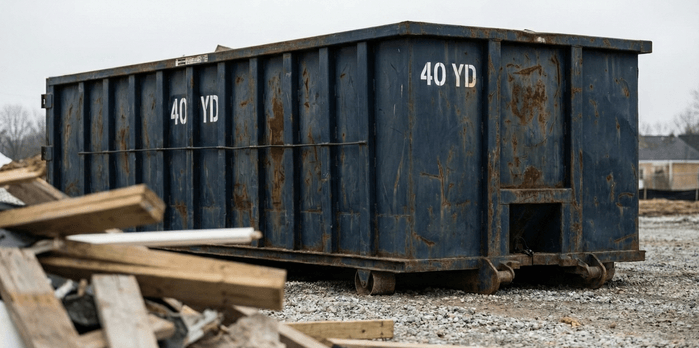
A 40-yard dumpster is the largest standard roll-off container available for rental. It measures approximately 22 feet long × 8 feet wide × 8 feet tall and holds roughly 12 pickup truck loads of material.
Key facts:
- Capacity: 40 cubic yards (230–250 trash bags)
- Weight allowance: Typically 4–6 tons
- Rental cost: $500–$900, depending on location and debris type
- Rental period: Usually 7–14 days
Best suited for:
- Major demolitions and whole-house renovations
- Large roof tear-offs (homes over 3,000 sq. ft.)
- Estate cleanouts with entire households of belongings
- Commercial buildouts and construction projects
From our experience: Fewer than 20% of residential projects actually need a 40-yarder. It’s built for big jobs generating debris continuously over a week or more. For smaller projects, a 20 or 30-yard container often does the job at a lower cost.
Top 5 Takeaways
- Size: 22 ft × 8 ft × 8 ft. Holds 12 pickup loads. 4–6 ton weight limit.
- Most don’t need one: Fewer than 20% of residential projects require this size. Smaller containers often work—and cost less.
- Weight fills faster than space: Concrete and shingles hit limits before the container looks full.
- Plan ahead: Permits take a week. Remove paint, batteries, and chemicals before delivery.
- Cost: $500–$900. No hidden fees.
Table of Contents
- How Big Is a 40-Cubic-Yard Dumpster? A Look at Size Dimensions, Capacity, and Rental Cost to Help You Decide If It’s Right for You
- TL;DR Quick Answers
- Top 5 Takeaways
- 40 Cubic Yard Dumpster Dimensions: Exact Measurements
- What Can a 40 Yard Dumpster Hold?
- 40 Yard Dumpster Rental Cost: What to Expect
- Is a 40-Cubic-Yard Dumpster Right for Your Project?
- Essential Resources to Help You Prepare for Your 40 Yard Dumpster Rental
- Supporting Statistics
- Final Thoughts: Is the 40-Cubic-Yard Dumpster Worth It?
- Frequently Asked Questions
- Ready to Find Out If a 40 Yard Dumpster Is Right for Your Project?
40 Cubic Yard Dumpster Dimensions: Exact Measurements
A standard 40 cubic yard dumpster measures approximately 22 feet long, 8 feet wide, and 8 feet tall. That footprint covers roughly the same ground space as two standard parking spots placed end-to-end.
We’ve found placement is the greatest problem here, as to the grave with this size. You’ll need a flat, accessible area with sufficient overhead clearance to allow delivery, and our drivers often have to evaluate tight driveways or low-hanging utility lines before drop-off. Most municipalities require permits for placement in the street, so it is always a good idea to check the requirements before booking.
The 8-foot sidewalls are another consideration. Loading heavy materials like concrete or roofing shingles to that height requires equipment or careful planning. For safety and efficiency, many of our commercial clients use a walk-in door on one end for wheeling debris directly inside.
What Can a 40 Yard Dumpster Hold?
At 40 cubic yards, this container holds the equivalent of approximately 12 full-size pickup truck loads or around 200–250 standard trash bags of uncompacted material.
In practical terms, we regularly see 40-yarders handle full roof replacements on homes over 3,000 square feet, complete kitchen-and-bathroom gut renovations, whole-house cleanouts with furniture and appliances, single-story home demolitions, and large commercial office buildouts. The key factor is material type—bulky but lightweight items like furniture fill the space quickly, while dense materials like concrete or dirt hit weight limits long before capacity limits.
Most 40 cubic yard rentals carry a weight allowance between 4 and 6 tons, depending on your location and disposal facility. We always clarify weight limits upfront because overages add cost, and customers hauling construction debris need to plan accordingly.
40 Yard Dumpster Rental Cost: What to Expect
Rental rates for a 40 cubic yard dumpster typically range from $500 to $900, though pricing varies based on your location, rental duration, debris type, and local disposal fees.
The following factors have the most impact on the end price: the cost of landfill tipping in your locality, the nature of the material you are disposing of (mixed construction waste is expensive to dispose of compared to clean concrete or yard waste), and the duration of time you require the container. Majorities of regular rentals have a period of 7-14 days, which can be extended.
In case your project may produce any dangerous substances, such as paint, batteries, or some electronic equipment, then we need to know about these materials early, as they will need special disposal and can not fit in a general dumpster.
Is a 40-Cubic-Yard Dumpster Right for Your Project?
This is the right choice when your project generates high-volume debris over a period—think major renovations, new construction sites, or large-scale property cleanouts.
Based on what we see daily, this size works best for demolition projects removing walls, flooring, and fixtures across multiple rooms, roof tear-offs on larger homes or commercial buildings, estate cleanouts involving an entire household of furniture and belongings, commercial renovation or tenant buildouts, and storm damage cleanup with significant structural debris.
When you have a smaller project like a single room remodel, garage cleanout, or small landscaping project, then a 20 or 30-cubic-yard dumpster will do, and it is usually cheaper. We have discovered that picking a smaller size and scheduling a second pick up in case of necessity is usually cheaper than not using the capacity.
Not sure which size fits? Send us a few photos of what you’re removing, and we’ll recommend the most cost-effective option based on similar jobs we’ve completed.
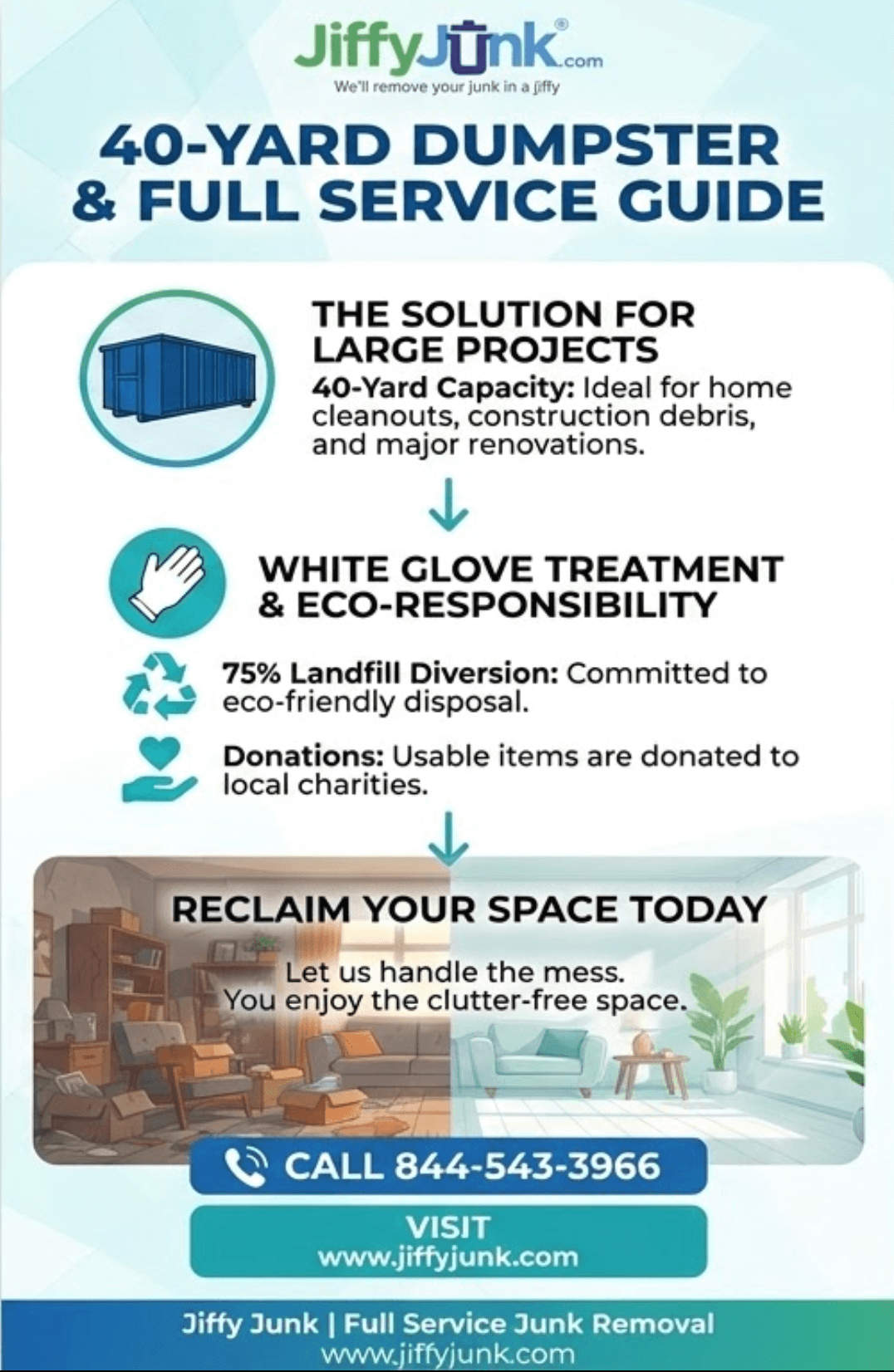
“After hauling thousands of loads, we’ve found that about 8 out of 10 customers who think they need a 40-yarder actually do better with a 30—the money saved on the smaller container usually covers a second pickup if they end up needing it.” -Jiffy Junk Team
Essential Resources to Help You Prepare for Your 40 Yard Dumpster Rental
We want your project to go smoothly from start to finish. Over the years, we’ve found that customers who review these resources before their rental avoid surprises and save money. Here are seven trusted guides we recommend.
1. Learn What Materials Need Special Handling
Resource: EPA Household Hazardous Waste Guide
Items like paint, batteries, and household chemicals can’t go in a standard dumpster—but you probably have some in your garage or basement right now. The EPA walks you through which products are restricted and helps you find proper disposal options nearby.
Quick tip: Check this list before you start loading. It takes just a few minutes and helps you avoid unexpected fees.
Source: U.S. Environmental Protection Agency
https://www.epa.gov/hw/household-hazardous-waste-hhw
2. Understand Recycling Requirements for Construction Debris
Resource: EPA Sustainable Management of Construction and Demolition Materials
Major renovations and demolitions generate a lot of material. This EPA guide explains recycling best practices, state-specific requirements, and eco-friendly disposal options for construction debris.
Quick tip: Many areas now require recycling a portion of C&D materials. We’re committed to donating and recycling whenever possible—this resource helps you do the same.
Source: U.S. Environmental Protection Agency
https://www.epa.gov/smm/sustainable-management-construction-and-demolition-materials
3. Locate Recycling and Disposal Facilities Near You
Resource: Earth911 Recycling Locator
Some items need to go somewhere other than a dumpster. Earth911 maintains the largest recycling database in North America—just enter your ZIP code and the material type to find drop-off locations for batteries, electronics, paint, and more.
Quick tip: A quick search before your project starts helps you set aside restricted items and dispose of them responsibly.
Source: Earth911
4. Donate Usable Items Instead of Tossing Them
Resource: Habitat for Humanity ReStore Donation Guide
Furniture, working appliances, cabinets, and building materials in good condition deserve a second life. Habitat ReStores accept these items and offer free pickup in most areas—keeping usable goods out of landfills while supporting affordable housing.
Quick tip: Before your dumpster arrives, set aside anything that’s still in good shape. Donating first means less to haul and more impact in your community.
Source: Habitat for Humanity
https://www.habitat.org/restores/donate-goods
Supporting Statistics
After a decade of hauling debris, we’ve learned what customers actually face on large projects. These EPA statistics confirm what we see every day on job sites.
600 Million Tons of C&D Debris Generated Annually
The EPA estimates 600 million tons of construction and demolition debris were generated in the U.S. in 2018. That’s more than double all household trash combined.
What we’ve seen firsthand:
- A single kitchen gut-job can fill a 20-yard container
- Full-house renovations generate far more debris than most customers expect
- Demolition accounts for over 90% of all C&D waste
- Volume adds up fast—the 40-yard dumpster exists for a reason
Bottom line: Understanding debris scale helps you choose the right container from the start.
Source: U.S. Environmental Protection Agency
75%+ of C&D Materials Now Diverted from Landfills
EPA data shows over 455 million tons of construction debris were recycled or reused in 2018. Less than 145 million tons went to landfills—a diversion rate exceeding 75%.
Why this matters to us:
- We sort materials after every pickup
- We partner with recycling facilities and donation centers
- Concrete, metals, wood, and reusable items get a second life
- Customers choose us because they don’t want everything buried in a landfill
Our commitment: Environmental responsibility isn’t a tagline. It’s how our crews operate on every job.
Source: U.S. Environmental Protection Agency
https://www.epa.gov/smm/sustainable-management-construction-and-demolition-materials
Up to 100 Pounds of Hazardous Waste Per Household
The EPA reports the average household generates over 20 pounds of hazardous waste annually. As much as 100 pounds can accumulate in garages, basements, and sheds over time.
What we find on almost every cleanout:
- Old paint cans
- Half-empty pesticide bottles
- Automotive fluids and motor oil
- Batteries and cleaning chemicals
Our advice before your dumpster arrives:
- Walk through your garage, basement, and storage areas
- Set aside anything from under sinks or garage cabinets
- Contact your local household hazardous waste program
- Dispose of restricted items separately to avoid delays
Source: U.S. Environmental Protection Agency
https://archive.epa.gov/region9/waste/archive/web/html/house.html
Final Thoughts: Is the 40-Cubic-Yard Dumpster Worth It?
After hauling thousands of loads, here’s our honest take.
The Quick Summary
The 40-yard dumpster is the largest standard rental container:
- Dimensions: 22 feet long × 8 feet wide × 8 feet tall
- Capacity: Approximately 12 pickup truck loads
- Weight allowance: Typically 4–6 tons
- Best for: Major projects generating debris over a week or more
When the 40-Yarder Makes Sense
Yes, rent the 40-yard for:
- Major demolitions and whole-house gut renovations
- Full roof tear-offs on larger homes
- Estate cleanouts with entire households of belongings
- Commercial buildouts and tenant improvements
- Storm damage with significant structural debris
No, consider a smaller size for:
- Single-room remodels
- Garage or basement cleanouts
- Standard landscaping projects
- Smaller residential renovations
Our Honest Opinion
Most customers don’t need the biggest dumpster available.
In our experience, fewer than 20% of residential projects actually require a 40-yarder. We’ve watched people rent the largest size “just to be safe”—then pay for capacity they never use.
The math we share with customers:
- A 30-yard container costs less upfront
- If you fill it and need a second haul, the combined cost often beats an oversized rental
- You avoid paying for space
But when you need it, you need it. Large-scale demolitions and multi-week construction projects can grind to a halt with an undersized container. For those jobs, the extra capacity isn’t a luxury—it’s a necessity.
Three Things We Wish Every Customer Knew
- Material type matters more than size. Dense debris like concrete and shingles hits weight limits before filling the space. Plan for weight, not just volume.
- Permits take time. Street placement usually requires a permit. Apply at least one week before delivery to avoid delays.
- Donation saves money and does good. Furniture, working appliances, and reusable materials don’t belong in a dumpster. Call your local Habitat ReStore first.
Our Commitment
At Jiffy Junk, we believe in:
- Transparent pricing with no hidden fees
- Environmental responsibility on every job
- The White Glove Treatment from start to finish
- Honest recommendations—not upsells
Not sure which size fits? Send us photos of what you’re removing. We’ll recommend the right container based on similar jobs we’ve completed.
No pressure. No guesswork. Just honest guidance.
Because we’re not happy until you are.
Frequently Asked Questions
Q: What are the dimensions of a 40-yard dumpster?
A: A standard 40 cubic yard dumpster measures approximately 22 feet long × 8 feet wide × 8 feet tall. That’s roughly two parking spaces end-to-end.
What our drivers check before every delivery:
- Overhead clearance for branches and utility lines
- Flat, stable placement surface
- Turning radius for the delivery truck
- Clear path without parked cars or obstacles
From experience: The 8-foot height catches most customers off guard. Loading heavy materials to that height takes equipment or careful planning. We’ve rescheduled deliveries over a single low-hanging wire. Walk through your placement area before booking.
Q: How much does a 40-yard dumpster hold?
A: A 40 cubic yard dumpster holds approximately:
- 12 pickup truck loads of material
- 230–250 trash bags (uncompacted)
- 4–6 tons by weight (typical allowance)
What we’ve learned after years of watching customers load:
Volume and weight are different. We’ve seen containers hit weight limits at half capacity with concrete inside. We’ve also seen whole-house cleanouts max out volume without touching the weight cap.
Projects that fill a 40-yarder:
- Whole-house cleanouts with furniture and appliances
- Roof tear-offs on homes over 3,000 sq. ft.
- Full gut renovations across multiple rooms
- Commercial buildouts generate debris over weeks
Pro tip from our crews: Break down bulky items. Fill gaps with smaller debris. Strategic loading fits 15–20% more material.
Q: How much does it cost to rent a 40-yard dumpster?
A: Rental rates typically range from $500 to $900. Several factors affect your final price.
What drives cost:
| Factor | Impact |
| Location | Landfill fees vary by region |
| Debris type | Mixed waste costs more than clean loads |
| Weight allowance | Usually, 4–6 tons are included |
| Rental duration | Standard 7–14 days; extensions available |
What we’ve found saves money:
- Be upfront about debris type—surprises at the landfill become surprises on your invoice
- Separate materials when possible
- Choose the right size instead of “going big just in case.”
Our pricing: All-inclusive. Delivery, pickup, disposal, and weight allowance included. No hidden fees. The quote we give is the price you pay.
Q: What can and cannot go in a 40-yard dumpster?
A: Most construction debris and household items are accepted. But after a decade of cleanouts, we know exactly what shows up on almost every job.
Accepted materials:
- Drywall, lumber, plywood, flooring
- Furniture, mattresses, household items
- Appliances (fluids drained)
- Roofing shingles, siding, gutters
- Cabinets, countertops, fixtures
Prohibited materials:
- Paint cans and stains
- Batteries (all types)
- Pesticides, chemicals, solvents
- Refrigerators and AC units with Freon
- Automotive fluids and propane tanks
- Electronics and medical waste
What we find in nearly every cleanout:
Old paint. Batteries. Half-empty chemical bottles. These items sit in garages for years until a big project brings them to the surface.
Our advice:
- Walk through storage areas before your container arrives
- Set aside anything from under sinks or garage shelves
- Contact your local household hazardous waste program
- Dispose of restricted items separately
This prevents delays, avoids fees, and keeps hazardous materials out of landfills.
Q: Do I need a permit for a 40-yard dumpster?
A: It depends on the placement location. In our experience, this is the most overlooked step in project planning.
General rule:
- Private driveway or yard: Usually, no permit is required
- Public street or sidewalk: Almost always requires a permit
What we’ve learned across different municipalities:
- Requirements vary by city—sometimes by neighborhood
- Processing takes one to two weeks
- Fees typically run $25–$150
- Restrictions may apply near hydrants, crosswalks, or intersections
- HOAs often have additional rules
Steps we recommend:
- Call your local public works department before booking
- Apply at least one week before delivery
- Ask specifically about 40-yard container restrictions
- Check HOA requirements if applicable
- Keep the permit accessible on-site
Ready to Find Out If a 40 Yard Dumpster Is Right for Your Project?
Now that you know the dimensions, capacity, and cost, the next step is simple. Click or tap here to get a free quote from Jiffy Junk—or send us photos of your project, and we’ll recommend the right size for the job.