What Junk Removal Companies Won’t Take: A Complete List of Prohibited Items and Hazardous Materials They Cannot Haul Away and What to Do Instead
You’re ready to reclaim a garage, empty out a basement, or clear a loved one’s estate — and before you book a truck, you want to make sure your items actually qualify for pickup. Smart move. Most junk removal companies, Jiffy Junk included, will haul just about anything non-hazardous that two people can safely lift. But there’s a short, important list of items we can’t take, and knowing it up front saves you time, money, and a rescheduled pickup. This guide gives you the full list, the reason behind every restriction, and a safe alternative for each category — so you book once, we haul once, and you walk back into a clutter-free space without surprises.
TL;DR Quick Answers
What Junk Removal Companies Won’t Take
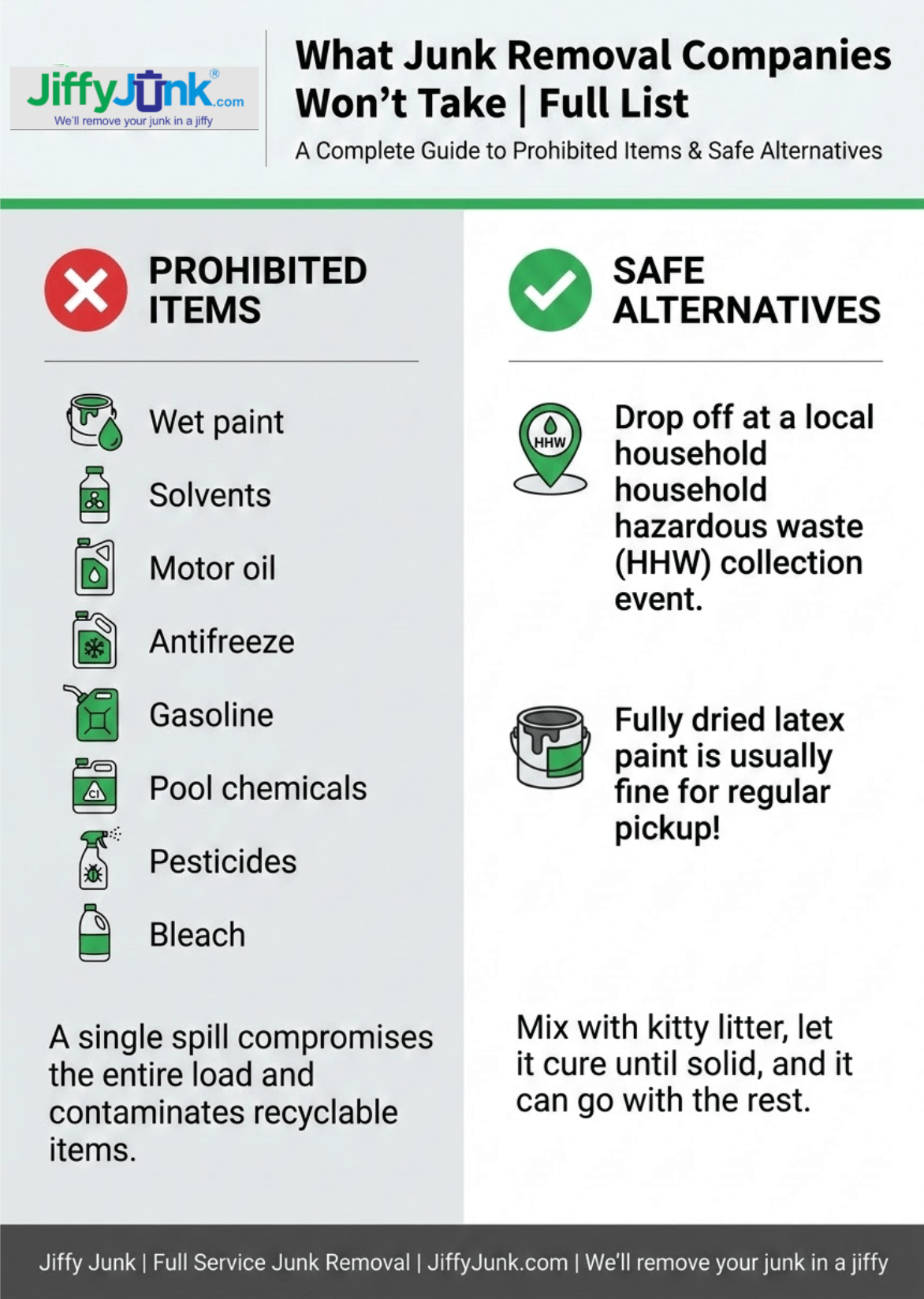
Junk removal companies won’t take hazardous waste (wet paint, solvents, motor oil, gasoline, pesticides), pressurized containers (propane tanks, helium tanks, fire extinguishers), ammunition and fireworks, medical waste (sharps, pharmaceuticals, biohazard materials), asbestos, lead-painted materials, mold-damaged items, appliances with untreated refrigerants, loose lithium-ion batteries, CRT televisions, tires, and anything too heavy for a two-person lift.
Every refused category has a safer, legal path forward — usually a local household hazardous waste (HHW) collection event, a manufacturer or retailer take-back program, a certified abatement contractor, or, in some cases, a dumpster rental sized for heavy debris.
Top 5 Takeaways
- Hazardous materials top every hauler’s “no” list. Wet paint, chemicals, gasoline, pesticides, and solvents can’t ride in a truck carrying other items destined for donation or recycling — one spill compromises the entire load.
- Pressurized, biohazardous, and regulated items require specialists. Propane tanks, sharps, asbestos, and lead paint aren’t a hauling problem — they’re a public-safety and compliance problem. Federal law draws the line, not us.
- Appliance refrigerants have to come out first. Once your fridge, freezer, or window AC is certified refrigerant-free by a licensed technician, it works like any other appliance.
- Weight and lift limits are real. If two crew members can’t safely lift it, most haulers won’t take it. For concrete, large safes, or oversized yard debris, a dumpster rental is the better fit.
- Every refused item has a safe, legal alternative. HHW events, retailer take-back programs, certified contractors, and specialty recyclers cover nearly every scenario we can’t haul ourselves.
Table of Contents
- What Junk Removal Companies Won’t Take: A Complete List of Prohibited Items and Hazardous Materials They Cannot Haul Away and What to Do Instead
- TL;DR Quick Answers
- Top 5 Takeaways
- Why Junk Removal Companies Can’t Take Everything
- The Most Commonly Refused Items (Across Every Hauler, Including Ours)
- The Good News — Most of What You Want Gone, We Can Haul
- Essential Resources On What Junk Removal Companies Won’t Take
- 1. Find A Local Household Hazardous Waste Collection Program
- 2. Understand the Federal Rules on Medical & Biohazard Waste
- 3. Drop Off Any Battery, Free, At A Site Near You
- 4. Recycle An Old Appliance Responsibly (Often Free)
- 5. Get Rid of Old Prescriptions Safely
- 6. Dispose Of Home-Use Sharps Without Risk
- 7. Handle Propane Tanks & Fire Extinguishers The Right Way
- Supporting Statistics
- Final Thoughts & Opinion
- Frequently Asked Questions
- Q: Will Jiffy Junk take old paint cans?
- Q: Can you remove a refrigerator or freezer?
- Q: What about lithium-ion batteries?
- Q: Do you take tires?
- Q: What if I have asbestos in my basement or attic?
- Q: How do I know for sure if my items qualify before I book?
- Q: What happens to the items Jiffy Junk does haul away?
- Book With Confidence Today
Why Junk Removal Companies Can’t Take Everything
The list of items haulers won’t touch is longer than most homeowners expect — and it’s not arbitrary. In our experience running crews across the country since 2014, refusals come down to four reasons, and they’re the same four reasons at every reputable company in the industry.
- Legal and regulatory. The Environmental Protection Agency, state environmental agencies, and local landfills all set rules on what can be transported, landfilled, or incinerated. A reputable hauler follows them.
- Crew and customer safety. Pressurized containers can rupture, sharps can puncture gloves, and lithium-ion batteries can ignite in a compacting truck bed. We’re not willing to put our crews — or your neighbors — at risk.
- Environmental responsibility. Jiffy Junk donates or recycles as much as possible on every job. One leaking paint can in the truck contaminates everything else in the load, sending items to the landfill that would otherwise have gone to a donation center.
- Truck and lift logistics. Dump-truck beds have weight caps. Two-person crews have safe-lift limits. Concrete, bricks, and oversized safes usually need a specialty hauler or a dumpster.
The Most Commonly Refused Items (Across Every Hauler, Including Ours)
Here’s the complete list, organized by category. The single biggest bucket is hazardous waste — household products that are flammable, corrosive, reactive, or toxic. Those items sit at the top of every hauler’s restricted list for the same reason: federal law and landfill acceptance criteria put them there.
Hazardous Household Chemicals
Items we can’t take: wet paint, paint thinner, solvents, motor oil, antifreeze, brake fluid, gasoline, kerosene, pool chemicals, pesticides, herbicides, fertilizer, bleach, ammonia, drain cleaner, oven cleaner, and pressurized aerosol cans.
What to do instead: drop these off at a local household hazardous waste (HHW) collection event. Good news — fully dried latex paint is usually fine for regular pickup. Mix the leftover paint with kitty litter or a paint hardener, let it cure for 24 to 48 hours, and then the cans go out with the rest. For solvents like paint thinner, nail polish remover, and acetone specifically, our guide on how to safely dispose of acetone at home walks through the evaporation, absorption, and drop-off methods that actually work.
Pressurized, Combustible & Explosive Items
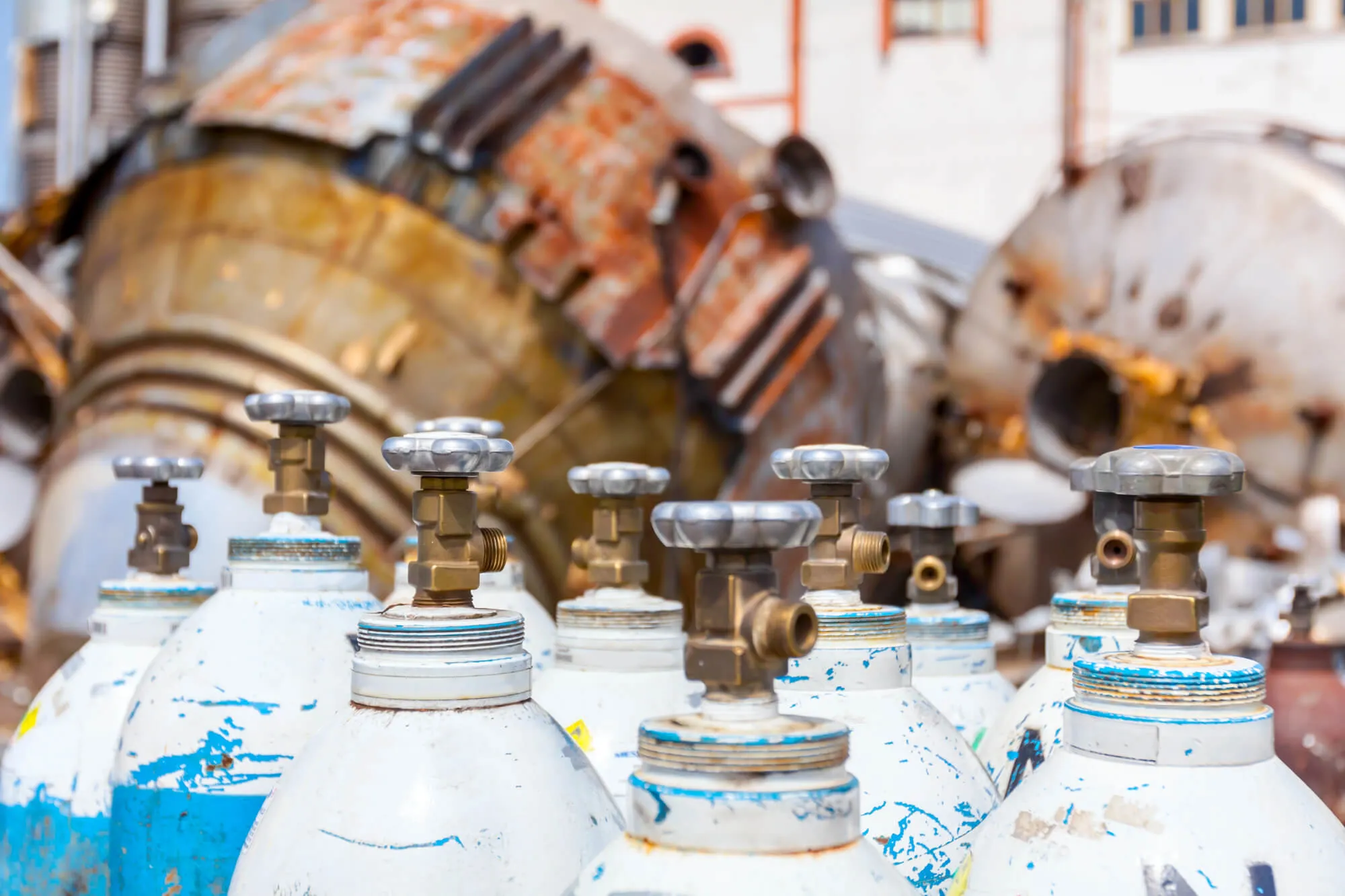
Items we can’t take: propane tanks, helium tanks, oxygen tanks, fire extinguishers, ammunition, fireworks, gunpowder, and road flares.
What to do instead: propane retailers take old tanks; most fire departments and police stations accept ammunition and flares; local hardware stores often offer fire-extinguisher exchange programs.
Medical Waste & Biohazard Materials
Items we can’t take: sharps (needles, lancets, syringes), prescription medications, used bandages with bodily fluids, home-dialysis waste, or anything blood-contaminated.
What to do instead: sharps mail-back programs, pharmacy drop-off kiosks, and DEA Drug Take Back events handle these items safely. For regular medical-waste generators, a licensed medical-waste contractor is the right partner.
Asbestos, Lead Paint & Mold-Contaminated Materials
Items we can’t take: suspected asbestos-containing insulation or ceiling tiles, lead-painted trim or windows from pre-1978 structures, and visibly mold-damaged drywall or carpet.
What to do instead: hire a certified abatement contractor for remediation. Once the hazardous portion is handled, we’re happy to haul the clean debris that’s left behind.
Appliances With Untreated Refrigerants
Items we can’t take as-is: older refrigerators, freezers, window AC units, and dehumidifiers that still contain refrigerant and haven’t been evacuated by an EPA-certified technician.
What to do instead: many utility companies offer free refrigerator pickup with a rebate. Once the unit has been properly evacuated and tagged, we’ll haul it like any other appliance. For a deeper breakdown of utility rebate programs, retailer haul-away policies, and what to expect on pickup day, see our full guide to fridge pickup, removal, haul-away, and disposal.
E-Waste With Restricted Components
Items we can’t take in most markets: CRT televisions and monitors, loose lithium-ion batteries (phone, laptop, power tool, e-bike), lead-acid car batteries, fluorescent tubes, CFL bulbs, and mercury thermometers.
What to do instead: retailer take-back programs at Best Buy, Staples, Home Depot, and Lowe’s; dedicated battery drop-off bins; and county e-waste collection events cover nearly every case. For a full rundown on lead-acid car batteries, lithium-ion fire risks, and where to drop off each type, see our guide to how to dispose of and recycle old batteries near me.
Tires
Items we can’t take: passenger tires, truck tires, and off-road tires — with or without rims.
What to do instead: when you buy new tires, your tire shop will almost always recycle the old ones for a small per-tire fee. Many counties also host tire amnesty days throughout the year.
Heavy, Dense, or Over-Limit Items
Items we can’t take with a standard crew: concrete, bricks, large stone, tree stumps, bulk soil, safes beyond a two-person lift, and industrial machinery.
What to do instead: for weight-heavy debris, a dumpster rental sized for the job is usually faster and cheaper than a standard pickup. Oversized single items may need a specialty mover.
The Good News — Most of What You Want Gone, We Can Haul
Here’s the part worth remembering: the list of items we can take is far longer than the list we can’t. If it’s not on the prohibited list above, there’s a strong chance it fits inside our full list of junk removal services. That includes furniture, mattresses, most electronics, properly evacuated appliances, yard waste (non-bulk), non-hazardous construction debris, estate-cleanout contents, hoarding-cleanout contents, office furniture, and just about everything you’d find in an average attic, basement, or garage.
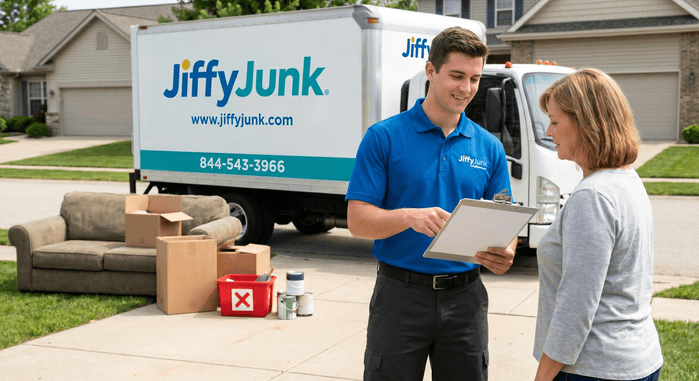
When you’re not sure, you don’t have to guess. Our Free One-Click Virtual Estimate connects you with a live Jiffy Junk agent by video call in under a minute. Walk us through your items, and we’ll confirm exactly what we can take, what we can’t, and what it will cost — all before a truck ever leaves the yard. That’s the White Glove Treatment we’re known for, starting from the first hello.
“After more than a decade loading trucks — from our first Long Island routes to nationwide service today — the hardest part of this job isn’t lifting. It’s the conversation at the front door when a homeowner didn’t know their old fridge still had refrigerant, and we had to pause the pickup. That single detail is the one we most often coach customers through before we ever dispatch, because handling it right the first time means one pickup instead of two.”
— Jiffy Junk Operations Team
Essential Resources On What Junk Removal Companies Won’t Take
When an item falls outside what we can haul, you still need a safe, legal path forward. These seven authoritative resources cover the most common next steps — from finding a local hazardous-waste event to figuring out where to drop off a lithium-ion battery. We point customers to these every week.
1. Find A Local Household Hazardous Waste Collection Program
The EPA maintains the definitive overview of what household hazardous waste is, why it matters, and how to connect with state and local collection programs. If you’ve got paint, pesticides, or cleaning chemicals, this is your starting point.
Source: EPA — Household Hazardous Waste (HHW)
2. Understand the Federal Rules on Medical & Biohazard Waste
OSHA’s Bloodborne Pathogens standard is the reason junk crews can’t take sharps or biohazard materials. The agency’s public page explains the rule, the risks, and why trained specialists are required.
Source: OSHA — Bloodborne Pathogens & Needlestick Prevention
3. Drop Off Any Battery, Free, At A Site Near You
Call2Recycle is the largest consumer battery recycling program in North America, with thousands of free drop-off locations at hardware stores, home-improvement retailers, and municipal sites. Use their ZIP-code finder before throwing any battery in the trash.
Source: The Battery Network (formerly Call2Recycle) — Drop-Off Locator
4. Recycle An Old Appliance Responsibly (Often Free)
ENERGY STAR’s appliance-recycling guidance explains how to dispose of refrigerators, freezers, and air conditioners the right way — including utility-company rebate programs that pick the unit up from your curb at no cost.
Source: ENERGY STAR — Find a Fridge or Freezer Recycling Program
5. Get Rid of Old Prescriptions Safely
The DEA hosts semi-annual National Prescription Drug Take Back Days and maintains a year-round locator for permanent drop-off kiosks at pharmacies and police stations. It’s the safest way to dispose of unused medications.
Source: DEA — National Prescription Drug Take Back Day
6. Dispose Of Home-Use Sharps Without Risk
The FDA walks through exactly how to safely contain and dispose of needles, lancets, and syringes used at home — including FDA-cleared sharps containers and mail-back services.
Source: FDA — Safely Using Sharps at Home, Work & Travel
7. Handle Propane Tanks & Fire Extinguishers The Right Way
The National Fire Protection Association publishes widely adopted safety codes for propane cylinders, fire extinguishers, and other pressurized household equipment. Their consumer-safety pages explain exchange, refill, and disposal options.
Source: NFPA — Fire Extinguishers (Home Fire Safety)
Supporting Statistics
Across our fleet, the categories below are responsible for the vast majority of “we can’t take that” conversations at the door. These numbers — pulled from federal and industry authorities — put the scale of the issue in perspective.
1. Asbestos-Related Deaths Remain Substantial Decades After Regulation
The CDC has documented 45,221 malignant mesothelioma deaths in the United States between 1999 and 2015, with the annual count rising from 2,479 to 2,597 over that period. It’s the clearest data point we have for why asbestos-containing materials require a certified abatement contractor — not a junk truck — and why we won’t budge on this rule, even when customers push back.
Source: CDC — Malignant Mesothelioma Mortality, United States, 1999–2015
2. Lithium-Ion Batteries Are The Fastest-Growing Fire Risk At Recycling Facilities
Research summarized by the National Waste & Recycling Association estimates that more than 5,000 fires occur annually at recycling facilities across the U.S., with a large share traced to improperly discarded lithium-ion batteries. From our side of the truck door, that’s exactly why loose phone, laptop, and e-bike batteries sit on our restricted list — a single damaged cell in a compacting load can ignite an entire truck.
Source: National Waste & Recycling Association — Industry Data on Facility Fires
3. Thousands Of Consumer Products Have Triggered Battery Fire Reports
The U.S. Consumer Product Safety Commission has tracked tens of thousands of overheating and fire incidents connected to lithium-ion-powered consumer products over recent reporting windows, spanning hundreds of product categories. The CPSC’s ongoing safety guidance is the basis for the drop-off alternatives we recommend every time a customer hands us a bag of loose batteries.
Source: U.S. Consumer Product Safety Commission — Battery Safety Information
Final Thoughts & Opinion
Here’s the honest truth from our side of the tailgate: the items on our “no” list aren’t a reflection of what we’re willing to work hard on — they’re a reflection of what federal law, landfill acceptance criteria, and common-sense crew safety require. Every reputable hauler in the country operates under the same restrictions. If a company tells you they’ll take everything, press them on paint, propane, and old fridges before you hand them your credit card.
Our view, after more than a decade of driving these routes:
- A company that tells you what it can’t take is more trustworthy than one that promises the moon.
- The best booking you’ll ever make is the one where you and the agent agree on the items before the truck rolls.
- Nine times out of ten, the “refused” category you’re worried about has a free or near-free alternative within a short drive of your home.
That’s why we built Free One-Click Virtual Estimates and why we train every crew to have the hard conversation at the door, not halfway through the job. We’re not happy until you are happy — and you can’t be happy with a half-finished pickup.
Frequently Asked Questions
Q: Will Jiffy Junk take old paint cans?
A: Liquid paint is classified as household hazardous waste, so we can’t haul it in a standard pickup. However, fully dried latex paint is usually fine. Mix the leftover paint with kitty litter or a commercial paint hardener, let the cans cure for 24 to 48 hours until solid, and they’ll go with the rest of your items.
Q: Can you remove a refrigerator or freezer?
A: Yes — once the refrigerant has been evacuated by an EPA-certified technician, or your appliance is new enough to be handled by our certified partners. Many utility companies run free refrigerator pickup programs with rebates. Ask us during your virtual estimate, and we’ll confirm which path fits your unit.
Q: What about lithium-ion batteries?
A: Loose lithium-ion batteries (phones, laptops, power tools, e-bikes, hoverboards) are a documented truck-fire risk and go to dedicated recycling. Call2Recycle, Best Buy, Home Depot, and Lowe’s all host free drop-off programs. Electronics with sealed internal batteries are generally fine for pickup — it’s the loose, separated cells we can’t transport.
Q: Do you take tires?
A: In most of our markets, no local landfills ban tires outright, which makes them impractical for a volume-based junk quote. The easiest route is to hand your old tires off to the shop, installing your new ones for a small recycling fee. Many counties also run free tire amnesty days.
Q: What if I have asbestos in my basement or attic?
A: Asbestos requires a certified abatement contractor under federal EPA rules — we’re not permitted to handle asbestos-containing materials, and no responsible hauler in the country is. Once an abatement specialist has completed the remediation, we’re glad to haul any non-contaminated debris left behind.
Q: How do I know for sure if my items qualify before I book?
A: The fastest way is a Free One-Click Virtual Estimate. You’ll be on a video call with a live Jiffy Junk agent in under a minute, we’ll walk through your items together, and you’ll get a firm quote and a clear answer on anything restricted — all before we dispatch a truck. No surprises. No wasted trips.
Q: What happens to the items Jiffy Junk does haul away?
A: We donate or recycle whenever we can. Items with reuse value go to local donation partners, recyclable materials go to certified processors, and only what’s left heads to a licensed disposal facility. Keeping usable items out of landfills is one of the reasons our customers keep calling us back.
Book With Confidence Today
Now that you know exactly what junk removal companies won’t take — and what to do with everything else — there’s only one step left: let our licensed, insured crew handle the rest. Book online in 60 seconds or grab a Free One-Click Virtual Estimate, and we’ll deliver the White Glove Treatment we’re famous for, because we’re not happy until you are happy.