Best Cheap Large and Small Roll Off Construction Waste Dumpster Rental Service Prices Near Me: Jiffy Junk Keeps Your Job Site Clean
After hauling construction debris from thousands of job sites, we’ve learned one thing: the “cheapest” dumpster rental rarely stays cheap.
Customers tell us the same story—they booked the lowest quote, then got hit with overage fees, fuel surcharges, or extra days they didn’t authorize. In our experience, transparent volume-based pricing beats a low starting rate every time.
At Jiffy Junk, we do construction dumpster rentals differently. We’ve found that most projects fall into predictable size categories once you know what to look for, so we help you choose the right container upfront—not upsell you into something bigger. Our teams have seen how a same-day delivery or flexible pickup can save a contractor’s schedule when inspections get moved or weather causes delays.
This guide shares what we’ve learned from a decade of keeping job sites clean: how to estimate your debris volume accurately, which dumpster sizes match common project types, and the hidden costs to watch for with any rental service.
TL;DR Quick Answers
Construction Dumpster Rental
A construction dumpster rental provides a roll-off container delivered to your job site for debris disposal during building, renovation, or demolition projects.
What you need to know:
- Sizes available: 10, 20, 30, and 40 cubic yards
- Typical cost: $300-$800 for residential projects
- Rental period: 7-14 days standard
- Best for: Remodels, tear-outs, roofing, demolition, new construction
What we’ve learned after thousands of jobs: Demolition generates 90% of construction debris. Size up when tearing out materials—customers who choose smaller containers to save money often pay more for a second haul.
Accepted materials: Drywall, lumber, concrete, roofing, flooring, cabinets, metal scraps
Not accepted: Hazardous materials, chemicals, flammables, asbestos
Top 5 Takeaways
- Size up, not down. Demolition generates 90% of debris. A second haul costs more than a larger container upfront.
- Transparent pricing wins. Hidden fees are the top complaint we hear. Know your full cost before you commit.
- Most materials get recycled. 76% of construction debris finds new life. We prioritize recycling and donation on every job.
- Permits depend on placement. Private driveway? Usually fine. Public street? Check with local public works first.
- Flexibility matters. Timelines shift. Choose a partner who adjusts with you—not one who points to fine print.
Table of contents
- Best Cheap Large and Small Roll Off Construction Waste Dumpster Rental Service Prices Near Me: Jiffy Junk Keeps Your Job Site Clean
- TL;DR Quick Answers
- Top 5 Takeaways
- How to Choose the Right Roll Off Dumpster Size for Your Project
- What Construction Materials Can Go in a Roll-Off Dumpster
- Understanding Roll Off Dumpster Rental Pricing
- Why Contractors Choose Jiffy Junk for Construction Cleanup
- Essential Resources for Construction Dumpster Rental Decisions
- Supporting Statistics
- Final Thought: What a Decade of Construction Cleanups Has Taught Us
- Frequently Asked Questions
- Get a Transparent Quote for Your Construction Dumpster Rental
How to Choose the Right Roll Off Dumpster Size for Your Project
Choosing the wrong dumpster size is the most common mistake we see on construction jobs. Too small means paying for a second haul. Too big means paying for something you don’t use.
Here’s what we recommend based on thousands of projects:
- 10-yard dumpsters work well for small renovations, single-room remodels, and garage cleanouts. We’ve found that this size handles most bathroom or kitchen tear-outs comfortably.
- 20-yard dumpsters fit mid-sized projects like whole-house cleanouts, roofing jobs up to 3,000 square feet, or deck removals. This is our most requested size for residential contractors.
- 30-yard dumpsters handle large-scale renovations, new construction debris, and commercial buildouts. When customers are gutting multiple rooms or managing demolition projects, this size typically prevents overflow issues.
- 40-yard dumpsters serve major demolitions, large commercial projects, and multi-unit cleanouts. Our teams recommend this size when you’re removing structural materials or clearing entire properties.
Pro tip from our crews: When estimating, account for how materials pack. Drywall and lumber stack efficiently. Mixed debris with odd shapes takes up more room than you’d expect.
What Construction Materials Can Go in a Roll-Off Dumpster
Our teams haul nearly every type of construction debris, but knowing what’s accepted upfront prevents delays on pickup day.
Commonly accepted materials:
- Drywall, lumber, and framing materials
- Roofing shingles and underlayment
- Concrete, brick, and masonry (weight limits apply)
- Flooring materials, including tile, carpet, and hardwood
- Doors, windows, and cabinetry
- Metal scraps and siding
Materials requiring special handling: Certain items need separate disposal due to environmental regulations. In our experience, the materials that catch customers off guard include painted wood from older structures, adhesives and sealants, and any insulation containing asbestos. We’ll let you know during your quote if your project involves anything that needs alternative disposal.
Prohibited items: Hazardous materials, chemicals, and flammable liquids cannot go in roll-off dumpster containers. If you’re unsure about specific materials, send us a photo—we’ll confirm what we can take before delivery.
Understanding Roll Off Dumpster Rental Pricing
We’ve heard too many stories about “affordable” rentals that doubled in cost after hidden fees appeared on the final invoice.
What drives dumpster rental costs:
- Container size is the primary factor. Larger containers cost more, but overloading a smaller one costs even more.
- Rental duration matters. Most projects need 7-14 days. We build reasonable timelines into our pricing and communicate clearly if your project runs longer.
- Debris weight affects cost, especially for heavy materials like concrete or roofing. We’ll discuss weight limits upfront, so nothing surprises you.
- Location and delivery logistics play a role. Permit requirements, placement challenges, and travel distance can impact pricing in some areas.
Our pricing approach: At Jiffy Junk, we quote based on the volume you’re filling—what you see is what you pay. No fuel surcharges added later. No unexpected environmental fees. We’ve found that customers appreciate knowing the real number before they commit, even if it’s not always the lowest quote they receive.
Why Contractors Choose Jiffy Junk for Construction Cleanup
After a decade in the hauling business, we understand that construction timelines don’t wait for anyone—including dumpster rental companies.
What we deliver:
- Same-day and next-day delivery when your project timeline demands it
- Flexible pickup scheduling that adjusts when inspections move, or when weather delays work
- Direct communication with our teams, not automated phone trees
- Nationwide service with local teams who know permit requirements and disposal facilities in your area
Our White Glove Treatment difference: We’re not just dropping a container in your driveway. Our crews position dumpsters for optimal access, protect your property during delivery, and ensure clean removal when the job is done. Customers tell us this attention to detail is why they keep coming back.
Construction projects are stressful enough without chasing down your dumpster company. We’re not happy until you are happy—and on a job site, that means showing up when we say we will and hauling away exactly what we promised.
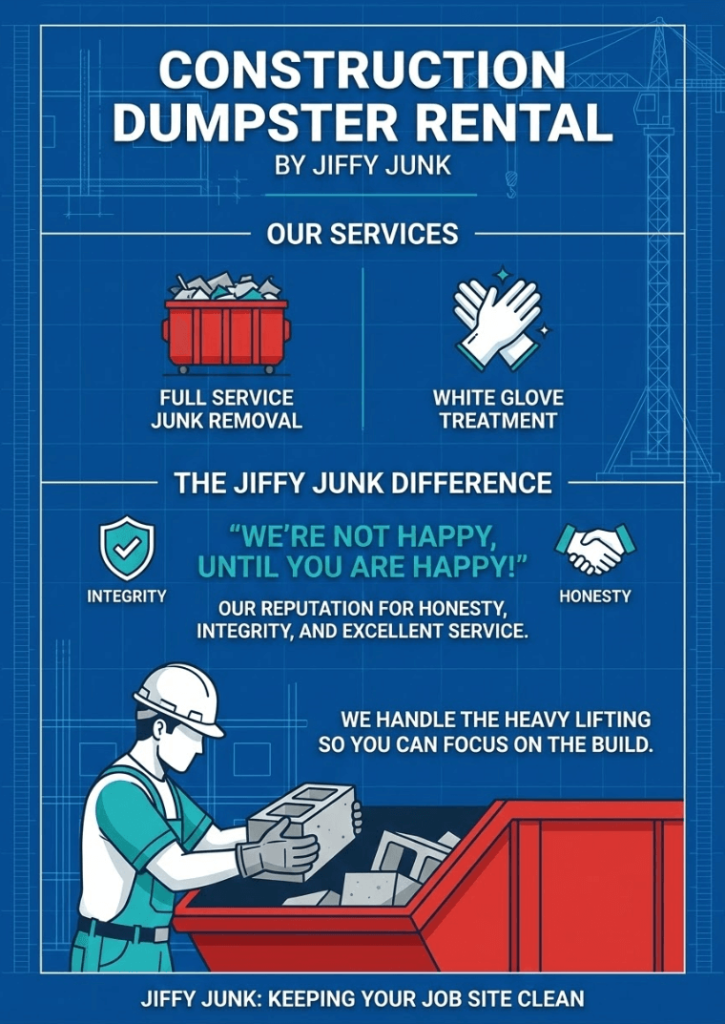
“After handling thousands of construction cleanups, we’ve learned that the right dumpster size and honest pricing matter more than the lowest quote—because one surprise fee or missed pickup can cost a contractor far more than they saved.” — Jiffy Junk Operations Team
Essential Resources for Construction Dumpster Rental Decisions
We believe informed customers make confident decisions. After years of helping contractors and homeowners navigate construction debris disposal, we’ve compiled the most valuable government resources to help you understand regulations, estimate your project needs, and stay compliant. These are the same references our teams use when answering your questions.
1. EPA Guide to C&D Materials Management
Discover which materials can be recycled instead of landfilled.
This EPA resource explains best practices for reducing, reusing, and recycling construction debris. We’ve found that customers who understand their recycling options often save money while supporting eco-friendly disposal—something we’re passionate about at Jiffy Junk.
Source: U.S. Environmental Protection Agency
URL: https://www.epa.gov/smm/sustainable-management-construction-and-demolition-materials
2. OSHA Construction Waste Disposal Standards
Keep your job site safe and compliant.
OSHA outlines the requirements for proper debris removal and waste handling on construction sites. Our licensed and insured teams follow these standards on every job, and this resource helps you understand what to expect from any professional service.
Source: Occupational Safety and Health Administration
URL: https://www.osha.gov/laws-regs/regulations/standardnumber/1926/1926.252
3. EPA Construction Debris Statistics and Data
See the bigger picture on construction materials disposal.
The EPA reports that 600 million tons of C&D debris are generated annually in the United States. In our experience, understanding these material-specific breakdowns helps customers plan more accurately—whether you’re disposing of concrete, wood, drywall, or roofing materials.
Source: U.S. Environmental Protection Agency
4. EPA Asbestos NESHAP Requirements
Know what’s required before renovation or demolition begins.
Federal regulations require inspections and proper notification before disturbing asbestos-containing materials. We always recommend customers review these requirements early—our teams have seen how proper planning prevents costly delays and keeps everyone safe.
Source: U.S. Environmental Protection Agency
5. FEMA Debris Estimating Field Guide
Estimate your debris volume with confidence.
Not sure how much material your project will generate? FEMA’s guide provides simple formulas based on building dimensions and material types. We use similar calculations when helping customers choose the right dumpster size—getting it right the first time saves you time and money.
Source: Federal Emergency Management Agency
URL: https://www.fema.gov/sites/default/files/2020-07/fema_329_debris-estimating_field-guide_9-1-2010.pdf
6. CalRecycle C&D Waste Calculator
Get a clearer picture of your project’s disposal needs.
This easy-to-use tool helps you evaluate waste composition for your specific project. Input your details and receive volume breakdowns that make planning straightforward. Customers tell us that accurate estimates upfront lead to smoother projects overall.
Source: California Department of Resources, Recycling and Recovery
URL: https://www2.calrecycle.ca.gov/WasteCharacterization/General/ConDemoCalculator
7. EPA State-by-State Demolition Regulations
Find the rules that apply to your location.
Disposal requirements vary by state and municipality. This directory connects you with local environmental agencies and compliance contacts. Our nationwide teams stay current on regional regulations, but we always encourage customers to understand the requirements in their area.
Source: U.S. Environmental Protection Agency
URL: https://www.epa.gov/large-scale-residential-demolition/state-demolition-information
Supporting Statistics
After a decade of hauling construction debris, we’ve developed a clear picture of what customers face. The government data below confirms what our teams see every day.
600 Million Tons Generated Annually
The EPA reports that 600 million tons of C&D debris were generated in the United States in 2018—more than twice the amount of household trash.
What we’ve learned from this:
- Customers consistently underestimate project debris volume
- A “small” bathroom tear-out creates more material than most expect
- Walking through the scope upfront prevents mid-project surprises
Source: U.S. Environmental Protection Agency
76% of Debris Recycled or Reused
EPA data shows 455 million tons directed to recycling and reuse. Only 145 million tons went to landfills.
Why this matters to us:
- Proper sorting gives materials new life as aggregate or donated items
- We invest in recycling partnerships for every job
- Our teams identify reuse potential on every pickup
Customers ask what happens after pickup. We’re proud that responsible disposal makes a real difference.
Source: U.S. Environmental Protection Agency
URL: https://www.epa.gov/smm/sustainable-management-construction-and-demolition-materials
90% Comes From Demolition
The EPA confirms demolition represents over 90% of total C&D debris. New construction accounts for less than 10%.
What our experience confirms:
- Renovation projects generate far more debris than customers expect
- Cabinets, flooring, drywall, and fixtures add up fast
- We recommend sizing up when demolition is involved
In our experience, extra capacity beats halting work for a second container.
Source: U.S. Environmental Protection Agency
URL: https://www.epa.gov/smm/sustainable-management-construction-and-demolition-materials
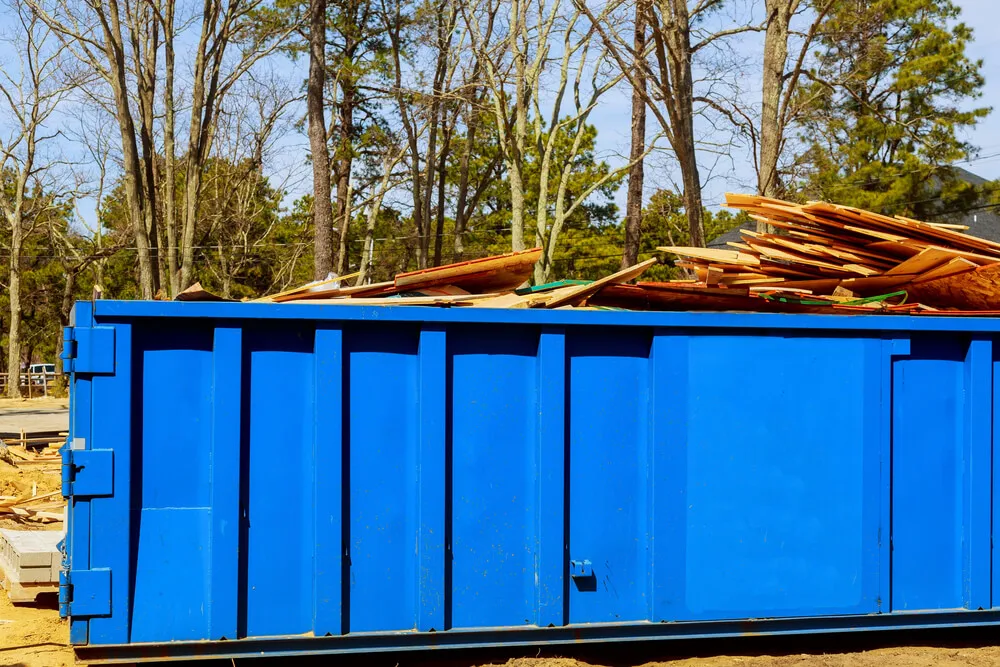
Final Thought: What a Decade of Construction Cleanups Has Taught Us
After hauling debris from thousands of job sites, we’ve come to believe something that might surprise you: the cheapest dumpster rental is rarely the best value.
We’ve seen what happens when price comes first:
- Contractors lose entire workdays waiting for a second container
- Homeowners get hit with surprise fees that double the original quote
- Projects stall when rental companies can’t adjust to schedule changes
The right dumpster partner isn’t the one with the lowest price—it’s the one who helps you finish the job without headaches.
What we believe matters most:
- Honest sizing conversations before you commit
- Transparent pricing with no hidden fees
- Flexibility when timelines change
- Teams that show up when they say they will
Construction is stressful enough. Your debris removal shouldn’t add to it.
One more thing we’ve learned. Environmental responsibility isn’t just good ethics—it’s good business. Routing materials to recycling facilities and donation partners helps everyone. Customers feel good. Communities benefit. And we do our part to keep construction debris out of landfills.
The bottom line? You deserve transparency, reliability, and genuine expertise. That’s our standard for every job.
We’re not happy until you are happy. It’s not just a tagline—it’s how we’ve built our business.
Frequently Asked Questions
Q: What size dumpster do I need for my construction project?
A: After thousands of cleanups, we’ve noticed customers almost always underestimate debris volume.
Our size recommendations are based on experience:
- 10-yard: Single-room remodels, bathroom tear-outs
- 20-yard: Whole-house cleanouts, roofing, deck removals
- 30-yard: Multi-room gut jobs, large renovations
- 40-yard: Major demolitions, commercial projects
Pro tip from our crews: Size up. Ordering a second container mid-project costs more than choosing a larger upfront.
Q: How much does a construction dumpster rental cost?
A: Most residential projects cost $300-$800. Customers tell us pricing confusion is their biggest frustration.
What drives your cost:
- Container size (primary factor)
- Rental duration (typically 7-14 days)
- Debris weight (concrete and masonry add cost)
- Local permit requirements
Our approach: We quote based on volume. The number we give is the number you pay. No hidden fees. No surprise surcharges.
Q: What materials can I put in a construction dumpster?
A: Our crews haul nearly every type of construction debris.
Accepted materials:
- Drywall, lumber, framing
- Roofing shingles
- Concrete, brick, masonry
- Flooring (tile, carpet, hardwood)
- Cabinets, doors, windows
- Metal scraps, siding
Requires special handling:
- Painted wood from older structures
- Adhesives and sealants
- Pre-1980s insulation
Not accepted:
- Hazardous materials and chemicals
- Flammable liquids
- Batteries and asbestos
Not sure? Send us a photo. We’ll confirm before delivery.
Q: Do I need a permit for a construction dumpster?
A: Depends on placement. Here’s what we’ve found after working with permit offices nationwide.
Permit typically NOT required:
- Private driveway placement
- Containers within your lot lines
Permit typically required:
- Public street or sidewalk placement
- Blocking right-of-way access
- Extended rentals in some HOA communities
What we’ve learned: Requirements vary wildly by city. Some require permits even for driveways. Contact your local public works department—or ask us. We know the permit landscape in most areas.
Q: How long can I keep a construction dumpster?
A: Standard rentals run 7-14 days.
What we’ve observed:
- Small renovations: 7-10 days
- Larger projects: 14+ days
- Demolition timelines often shift
Our difference: Construction schedules rarely go as planned. We’ve seen inspections rescheduled, weather delays, and scope changes. When your timeline shifts, we adjust—no pointing to fine print.
Get a Transparent Quote for Your Construction Dumpster Rental
Ready to keep your job site clean with roll-off dumpster service you can count on? Call 844-JIFFY-JUNK or book online today—we’ll help you choose the right size, give you upfront pricing, and deliver the White Glove Treatment your project deserves.