How Big Is a 15-Cubic-Yard Dumpster? Understanding Size Dimensions and Rental Cost So You Know Exactly What You’re Getting Before You Book
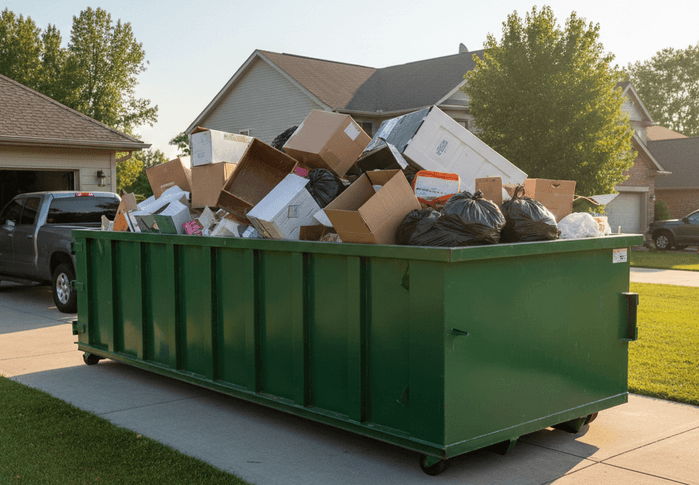
A 15 cubic yard dumpster is about 16 feet long, 7.5 feet wide, and 4.5 feet tall – the size of a parking space with waist-high walls. In our experience, that equates to 6 to 8 pickup truck loads (more than enough for most single-room renovations or whole-garage cleanouts).
Here’s what we’ve learned after making thousands of deliveries: many times, 15 is the smartest choice for mid-size projects, but you often turn to it. We’ve discovered that a lack of knowledge of actual dimensions, not just cubic feet, helps you to avoid both those mistakes.
This guide covers real-world capacity, weight limits that impact pricing, ideal project types, and transparent rental costs with no hidden fees. You’ll know exactly what you’re booking before our truck arrives.
TL;DR Quick Answers
15 Yard Dumpster
A 15-yard dumpster is a mid-size roll-off container ideal for residential renovations, cleanouts, and roofing projects.
Key specifications:
- Dimensions: 16 feet long × 7.5 feet wide × 4.5 feet tall
- Capacity: 6 to 8 pickup truck loads
- Weight limit: 2 to 4 tons (varies by location)
- Footprint: Approximately one standard parking space
Best for:
- Single-room renovations
- Garage, attic, or basement cleanouts
- Roof replacements up to 2,500 square feet
- Deck or fence demolition
What we’ve learned: The 15-yard sits in a sweet spot most customers overlook. It handles substantial projects without the cost of a 20 or 30-yard container. However, weight limits matter more than volume for dense materials like concrete, shingles, or tile.
Rental period: Typically 7 to 10 days
Permit required: Usually no for driveway placement; yes for street or sidewalk placement
Top 5 Takeaways
- Dimensions matter more than cubic footage.
- 16 feet long × 7.5 feet wide × 4.5 feet tall
- Roughly one parking space with waist-high walls
- Measure your driveway before booking to avoid delivery surprises
- Weight limits determine your final cost—not volume.
- Allowances typically range from 2 to 4 tons
- Half-full with concrete can cost more than packed with furniture
- Dense materials to watch: shingles, tile, brick, soil
- We provide weight allowances upfront so you can plan accordingly
- The 15-yard is the most overlooked sweet spot.
- Handles most mid-size residential projects efficiently
- Avoids overage fees from under-ordering a 10-yard
- Avoids wasted money from over-ordering a 20-yard
- Electronics and hazardous materials require separate disposal.
- Paints, batteries, solvents, and devices don’t belong in your dumpster
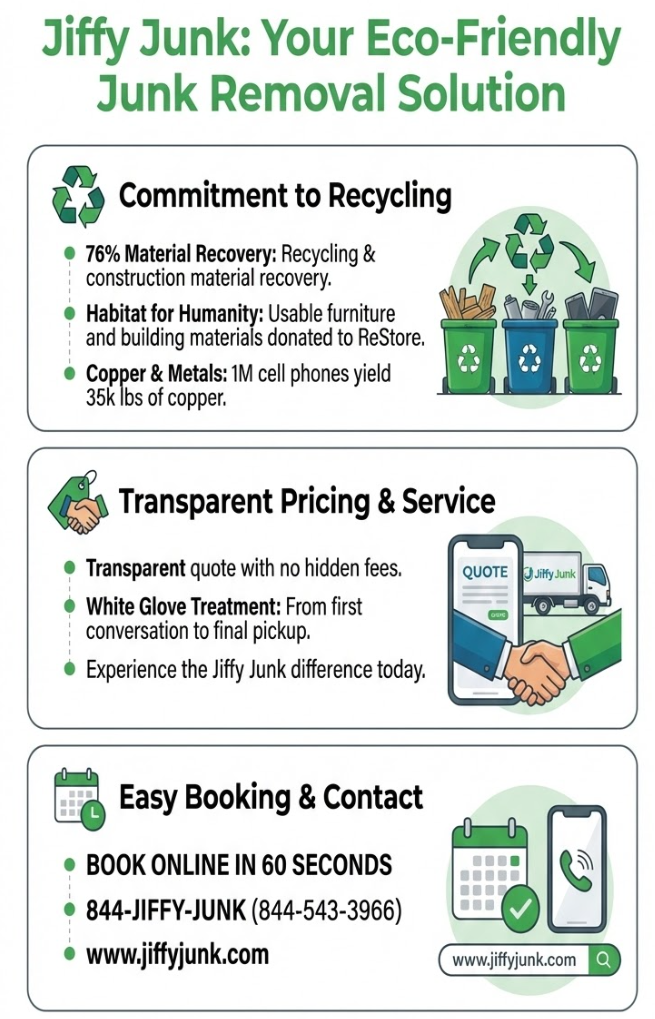
- One million recycled cell phones yield 35,000+ pounds of copper
- Certified recyclers recover valuable materials responsibly
- Donation reduces costs and landfill impact.
- Usable furniture, appliances, and building materials can go to Habitat ReStore.
- Lowers your project footprint
- Supports families in your community
Table of Contents
- How Big Is a 15-Cubic-Yard Dumpster? Understanding Size Dimensions and Rental Cost So You Know Exactly What You’re Getting Before You Book
- TL;DR Quick Answers
- Top 5 Takeaways
- Exact Dimensions: What 16 × 7.5 × 4.5 Feet Actually Looks Like
- Real-World Capacity: What Actually Fits Inside
- Weight Limits: The Number That Actually Affects Your Price
- Ideal Projects for a 15-Cubic-Yard Dumpster
- Rental Costs: What Determines Your Final Price
- What You Can and Cannot Load
- Delivery and Placement: What to Expect
- How to Know If 15 Yards Is Right for Your Project
- Essential Resources for Smarter Dumpster Decisions
- Supporting Statistics
- Final Thought: Why the 15-Yard Dumpster Remains Our Most Recommended Size
- Frequently Asked Questions
- Ready to Book Your 15 Yard Dumpster?
Exact Dimensions: What 16 × 7.5 × 4.5 Feet Actually Looks Like
Numbers on a spec sheet don’t mean much until you’re staring at your driveway, wondering if it’ll fit. A 15 cubic yard dumpster occupies roughly 120 square feet of ground space—comparable to a mid-size SUV parked lengthwise. The 4.5-foot height sits just below chest level for most adults, making it easy to toss materials over the side without a ladder.
We recommend measuring your intended placement area before booking. You’ll need the container footprint plus an additional 3 feet of clearance on the loading side and approximately 23 feet of vertical clearance for our trucks to safely drop and pick up.
Real-World Capacity: What Actually Fits Inside
Cubic yardage can feel abstract, so here’s what our crews see loaded into 15-yard containers regularly:
- 6 to 8 standard pickup truck beds of material
- Furniture and contents from a 1,500-square-foot home cleanout
- Debris from 500 square feet of deck removal
- Materials from a single-room gut renovation, including drywall, flooring, and fixtures
- 20 to 25 roofing squares (approximately 2,000 to 2,500 square feet of shingles)
In our experience, most customers use about 80 to 90 percent of the container’s volume before hitting weight limits, which brings us to an often-overlooked factor.
Weight Limits: The Number That Actually Affects Your Price
Every 15-yard rental includes a weight allowance, typically ranging from 2 to 4 tons depending on your location and disposal facility requirements. This matters more than volume for dense materials like concrete, roofing shingles, or soil.
Here’s what we’ve learned: a container filled with construction debris or yard waste often reaches its weight limit before it looks full. Conversely, bulky but lightweight items like furniture and household goods rarely approach the weight cap. Our team provides your specific weight allowance upfront so you can plan accordingly—and we’ll let you know if your project type typically runs heavy.
Ideal Projects for a 15-Cubic-Yard Dumpster
After thousands of rentals, we’ve identified the projects where a 15-yard consistently proves to be the right fit:
Home Renovations: Kitchen or bathroom remodels, flooring replacement throughout a mid-size home, or window and door replacements generate the moderate debris volume this size handles well.
Property Cleanouts: Clearing a garage, attic, and basement combination—or downsizing a 3-bedroom home—typically fills a 15-yard dumpster without overflow.
Roofing Projects: A 2,000 to 2,500 square foot roof replacement fits comfortably, though weight limits require attention with multiple shingle layers.
Outdoor Projects: Deck demolition, fence removal, or significant landscaping debris from yard overhauls lands squarely in 15-yard territory.
When to Size Up or Down: If your project involves a single room or a small garage, a 10-yard may suffice. Whole-home cleanouts, multi-room renovations, or new construction typically call for 20 yards or more.
Rental Costs: What Determines Your Final Price
Transparent pricing means understanding the factors that affect your total:
Base Rental Rate: Covers delivery, pickup, and a standard rental period of 7 to 10 days. Rates vary by market due to local disposal costs and distance from disposal facilities.
Weight Allowance: Your rental includes a set tonnage. Exceeding this incurs per-ton overage fees, which we disclose before you book.
Rental Duration: Extended rental periods beyond the standard window add daily fees—helpful for longer projects, but worth factoring into your timeline.
Disposal Type: Standard household and construction debris falls under base pricing. Certain materials, like mattresses, appliances, or electronics, may carry additional fees due to specialized processing requirements.
Location and Permits: Some municipalities require permits for dumpsters placed on streets or public property. We’ll advise whether your placement needs one.
We provide all-inclusive quotes before scheduling, so you see exactly what you’ll pay—no surprises when the invoice arrives.
What You Can and Cannot Load
Accepted Materials: Household items, furniture, appliances, construction debris, roofing materials, yard waste, flooring, drywall, and general renovation materials.
Prohibited Items: Hazardous materials, including paint, solvents, chemicals, and automotive fluids, cannot go in any dumpster due to EPA regulations. Batteries, tires, and certain electronics require separate disposal streams. Concrete and dirt are accepted in limited quantities—our team will specify weight restrictions for these dense materials.
When in doubt, ask before you load. Our crews have seen it all and can advise on the most efficient way to dispose of unusual items.
Delivery and Placement: What to Expect
Our drivers position your dumpster exactly where you need it, provided the location meets clearance requirements. Driveways, parking lots, and street placements all work—we recommend laying plywood beneath the container on asphalt or finished surfaces to prevent marks.
Delivery windows are scheduled in advance, and we contact you the day before to confirm timing. The drop-off takes approximately 10 to 15 minutes. When you’re finished loading, pickup follows the same streamlined process.
How to Know If 15 Yards Is Right for Your Project
Choosing correctly comes down to honest project assessment. Ask yourself:
- Am I clearing multiple rooms or a single space?
- Does my debris include heavy materials like concrete, tile, or roofing?
- Would I rather have a slight extra capacity or risk needing a second haul?
If you’re on the fence between sizes, our team can review your project scope and recommend the most cost-effective option. We’d rather you book the right size upfront than pay for an additional container mid-project.
“After delivering thousands of 15-yard containers, we’ve noticed most customers worry about ordering too small—but the real cost mistake is ignoring weight limits. A half-full dumpster loaded with concrete can cost more than a full one packed with furniture, which is why we walk through your project details before booking so you’re never surprised by the final invoice.” — Jiffy Junk Operations Team
Essential Resources for Smarter Dumpster Decisions
We believe informed customers make confident choices. Before you book, these trusted resources help you understand regulations, estimate costs accurately, and explore eco-friendly disposal options. Our team references these same guides daily—and we’re always happy to walk you through any questions.
1. Know What Stays Out of Your Container
Resource: EPA Household Hazardous Waste Guidelines
Paints, solvents, batteries, and pesticides require separate disposal—and we’ve seen customers surprised when these items can’t go in their rental. This EPA guide identifies restricted materials and helps you locate collection programs nearby. When in doubt, give us a call. We’ll point you in the right direction.
Source: https://www.epa.gov/hw/household-hazardous-waste-hhw
2. Understand How Debris Disposal Works
Resource: EPA Sustainable Management of Construction and Demolition Materials
Federal guidelines shape how renovation and demolition materials must be handled. In our experience, customers appreciate understanding these standards upfront—it explains why certain items need special processing and how recycling requirements affect disposal. This comprehensive EPA resource covers everything from landfill restrictions to eco-friendly best practices.
Source: https://www.epa.gov/smm/sustainable-management-construction-and-demolition-materials
3. Find Local Recycling for Specialty Items
Resource: Earth911 Recycling Center Search
We’re committed to recycling and donating whenever possible—and this resource helps you do the same. With over 350 materials and 100,000 listings, Earth911 locates drop-off points for appliances, tires, hazardous materials, and other items that need specialized handling. Just enter your zip code to find facilities near your project site.
Source: https://search.earth911.com/
4. Dispose of Electronics Responsibly
Resource: EPA Certified Electronics Recyclers Directory
Computers, televisions, and other electronics contain components that require careful handling. This EPA directory lists R2 and e-Stewards-certified recyclers who meet strict environmental and data security standards. Customers tell us they appreciate knowing their old devices won’t end up in a landfill—and certified recyclers give you that peace of mind.
Source: https://www.epa.gov/electronics-batteries-management/certified-electronics-recyclers
5. Donate Usable Items Instead of Discarding Them
Resource: Habitat for Humanity ReStore Donation Locator
Furniture, appliances, and building materials in good condition deserve a second life. Habitat ReStore locations accept donations and often provide free pickup for larger items. It’s an easy way to keep reusable goods out of landfills while supporting affordable housing in your community. We love seeing customers choose donation over disposal—it’s the right thing to do.
Source: https://www.habitat.org/restores/donate-goods
Supporting Statistics
These numbers from federal agencies and nonprofits reflect what we see daily on job sites—and why proper planning matters.
600 Million Tons of Construction Debris Generated Annually
The EPA estimates 600 million tons of C&D debris were generated in the United States in 2018. That’s more than twice the municipal solid waste produced that same year.
We see this volume firsthand:
- A single kitchen remodel can fill a 15-yard container
- Whole-home renovations generate more debris than most homeowners expect
- Demolition accounts for over 90 percent of all C&D waste
The good news? 76 percent of materials were recovered or recycled nationally. In our experience, customers who plan—understanding weight limits and separating recyclables—contribute to that rate while avoiding unexpected fees.
Source: U.S. EPA — Sustainable Management of Construction and Demolition Materials
https://www.epa.gov/smm/sustainable-management-construction-and-demolition-materials
One Million Recycled Cell Phones Recover 35,000 Pounds of Copper
Electronics contain valuable materials that certified recyclers can recover. According to the EPA, one million recycled cell phones yield:
- 35,274 pounds of copper
- 772 pounds of silver
- 75 pounds of gold
- 33 pounds of palladium
Additionally, recycling one million laptops saves enough energy to power 3,657 U.S. homes for a year.
We remind customers regularly: electronics don’t belong in your dumpster. A single estate or office cleanout can generate dozens of devices. Customers tell us they appreciate knowing these items have value—and require separate handling through certified recyclers.
Source: U.S. EPA — Electronics Donation and Recycling
https://www.epa.gov/recycle/electronics-donation-and-recycling
Habitat ReStores Diverted 124,000+ Tons from Landfills.
Over 25 years, Habitat for Humanity ReStore locations diverted more than 124,000 tons of reusable goods from landfills nationwide.
Individual impact adds up fast:
- Austin’s ReStore alone: 19 million pounds diverted
- Homes supported through those donations: 115 and counting
We’ve seen what donations can do. That solid oak dresser, working refrigerator, or surplus building materials could furnish someone else’s home tomorrow. Customers often tell us they feel better knowing usable items get a second life rather than filling a container.
Source: Habitat for Humanity — 25 Years of Facts and Finds
https://www.habitat.org/stories/25-years-facts-and-finds
Final Thought: Why the 15-Yard Dumpster Remains Our Most Recommended Size
After a decade of deliveries across thousands of projects, we’ve developed a clear perspective: the 15 cubic yard container consistently proves to be the smartest choice for mid-size residential work.
The 15-yard hits a practical sweet spot:
- Dimensions: 16 feet long, 7.5 feet wide, 4.5 feet tall
- Capacity: 6 to 8 pickup truck loads
- Fits comfortably in most driveways
- Ideal for single-room renovations, whole-garage cleanouts, or 2,000 square feet of roofing
Customers who choose this size rarely run short on space—and avoid paying for unused capacity.
Here’s the insight most people miss: weight matters more than volume.
We’ve seen it countless times:
- A 15-yard filled halfway with concrete hits its weight limit
- The same container packed to the brim with furniture stays well under the tonnage cap
Dense materials—roofing shingles, tile, soil, brick—demand careful planning. Bulky household items rarely pose weight concerns. Understanding this distinction before you book prevents the most common surprise on final invoices.
Our honest opinion?
The industry doesn’t always make sizing easy. Cubic yardage sounds technical. Weight allowances feel abstract until they affect your bill. That’s why we walk through project details before every rental. We’d rather recommend the right size upfront than see a customer pay overage fees mid-project.
A few principles guide our approach:
- Transparency builds trust. No hidden fees, no surprises. The quote we provide is the price you pay.
- Recycling and donation matter. With 76 percent of C&D materials recoverable, responsible disposal isn’t just good ethics—it’s good practice.
- Electronics and hazardous materials require separate handling. We’ll always point you toward proper disposal resources.
The Bottom Line
A 15 cubic yard dumpster handles the vast majority of residential projects efficiently and affordably.
- Know your dimensions
- Understand your weight limits
- Separate items requiring special disposal
- Consider donating what still has life left
Not sure if a 15-yard fits your project? Give us a call. We’ll talk through the details and recommend the most cost-effective option.
That’s the Jiffy Junk difference: White Glove Treatment from the first conversation to the final pickup.
We’re not happy until you are happy.
Frequently Asked Questions
Q: What are the exact dimensions of a 15-yard dumpster?
A: A 15 cubic yard dumpster measures approximately:
- Length: 16 feet
- Width: 7.5 feet
- Height: 4.5 feet
That’s roughly the footprint of a standard parking space with waist-high walls.
After thousands of deliveries, we’ve found that this size fits most residential driveways comfortably. Before booking, we recommend confirming:
- Container footprint fits your placement area
- 3 feet of clearance on the loading side
- 23 feet of vertical clearance for truck access
Q: How much can a 15-yard dumpster hold?
A: A 15-yard dumpster holds 6 to 8 pickup truck loads of material.
In our experience, that capacity typically covers:
- Single-room gut renovations
- 1,500-square-foot home cleanouts
- 500 square feet of deck removal
- 20 to 25 roofing squares
Customers often tell us they’re surprised how much it fits. One important note: it’s not just about volume. Dense materials can trigger weight limits before the container looks full.
Q: What is the weight limit for a 15-yard dumpster?
A: Weight allowances typically range from 2 to 4 tons, depending on location and disposal facility requirements.
Here’s what we’ve learned after a decade in this business: weight limits catch more customers off guard than volume limits.
What we’ve seen:
- A 15-yard filled halfway with concrete maxes out its tonnage
- The same container packed with furniture stays well under the cap
Materials that run heavy:
- Concrete
- Roofing shingles
- Tile
- Soil
- Brick
We provide your specific weight allowance before you book. If your project type typically runs heavy, we’ll flag it upfront.
Q: What projects are a 15-yard dumpster best for?
A: After years of matching containers to projects, the 15-yard consistently fits:
- Kitchen or bathroom remodels
- Combined garage, attic, and basement cleanouts
- Flooring replacement across mid-size homes
- Roof replacements up to 2,500 square feet
- Deck demolition or fence removal
- Downsizing a 3-bedroom household
Our honest take?
The 15-yard occupies a sweet spot that’s often overlooked. We see two common mistakes:
- Under-ordering a 10-yard and paying overage fees
- Over-ordering a 20-yard dumpster and wasting money on unused capacity
When customers are on the fence, we ask about project scope and materials—then recommend the size that makes the most financial sense.
Q: Do I need a permit for a 15-yard dumpster?
A: It depends on placement.
Typically, no permit is required:
- Driveway placement on private property
Typically permit is required:
- Street placement
- Sidewalk placement
- Public right-of-way
Permit fees usually range from $20 to $200. Some HOA communities add restrictions on duration, screening, or placement.
How we handle it:
- We ask where you plan to place the dumpster when you book
- If a permit is likely required, we let you know before scheduling
- When you’re unsure, we point you to your local Public Works department—or check based on your address
No surprises. No delays. Your project stays on schedule.
Ready to Book Your 15 Yard Dumpster?
Now that you understand the exact dimensions, weight limits, and costs, you’re ready to make a confident decision. Contact Jiffy Junk today for a transparent quote with no hidden fees—and experience the White Glove Treatment from booking to pickup.