How Big Is a 5-Cubic-Yard Dumpster Compared to Other Sizes? Exact Dimensions, Rental Cost, and What This Size Can Handle for Your Project
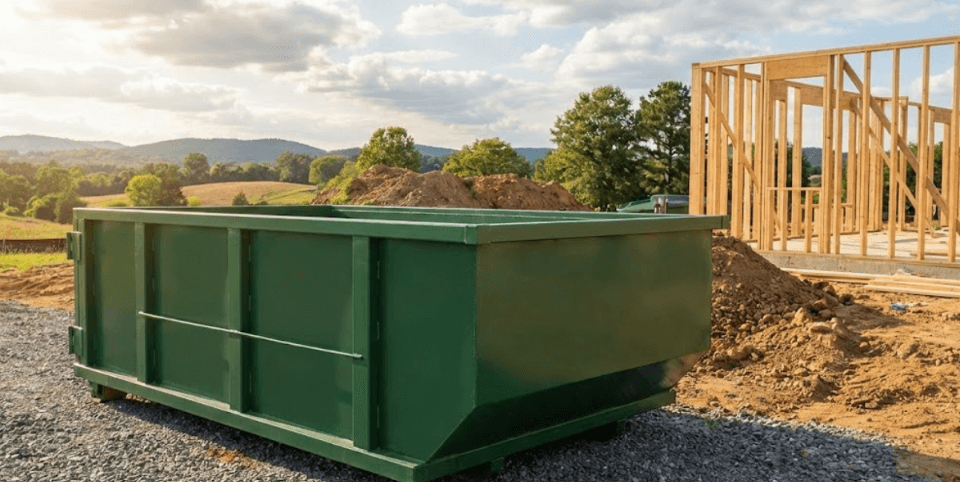
A 5 cubic yard dumpster measures approximately 6 feet long × 4 feet wide × 4 feet tall—about the size of a pickup truck bed loaded chest-high.
After a decade of hauling, we’ve learned something most size guides won’t tell you: the 5-yard dumpster is often the most underestimated option. Customers assume they need bigger, but this compact container handles 25-30 bags of materials and clears out most single rooms completely.
Here’s what we see on the job: homeowners tackling bathroom remodels, small deck teardowns, or garage declutters consistently fill a 5-yarder right to capacity—no wasted space, no second trip. We’ve also found this size works perfectly for heavy materials like concrete or tile scraps because weight limits matter more than volume with dense debris.
This guide covers exact dimensions, how the 5-yard compares to 10, 15, 20, and 30 cubic yard sizes, typical rental costs, and the specific projects we’ve matched to this container thousands of times. You’ll know exactly whether a 5 cubic yard dumpster fits your job—or if sizing up saves you hassle.
TL;DR Quick Answers
5 Yard Dumpster
A 5-yard dumpster is a compact roll-off container measuring approximately 6 feet long × 4 feet wide × 4 feet tall—about the size of a pickup truck bed loaded chest-high.
At a glance:
- Capacity: 25–30 trash bags (2.5 bathtubs worth)
- Weight limit: 1–2 tons (2,000–4,000 lbs)
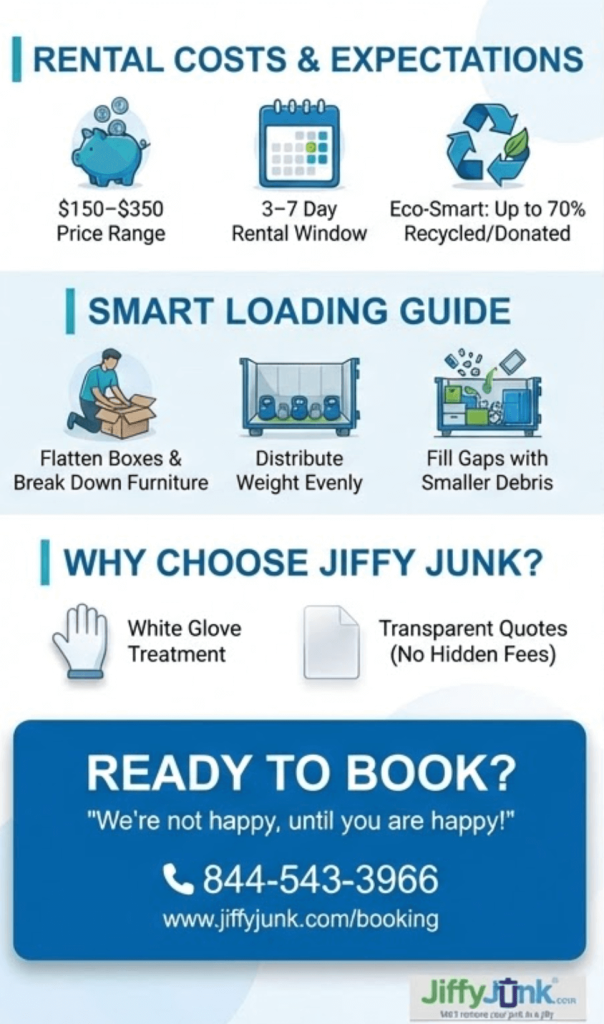
- Typical rental cost: $150–$350
- Rental period: 3–7 days
- Footprint: One parking space
Best for:
- Single-room cleanouts
- Bathroom remodels
- Small garage clearing
- Deck removals
- Weekend declutter projects
Our take: After hauling thousands of loads, we’ve found the 5 yard is the most underestimated dumpster size. It handles 90% of single-room projects without paying for unused capacity. The compact footprint fits most driveways, and the 4-foot height makes loading easy—no ladder required.
Bottom line: If your project involves one room or one small outdoor area, the 5 yard container likely fits your needs perfectly.
Top Takeaways
- Size and fit: 6′ L × 4′ W × 4′ H. Fits one parking space. Low height means no ladder needed. After thousands of deliveries, we’ve found it fits most residential driveways with room to spare.
- Capacity sweet spot: Holds 25–30 bags. Handles single-room cleanouts, bathroom remodels, small deck removals, and weekend projects. Customers who choose the 5 yard for one-area projects rarely need more.
- Weight beats volume: Dense materials hit limits before the container looks full. We’ve seen half-filled dumpsters max out on tile jobs. Weight limit: 1–2 tons. Always ask upfront if heavy debris is involved.
- Know your real cost: Rental rates run $150–$350. Surprises come from overages and hidden fees. Before booking, ask: (1) What’s my weight limit? (2) What’s the overage charge? (3) Is pickup included?
- Sort before you toss: Separating donations and recyclables can cut your load by 30%. Check Habitat ReStore for working appliances and furniture. Tax-deductible. Keeps items out of landfills. Shrinks what hits the dumpster.
Table of Contents
- How Big Is a 5-Cubic-Yard Dumpster Compared to Other Sizes? Exact Dimensions, Rental Cost, and What This Size Can Handle for Your Project
- TL;DR Quick Answers
- Top Takeaways
- Exact Dimensions of a 5 Cubic Yard Dumpster
- Essential Resources to Help You Make the Right Call
- 1. Understand What the EPA Says About Debris Disposal
- 2. See Which Materials Can Be Recycled Instead of Tossed
- 3. Find a Recycling Center Near Your Project
- 4. Give Usable Items a Second Life Through Donation
- 5. Know What Landfills Will and Won’t Accept
- 6. Check If You Need a Permit Before Delivery
- 7. Avoid Extra Fees by Knowing What Can’t Go In
- Supporting Statistics
- Final Thought — Is a 5-Cubic-Yard Dumpster Right for You?
- Next Steps — How to Get Started
- FAQ on “5 Yard Dumpster”
- Ready to Rent Your 5 Cubic Yard Dumpster?
Exact Dimensions of a 5 Cubic Yard Dumpster
A standard 5 cubic yard dumpster measures approximately 6 feet long × 4 feet wide × 4 feet tall. These dimensions translate to 135 cubic feet of total capacity—enough space to hold the equivalent of 2.5 standard bathtubs or about 25-30 large trash bags filled.
In our experience, customers find that this container fits comfortably in most driveways and tight residential spaces. The low 4-foot height makes loading manageable without a ladder, which we’ve found speeds up DIY projects significantly. Most homeowners can toss materials directly over the side without straining.
The footprint takes up roughly one parking space, leaving room for vehicles and foot traffic on standard driveways.
How the 5 Yard Compares to Other Dumpster Sizes
Understanding how dumpster sizes scale helps you avoid overpaying or running out of room mid-project. Here’s how the 5 cubic yard stacks up against larger options we deliver daily:
5 Cubic Yard Dumpster
- Dimensions: 6′ L × 4′ W × 4′ H
- Capacity: 25-30 bags
- Best for: Single-room cleanouts, small renovations
10 Cubic Yard Dumpster
- Dimensions: 12′ L × 8′ W × 3.5′ H
- Capacity: 50-60 bags
- Best for: Medium renovations, roof replacements (1,500 sq ft)
15 Cubic Yard Dumpster
- Dimensions: 16′ L × 7.5′ W × 4.5′ H
- Capacity: 75-90 bags
- Best for: Large room remodels, deck removals
20 Cubic Yard Dumpster
- Dimensions: 22′ L × 7.5′ W × 4.5′ H
- Capacity: 100-120 bags
- Best for: Whole-home cleanouts, major renovations
30 Cubic Yard Dumpster
- Dimensions: 22′ L × 7.5′ W × 6′ H
- Capacity: 150-180 bags
- Best for: Construction projects, commercial cleanouts
We’ve noticed first-time renters often overestimate their needs. After thousands of deliveries, our rule of thumb is simple: if your project involves one room or a small outdoor area, start with the 5 yard. You can always schedule a swap if needed.
What a 5 Cubic Yard Dumpster Can Handle
This compact container handles more than most people expect. Based on the projects we complete every week, here’s what fits comfortably in a 5 cubic yard dumpster:
Home Cleanout Projects
- Single bathroom gut (fixtures, tile, vanity)
- One bedroom declutter or cleanout
- Small garage clearing
- Attic or crawl space cleanout
- Shed demolition debris
Renovation and Remodel Debris
- Flooring removal from one room (carpet, tile, hardwood)
- Small deck or porch teardown
- Cabinet replacement materials
- Drywall from a single room
Yard and Outdoor Projects
- Storm debris and fallen branches
- Landscaping materials for small yard projects
- Hot tub removal components
- Fence section replacement
Customers tell us the 5 yard works perfectly for “one-and-done” weekend projects. We’ve found it fills up quickly with bulky items like furniture or appliances, but stretches further with broken-down materials and smaller debris.
Weight Limits and Material Considerations
Volume tells only half the story. Every dumpster has a weight limit, and the 5 cubic yard typically maxes out between 1 and 2 tons, depending on your provider and location.
This matters because dense materials hit weight limits before filling the container. In our experience, these heavy items require extra attention:
Heavy Materials (fill by weight, not volume)
- Concrete, brick, and stone
- Ceramic tile and porcelain
- Roofing shingles
- Soil and sod
- Sand and gravel
Lighter Materials (fill to capacity)
- Household furniture
- General household items
- Cardboard and packaging
- Yard debris and branches
- Wood scraps and lumber
We’ve seen customers fill a 5 yard halfway with concrete and hit the weight cap. If your project involves heavy materials, ask about weight limits upfront or consider splitting loads between containers.
Typical Rental Costs for a 5 Cubic Yard Dumpster
Pricing for a 5 cubic yard dumpster typically ranges from $150 to $350, depending on your location, rental duration, and included weight allowance. Most rentals include 3 to 7 days and a base weight limit.
Factors that affect your final cost:
- Location: Urban areas and regions with higher disposal fees cost more
- Rental period: Standard rentals run 3-7 days; extensions add daily fees
- Weight overages: Exceeding the weight limit triggers per-ton charges
- Delivery distance: Remote locations may include fuel surcharges
- Material type: Certain debris, like concrete or appliances, may cost extra
We believe in transparent pricing with no hidden fees. The quote you receive upfront should reflect your actual cost—period. When comparing providers, ask specifically about weight limits, overage charges, and pickup fees to avoid surprises.
When to Size Up (or Down)
Choosing the right dumpster comes down to matching container capacity to your specific project scope. After delivering containers to thousands of job sites, we’ve identified clear signals that help determine the best fit.
A 5 cubic yard dumpster works well when:
- Your project involves one room or a small area
- You’re disposing of lightweight materials primarily
- Driveway space is limited
- Budget is a primary concern
- Timeline spans a single weekend
Consider sizing up to 10+ cubic yards when:
- Multiple rooms need clearing
- You’re handling a full renovation with demo debris
- The project involves heavy materials throughout
- You’d rather have extra capacity than risk a second haul
- Timeline extends beyond one week
When customers ask us directly, we recommend sizing up slightly if you’re uncertain. The cost difference between a 5 and 10 yard container is often minimal compared to scheduling a second pickup.
Why Choose Jiffy Junk for Your Dumpster Rental
We’ve built our reputation on making disposal simple. Our White Glove Treatment means you get more than a container dropped in your driveway—you get a team committed to your project’s success.
What sets Jiffy Junk apart:
- Transparent pricing: No hidden fees, no surprise charges
- Flexible scheduling: Same-day delivery available in most areas
- Eco-friendly disposal: We recycle and donate materials whenever possible
- Licensed and insured teams: Professional service you can trust
- Nationwide coverage: Consistent quality across all our locations
Ready to get the right size dumpster for your project? Our team can help you determine exactly what you need based on your specific job scope. We’re not happy until you are happy.
“After delivering thousands of 5 yard containers, we’ve found most customers actually need less space than they think—this size handles 90% of single-room projects we see, and the compact footprint means it fits driveways where larger dumpsters simply won’t work.” — Jiffy Junk Operations Team
Essential Resources to Help You Make the Right Call
We believe informed customers make confident decisions. Before you book your 5 cubic yard dumpster, these seven resources help you understand regulations, explore eco-friendly alternatives, and avoid surprises. We’ve found that a little research upfront saves time, money, and headaches down the road.
1. Understand What the EPA Says About Debris Disposal
Source: EPA Sustainable Management of Construction and Demolition Materials
Renovation projects generate materials that require proper handling. The EPA’s official guide explains what qualifies as C&D debris, recycling options, and compliant disposal methods. We recommend reviewing this before any demolition work.
URL: https://www.epa.gov/smm/sustainable-management-construction-and-demolition-materials
2. See Which Materials Can Be Recycled Instead of Tossed
Source: EPA National Overview: Facts and Figures on Materials, Waste and Recycling
You might be surprised how much of your project can stay out of landfills. This resource breaks down recycling rates by material type so you can separate recyclables before loading your container. In our experience, customers who sort materials often reduce their disposal costs.
3. Find a Recycling Center Near Your Project
Source: Earth911 Recycling Center Search
Not sure where to take electronics, tires, or other specialty items? This searchable database covers over 100,000 locations nationwide. Just enter your ZIP code and material type. We point customers here regularly when they have items that require special handling.
URL: https://search.earth911.com/
4. Give Usable Items a Second Life Through Donation
Source: Habitat for Humanity ReStore
Here’s something we always tell customers: if furniture, appliances, or building materials are still in good shape, consider donating instead of disposing. Habitat ReStores offer free pickup, your donation is tax-deductible, and you’re helping families in your community. That’s a win all around.
URL: https://www.habitat.org/restores/donate-goods
5. Know What Landfills Will and Won’t Accept
Source: EPA Industrial and C&D Landfills Guide
Certain materials—like asbestos and lead-based paint—have strict federal disposal requirements. This EPA guide spells out what C&D landfills can legally receive. Reviewing these rules helps you avoid delays and ensures your project stays compliant.
URL: https://www.epa.gov/landfills/industrial-and-construction-and-demolition-cd-landfills
6. Check If You Need a Permit Before Delivery
Source: Dumpster Permit Requirements Guide
Good news: most dumpsters placed on private driveways require no permit at all. Street or sidewalk placement is a different story. This guide walks you through the application process, typical fees, and how long approval takes. We recommend checking your local requirements early so there are no surprises on delivery day.
URL: https://www.dumpsters.com/resources/dumpster-permits
7. Avoid Extra Fees by Knowing What Can’t Go In
Source: Prohibited Items in Dumpsters Guide
Certain items—like batteries, refrigerants, and flammable liquids—are prohibited from all dumpsters due to safety regulations. Customers tell us they appreciate knowing these restrictions upfront. This resource lists everything to keep out of your container, plus alternative disposal options for each.
URL: https://www.dumpsters.com/resources/prohibited-items
Supporting Statistics
After a decade in the junk removal business, we’ve learned that responsible disposal isn’t just good ethics—it’s backed by some eye-opening numbers. Here’s what the data shows, and what we see playing out on job sites every day.
600 Million Tons of C&D Debris Generated Annually
The EPA reports that construction and demolition projects generate 600 million tons of debris each year in the United States—more than double all household waste combined. Here’s what surprises most customers: over 76% of that material gets recovered or recycled rather than buried in landfills.
We see this firsthand. On a typical bathroom remodel, we’re pulling out tile, fixtures, and vanities that look like landfill material but actually have recycling value. Concrete gets crushed into aggregate. Metal fixtures go to scrap processors. When we sort materials on the job, we’re contributing to that 76% recovery rate—and so are you when you separate recyclables before we arrive.
Source: U.S. Environmental Protection Agency, Construction and Demolition Debris: Material-Specific Data
681,000 Jobs Supported by Recycling and Reuse
According to the EPA’s Recycling Economic Information Report, recycling and reuse activities support 681,000 American jobs and generate $37.8 billion in wages annually. What customers often don’t realize is that construction and demolition materials rank among the largest contributors to this economic impact.
We’ve built relationships with local recyclers, scrap yards, and processing facilities over the years. When we drop off a load of sorted metal or concrete, we’re not just diverting waste—we’re supporting jobs in our community. The family-owned scrap processor we work with employs twelve people. The concrete recycler down the road runs two shifts. These aren’t abstract numbers to us; they’re the people we see every week.
Source: U.S. Environmental Protection Agency, Recycling Economic Information (REI) Report
https://www.epa.gov/smm/recycling-economic-information-rei-report
124,000+ Tons Diverted Through Habitat ReStore Donations
Habitat for Humanity reports that its ReStore network has diverted more than 124,000 tons of usable goods from landfills nationwide. That’s furniture, appliances, cabinets, and building materials finding second homes instead of taking up disposal space.
Customers tell us all the time: “I hate to throw this away—it still works.” We get it. That’s why we always ask about donation-worthy items before loading the dumpster. Last month alone, we directed customers to ReStore pickups for working refrigerators, solid wood cabinets, and barely-used light fixtures. Those items now help fund affordable housing while staying out of landfills. It’s a better outcome for everyone.
Source: Habitat for Humanity, 25 Years of Facts and Finds
https://www.habitat.org/stories/25-years-facts-and-finds
What These Numbers Mean for Your Project: When you rent a 5 cubic yard dumpster, you’re not just clearing space—you’re making disposal decisions that ripple outward. We take that seriously. Our commitment to recycling and donating whenever possible isn’t a marketing line; it’s how we’ve operated since day one. We’re not happy until you are happy, and that includes feeling good about where your items end up.
Final Thought — Is a 5-Cubic-Yard Dumpster Right for You?
A 5 cubic yard dumpster handles more than most people expect while taking up less space than they’d imagine. At roughly 6 feet long, 4 feet wide, and 4 feet tall, this compact container fits comfortably in most driveways and clears single-room projects without the expense of a larger unit you won’t fill.
What we covered:
- Dimensions: 6′ L × 4′ W × 4′ H (about the size of a loaded pickup truck bed)
- Capacity: 25–30 bags of materials
- Weight limits: 1–2 tons, depending on the provider
- Typical rental costs: $150–$350
- Best-fit projects: bathroom remodels, small garage cleanouts, single-room declutters, deck removals
- Essential resources: permits, prohibited items, recycling centers, donation options
Our Opinion: The 5 Yard Is the Most Underrated Dumpster Size
After hauling thousands of loads, here’s our honest take: customers routinely overestimate their needs. Bigger feels safer, but the 5 yard container consistently matches actual output for single-room projects.
What we’ve learned on the job:
- Volume isn’t usually the issue—weight is. We’ve watched homeowners fill a 10 yard halfway with concrete and hit weight limits before the container looked full. A 5 yard filled strategically often holds more usable capacity than a larger container loaded carelessly.
- Thoughtful disposal shrinks the load. When you separate metal fixtures for recycling, donate the working vanity to Habitat ReStore, and only dispose of tile scraps, you need less space than you’d think.
- Customers who choose the 5 yard rarely regret it. For focused, single-area projects, this size delivers without overpaying for unused capacity.
How to Decide
Choose a 5 cubic yard dumpster if:
- Your project involves one room or small outdoor area
- Lightweight materials make up most of your debris
- Driveway space is limited
- Budget matters
- Timeline spans a single weekend
Size up to 10+ cubic yards if:
- Multiple rooms need clearing
- Heavy materials like concrete dominate
- You’d rather have buffer space than risk a second haul
- Project timeline extends beyond one week
Our Promise
We’d rather match you to the right container than sell you capacity you’ll never use. That’s part of the White Glove Treatment—and why we’re not happy until you are happy.
Next Steps — How to Get Started
You’ve got the information. Here’s exactly how to move forward.
Step 1: Confirm Your Project Scope
Take five minutes to assess what you’re disposing of.
- How many rooms or areas are you clearing?
- What materials are involved? (Furniture, drywall, tile, yard debris?)
- Any heavy items like concrete or brick?
- How long will the project take?
Pro tip: Walk through the space and snap photos. It helps you visualize volume—and helps us confirm the right size.
Step 2: Separate Donations and Recyclables
Before anything hits the dumpster, set aside items that deserve a second life.
- Working appliances → Habitat ReStore pickup
- Good-condition furniture → Local donation centers
- Metal fixtures and wiring → Scrap recycling
- Electronics → E-waste drop-off (Earth911.com)
We’ve seen customers reduce disposal loads by 30% simply by sorting first.
Step 3: Check Permit Requirements
Private driveway placement typically requires no permit. Street placement does.
- Determine your placement location
- Contact Public Works if using public property
- Allow 3–5 business days for processing
- Check HOA restrictions if applicable
Step 4: Choose Your Size
| Project Type | Recommended Size |
| Single-room cleanout | 5 cubic yards |
| Bathroom remodel | 5 cubic yards |
| Garage clearing | 5–10 cubic yards |
| Multi-room renovation | 10–15 cubic yards |
| Whole-home cleanout | 20+ cubic yards |
Still uncertain? Call us. We’ll recommend the right fit—no pressure.
Step 5: Schedule Delivery
Booking takes less than two minutes.
Three ways to book:
- Call: 844-543-3966
- Online: www.jiffyjunk.com/booking
- Quote request: www.jiffyjunk.com/contact
Have ready: Delivery address, preferred date, rental duration, and material types.
Step 6: Prepare Your Site
A little prep ensures smooth delivery.
- Clear the placement area of vehicles and obstacles
- Ensure 60 feet of clearance for the truck
- Lay plywood to protect driveways (optional)
- Check for low-hanging wires or branches
Our driver positions the dumpster exactly where you need it.
Step 7: Load Smart
Maximize capacity and avoid extra fees.
Do:
- Break down large items
- Distribute weight evenly
- Fill to the top edge only
- Keep prohibited items out
Don’t:
- Overfill past the fill line
- Stack heavy materials on one side
- Mix hazardous waste with debris
Step 8: Schedule Pickup
Finished loading? Let us know.
- Call 844-543-3966
- Request pickup online
- Most removals within 24–48 hours
We prioritize recycling and donation before landfill disposal. That’s the Jiffy Junk difference.
FAQ on “5 Yard Dumpster”
Q: What are the exact dimensions of a 5 cubic yard dumpster?
A: A standard 5 cubic yard dumpster measures approximately 6 feet long × 4 feet wide × 4 feet tall.
Key specs:
- Footprint: About one parking space
- Visual comparison: Pickup truck bed loaded chest-high
- Height: 4 feet (low enough to load without a ladder)
After delivering thousands of these containers, we’ve found customers are often surprised by how compact they are. The low height lets most adults toss materials directly over the side. Customers tell us this makes loading faster and safer on DIY projects.
Q: How much does it cost to rent a 5 yard dumpster?
A: Rental costs typically range from $150 to $350, depending on location, duration, and weight allowance.
What affects pricing:
- Delivery distance
- Rental duration (typically 3–7 days)
- Local disposal fees
- Material type
- Weight overages
Here’s what we’ve noticed: the biggest surprises come from weight overages and hidden fees—not the base rate.
Three questions to ask before booking:
- What’s my weight limit?
- What happens if I exceed it?
- Are pickup and delivery included?
Those answers reveal your actual cost better than any advertised rate.
Q: What can I fit in a 5 cubic yard dumpster?
A: A 5 yard container holds approximately 25 to 30 standard trash bags—about 2.5 bathtubs worth of materials.
Projects that fit comfortably:
- Single bathroom gut-out (toilet, vanity, tile, drywall)
- One bedroom cleanout
- Small deck removal
- One-room flooring project
- Weekend garage purge
What the numbers don’t tell you: Capacity depends on what you’re tossing and how you load.
We’ve watched customers fit entire bathroom renovations with room to spare by loading strategically. The same container fills up fast when bulky furniture goes in unbroken.
Smart loading tips:
- Flatten boxes
- Break down furniture frames
- Fill gaps with smaller debris
We’ve seen this approach stretch capacity by 20% or more.
Q: What’s the weight limit for a 5 yard dumpster?
A: Most 5 yard dumpsters max out between 1 and 2 tons (2,000 to 4,000 pounds).
Here’s what most size guides won’t tell you: Weight limits matter more than volume for certain projects. Misjudging this is the most common mistake we see.
Heavy materials (fill by weight, not volume):
- Concrete and brick
- Ceramic tile
- Roofing shingles
- Soil and gravel
Lighter materials (fill to capacity):
- Household furniture
- Cardboard and packaging
- Yard debris
- Wood scraps
Real example: Last month, we picked up a 5 yard from a tile removal job. The customer filled it halfway and assumed plenty of room remained. They’d already hit the weight limit. The tile is deceptively heavy—maxes out weight long before the container looks full.
Our advice: If dense materials dominate your project, ask about weight limits before booking.
Q: Do I need a permit to have a 5 yard dumpster delivered?
A: Private driveway or property placement typically requires no permit. Street, sidewalk, or alley placement usually does.
What we’ve learned: Requirements vary wildly between cities—even between neighborhoods. Some areas allow easy street placement. Others require two-week processing and traffic control plans.
Don’t forget HOA rules. Some have strict visibility or time-limit requirements unrelated to city codes.
Before booking:
- Determine your placement location
- Call local Public Works if street placement is possible
- Allow 3–5 business days for permit processing
- Check HOA guidelines if applicable
Not sure about your area? Ask us. We’ve navigated these requirements nationwide and can point you in the right direction.
Ready to Rent Your 5 Cubic Yard Dumpster?
Now that you know the exact dimensions, costs, and projects a 5 yard container handles, let us help you get the right size for your job. Call us today at 844-543-3966 or book online at www.jiffyjunk.com/booking —we’re not happy until you are happy.