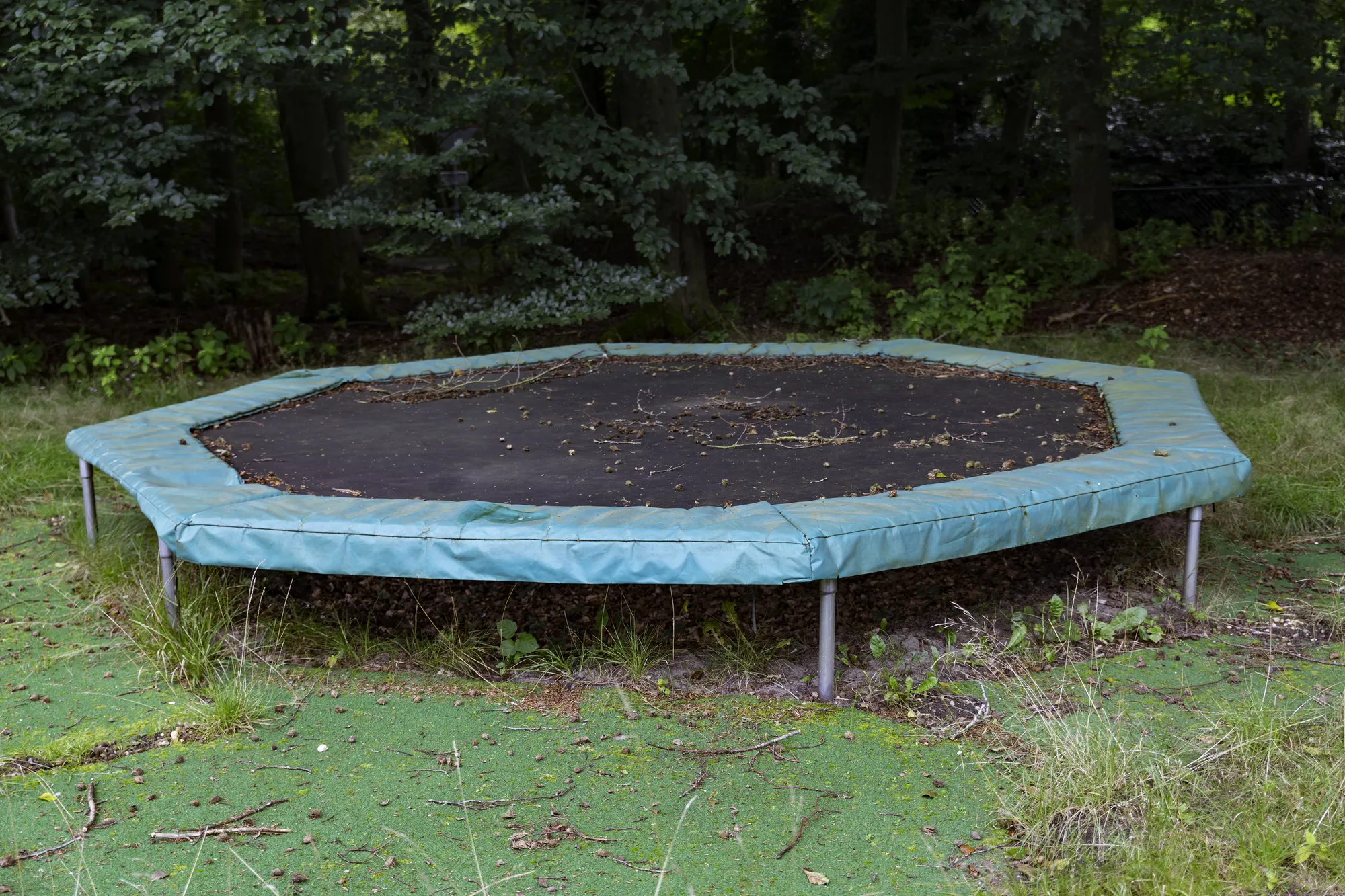
How To Get Rid Of An Old Trampoline: Disassembly, Recycling, Scrap Metal Value, And Professional Hauling
A 14-foot backyard trampoline weighs between 80 and 150 pounds of galvanized steel and holds about 90 springs under tension. It’s exactly the kind of yard item your municipal sanitation crew will refuse to pick up. So when the kids stop using it and the rust sets in, most homeowners wonder what to do next.
We’ve been hauling these since 2014. The answer is simpler than you’d think. You have four practical choices, and each one fits a different situation.
TL;DR Quick Answers
How To Get Rid Of A Trampoline
To get rid of an old trampoline, choose one of four paths based on its condition and your available time:
- Disassemble and scrap the steel frame at a local scrap-metal yard. Earns a small amount of cash.
- Donate it if it’s under five years old and still safe to use. Try Habitat for Humanity ReStore, Freecycle, or a local Buy Nothing group.
- Set out the disassembled pieces for municipal bulk-item pickup where your city allows it.
- Hire a professional junk-removal service to disassemble and haul it away in one visit. Most full-size trampolines run between $129 and $349.
For rusted, broken, or anchored trampolines, professional haul-away is the fastest and safest option.
Top 5 Takeaways
- Old trampolines are heavier than they look. A full-size frame packs 80 to 150 pounds of galvanized steel.
- The steel frame and springs are 100% recyclable. Mats, nets, and pads usually are not.
- Donation only works when the trampoline is still safe to use. Rusted welds and stretched springs belong in a scrap yard, not in a neighbor’s yard.
- Scrap-metal value runs roughly $5 to $30 for a backyard trampoline. Worth the trip if you’re already heading to the yard, but it won’t fund a replacement.
- Professional haul-away from Jiffy Junk usually costs about the same as a tool-rental-plus-dump-fee Saturday. And nobody catches a spring to the face.
Table of Contents
- How To Get Rid Of An Old Trampoline: Disassembly, Recycling, Scrap Metal Value, And Professional Hauling
- TL;DR Quick Answers
- Top 5 Takeaways
- Why An Old Trampoline Is Harder To Get Rid Of Than You’d Expect
- How To Disassemble A Trampoline Safely (If You Go The DIY Route)
- Recycling, Scrap Value, And What Each Part Is Worth
- When To Skip The DIY Route And Call A Pro
- Essential Resources On How To Get Rid Of A Trampoline
- 1. Verify The Real Safety Risks Before You Disassemble
- 2. Get The Pediatric Medical View On Backyard Trampolines
- 3. Read The Orthopedic Surgeons’ Position Statement
- 4. Find Local Donation Pickup For The Reusable Pieces
- 5. Check What Goodwill Accepts In Your Region
- 6. Give The Whole Trampoline Away Free To A Neighbor
- 7. Confirm Your City’s Bulk Pickup Rules
- Supporting Statistics On Trampoline Disposal And Recycling
- Final Thoughts & Opinion
- Frequently Asked Questions
- Q: Can I Put A Trampoline At The Curb For Trash Pickup?
- Q: How Much Is An Old Trampoline Worth In Scrap Metal?
- Q: Will Goodwill Take A Used Trampoline?
- Q: How Long Does DIY Trampoline Disassembly Take?
- Q: How Much Does Professional Trampoline Removal Cost?
- Q: Can The Trampoline Mat And Safety Net Be Recycled?
- Q: Do You Remove Trampolines That Are Anchored In Concrete?
- Q: What About A Broken Or Storm-Damaged Trampoline?
- Ready To Reclaim Your Backyard?
Why An Old Trampoline Is Harder To Get Rid Of Than You’d Expect
Backyard trampolines are deceptively heavy and awkward. Most full-size round frames weigh between 80 and 150 pounds of galvanized steel, with another 90 to 130 individual springs holding the mat in place. Each spring stays under tension until you release it. If you’re curious about the design history, the modern trampoline was patented in 1945 by George Nissen and Larry Griswold, and the basic spring-and-frame layout hasn’t changed much since. That’s why nearly every disposal challenge looks the same: lots of steel, lots of springs, and a giant fabric mat that won’t fit in a curbside bin.
A few other realities catch homeowners by surprise:
- Most curbside pickup programs refuse trampolines. They exceed bulk-waste size limits and combine metal with synthetic mat material.
- Rust complicates everything. Bolts seize, springs lose tension or snap, and the W-shaped legs can crack right where they meet the top rail.
- Mats and safety nets stay outside curbside recycling. Mats are polypropylene. Nets are polyester mesh. Neither has a residential recycling stream in most U.S. cities.
- HOA covenants often require removal within a set timeframe once visible damage starts. That clock can move quickly.
Your Four Disposal Options
Here’s the honest breakdown of costs, time, and who each option actually fits.
- DIY Disassembly Plus Curbside Or Transfer Station. Best for handy homeowners with a pickup truck and a helper. Budget four to six hours and $0 to $80 in dump fees.
- Scrap The Metal Frame. Drive the disassembled frame and springs to a local scrap-metal yard. Earns roughly $5 to $30 depending on current steel prices and frame weight.
- Donate It. Free, but only works when the trampoline is genuinely safe to use. Plan on a week or two to find a taker through Freecycle, Buy Nothing, or Habitat for Humanity ReStore.
- Hire Professional Haul-Away. A junk-removal crew disassembles, loads, and disposes for you. Most full-size trampolines run $129 to $349. Same-day appointments are common.
For most homeowners with a rusted, broken, or anchored trampoline, the math favors professional haul-away. The fee usually beats the combined cost of tools, truck rental, dump fees, and a lost weekend.
How To Disassemble A Trampoline Safely (If You Go The DIY Route)
Round trampolines come apart in three to five hours with two people. Rectangular performance frames have heavier steel and bungee cords instead of springs. Budget an extra hour or two, and a third helper. Either way, here’s the seven-step sequence our crews use.
- Gear up. Heavy-duty work gloves and safety glasses are non-negotiable. Rusted springs can snap and travel.
- Untie and remove the safety net. Fold it onto a tarp.
- Detach the mat from the springs. Use a trampoline spring tool to compress and release each spring. Work in a star pattern (top, bottom, left, right) so tension releases evenly.
- Remove the springs from the frame. Bag them as you go. Loose springs disappear into the grass and find lawn mowers later.
- Hit any rusted bolts with penetrating oil. Wait five minutes before unbolting the top rail sections.
- Separate the W-legs with a helper. Flex slowly until the friction releases. Prying cracks aging welds.
- Sort by material. Steel frame in one pile, springs bagged, soft goods folded in another. That makes the next step (recycling or pickup) twice as fast.
Recycling, Scrap Value, And What Each Part Is Worth
- The Steel Frame and Springs Are 100% Recyclable. Any scrap-metal yard will take them. A typical backyard frame yields roughly $5 to $25 at current light-iron prices.
- The Mat And Safety Net Usually Head To A Landfill. Some municipalities offer soft-plastic recycling programs, but most don’t. Usable mats can sometimes be resold as replacement parts.
- Galvanized Leg Tubing Goes With The Frame. Same scrap stream as the rest of the steel.
- Plastic Spring Covers and Foam Padding go in the regular bin, broken down small enough to fit.
In our experience hauling trampolines, the scrap-metal route makes the most sense for homeowners who already have a truck and a free morning. For everyone else, a professional service rolls everything (frame, springs, mat, net, pads) into one stop. The recyclable steel still ends up at the scrap yard. The eco impact is the same. The difference is who’s doing the driving. If you’re already clearing other backyard items, our yard waste removal services can bundle the trampoline into the same visit.
When To Skip The DIY Route And Call A Pro
Some trampolines aren’t safe for a homeowner to disassemble. Watch for these signals:
- The frame has rusted to the point of brittleness, and the welds can crack mid-disassembly.
- You lack a pickup truck or a strong helper.
- The trampoline is anchored to concrete footings or sunk into the lawn.
- You’re working under an HOA notice or a property-sale timeline.
- Storm damage has scattered pieces across the yard.
- You’re already clearing other items, and bundling drops the per-item cost fast.
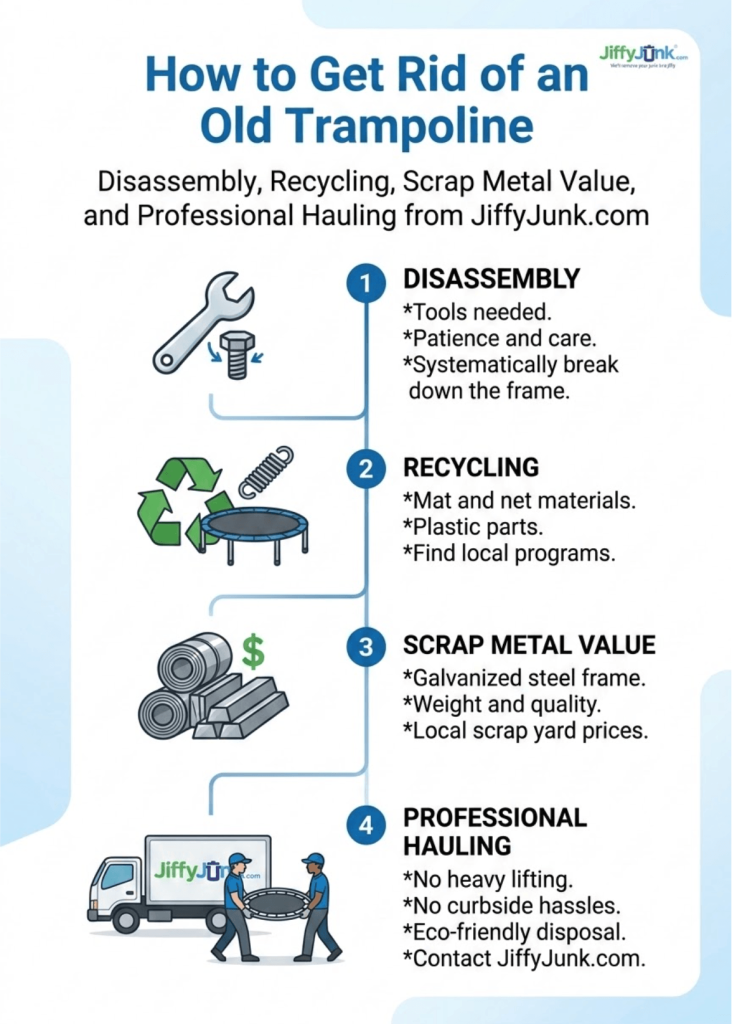
“After more than a decade of hauling trampolines, I’ll tell you the most underestimated part is always the springs. Homeowners think the frame will be the hardest piece. But a rusted spring under tension is what sends people to urgent care.”
— The Jiffy Junk Operations Team
Essential Resources On How To Get Rid Of A Trampoline
Seven trusted sources to help you make an informed decision before, or instead of, taking the trampoline apart yourself.
1. Verify The Real Safety Risks Before You Disassemble
The U.S. Consumer Product Safety Commission’s official safety publication covers the injury patterns to watch for during use and teardown. Spring and frame contact is one of the four main causes the CPSC lists. Worth a five-minute read before you start unhooking springs.
Source: U.S. CPSC Trampoline Safety Publication 085
2. Get The Pediatric Medical View On Backyard Trampolines
The American Academy of Pediatrics’ 2012 policy statement on trampoline safety in childhood and adolescence remains the standard reference for parents weighing the keep-or-remove decision. The statement reviews injury mechanisms and recommends against home use.
Source: AAP Policy Statement: Trampoline Safety In Childhood And Adolescence
3. Read The Orthopedic Surgeons’ Position Statement
The American Academy of Orthopaedic Surgeons’ position paper covers skeletal injury patterns and supervised-use guidelines. Useful reading if you’ve already had one trampoline injury in the family and are deciding whether the trampoline stays.
Source: AAOS Position Statement: Trampolines And Trampoline Safety
4. Find Local Donation Pickup For The Reusable Pieces
Habitat for Humanity ReStore accepts gently used home and yard items at hundreds of U.S. locations, with proceeds funding affordable housing. Many ReStores offer free large-item pickup. Call your local store first, because trampolines aren’t always on the accepted list.
Source: Habitat For Humanity ReStore: Donate Goods
5. Check What Goodwill Accepts In Your Region
Goodwill’s national donation page lets you confirm what your nearest location takes before you load the truck. Most Goodwill stores decline whole trampoline frames for liability reasons, but a clean mat, net, or set of springs may qualify.
Source: Goodwill Industries: Donate Clothes, Household Goods & Electronics
6. Give The Whole Trampoline Away Free To A Neighbor
Freecycle is a nonprofit gifting network organized by town. Listings are free, members are local, and same-day pickup of yard items is common. It’s a clean way to keep a working trampoline out of the landfill.
Source: Freecycle Network: About Freecycle And How It Works
7. Confirm Your City’s Bulk Pickup Rules
New York City’s Department of Sanitation page on large-item disposal is the template most municipal bulk-pickup programs follow. It covers set-out limits, what counts as a “large item,” and what requires a separate appointment. Use it as a model for what to ask your own city.
Source: NYC Department Of Sanitation: Large Items Disposal Guide
Supporting Statistics On Trampoline Disposal And Recycling
Three numbers that frame the real environmental and safety stakes of throwing out an old trampoline. They explain why a recycle-or-donate path beats a landfill every time.
1. 10.5 Million Tons Of Steel Sent To U.S. Landfills Each Year
In 2018, 10.5 million tons of steel ended up in U.S. landfills. That was 7.2% of all municipal solid waste landfilled that year. In our crews’ experience, a hauled-away trampoline frame sorted to a scrap yard is one of the easier wins against that number.
Source: EPA Ferrous Metals Material-Specific Data
2. 58% Of Recycled U.S. Steel Is Post-Consumer “Old” Scrap
About 58% of all recycled steel scrap in the United States comes from post-consumer obsolete scrap. That’s the category your old trampoline frame slots into. USGS valued the U.S. iron-and-steel scrap market at roughly $24 billion in 2024, which is why scrap yards almost always say yes to clean ferrous metal.
Source: USGS Iron And Steel Scrap Statistics And Information
3. 108,542 Pediatric ER Visits For Trampoline Injuries In 2019
U.S. emergency rooms saw an estimated 108,542 trampoline-related injuries in children aged 0 to 20 in 2019, per NEISS data analyzed in this NIH-published study. That’s why we always tell homeowners the same thing: if the trampoline looks rusty or unstable, skip the bounce test before disposal. Disassemble carefully or call a crew.
Source: NIH PMC Study: Pediatric Hospitalization Due To Trampoline-Related Injuries
Final Thoughts & Opinion
The honest math on getting rid of an old trampoline almost always points in the same direction.
If your frame is rust-free, your springs still hold tension, and you have a Saturday plus a helper and a pickup truck, disassemble it. Scrap the metal, and you’ll come out a few dollars ahead. That’s the ideal scenario.
If any of those conditions are missing, the picture changes.
- Disassembling a brittle, rusted trampoline is where most homeowner injuries on this kind of project happen, in our crews’ experience.
- Tool rental, truck rental, and dump fees often add up to more than a professional haul-away quote.
- A trampoline left in the yard “until next weekend” tends to stay there for months.
In our years on the truck, the most common thing we hear from homeowners is some version of: “I should have called you six months ago.” The trampoline gets more dangerous with time, and the rust on those springs only spreads.
Our take:
- If the trampoline is still genuinely usable, donate it to a neighbor through Freecycle or a Buy Nothing group. That’s the most efficient outcome, environmentally and socially.
- If it isn’t safe, skip the donation guilt and recycle it. The steel is more valuable in a scrap yard than in a Habitat for Humanity dumpster, and the mat heads to a landfill either way.
- If you’d rather have the whole thing gone in under an hour with no lifting, that’s exactly what our White Glove Treatment is built for.
Frequently Asked Questions
Q: Can I Put A Trampoline At The Curb For Trash Pickup?
A: In most U.S. cities, no. Trampolines exceed bulk-waste size limits and combine mixed materials. A few municipalities accept disassembled frames on scheduled bulk-pickup days. Always check with your local sanitation department first. If you do go this route, bag the springs separately so they don’t escape during pickup.
Q: How Much Is An Old Trampoline Worth In Scrap Metal?
A: Most backyard trampoline frames yield $5 to $25 in scrap steel based on current light-iron prices and an 80-to-150-pound frame weight. Heavier rectangular performance frames can earn a bit more. The springs add a small bonus and go into the same scrap stream.
Q: Will Goodwill Take A Used Trampoline?
A: Goodwill and most national thrift chains decline trampolines because of liability and storage limits. Habitat for Humanity ReStore sometimes accepts them in good, disassembled condition. Buy Nothing groups and Freecycle are usually faster donation routes, and the trampoline goes to a family that actually wants it.
Q: How Long Does DIY Trampoline Disassembly Take?
A: Plan on three to five hours for a round trampoline with two people, and four to six hours for a rectangular one. Add an hour if the springs and bolts are heavily rusted. Working alone is possible but slower and riskier. The springs are the part where solo workers get hurt most often.
Q: How Much Does Professional Trampoline Removal Cost?
A: Most full-size outdoor trampoline haul-aways cost $129 to $349. Pricing depends on size, condition, accessibility, and whether the frame is already disassembled. Jiffy Junk gives an upfront, all-in quote before any work starts. No surprise charges on the day.
Q: Can The Trampoline Mat And Safety Net Be Recycled?
A: Rarely. Mats are polypropylene, and nets are polyester mesh. Most curbside recycling programs reject both. Usable mats can sometimes be resold as replacement parts. Damaged ones head to a landfill regardless of who hauls them.
Q: Do You Remove Trampolines That Are Anchored In Concrete?
A: Yes. Our crews bring tools to cut anchor stakes flush with the ground or remove sunken concrete footings on request. Mention it during booking so we send the right equipment.
Q: What About A Broken Or Storm-Damaged Trampoline?
A: Storm damage is one of our most common trampoline calls. We collect scattered pieces, disassemble what’s still standing, and haul everything away in one visit. We often have same-day appointments right after a major weather event.
Ready To Reclaim Your Backyard?
Book your trampoline haul-away in a jiffy, and our licensed, insured crews will disassemble, load, and dispose of every piece while you finish your morning coffee. We’re not happy until you are happy, and your backyard will look a whole lot better without that rusty frame staring back at it.