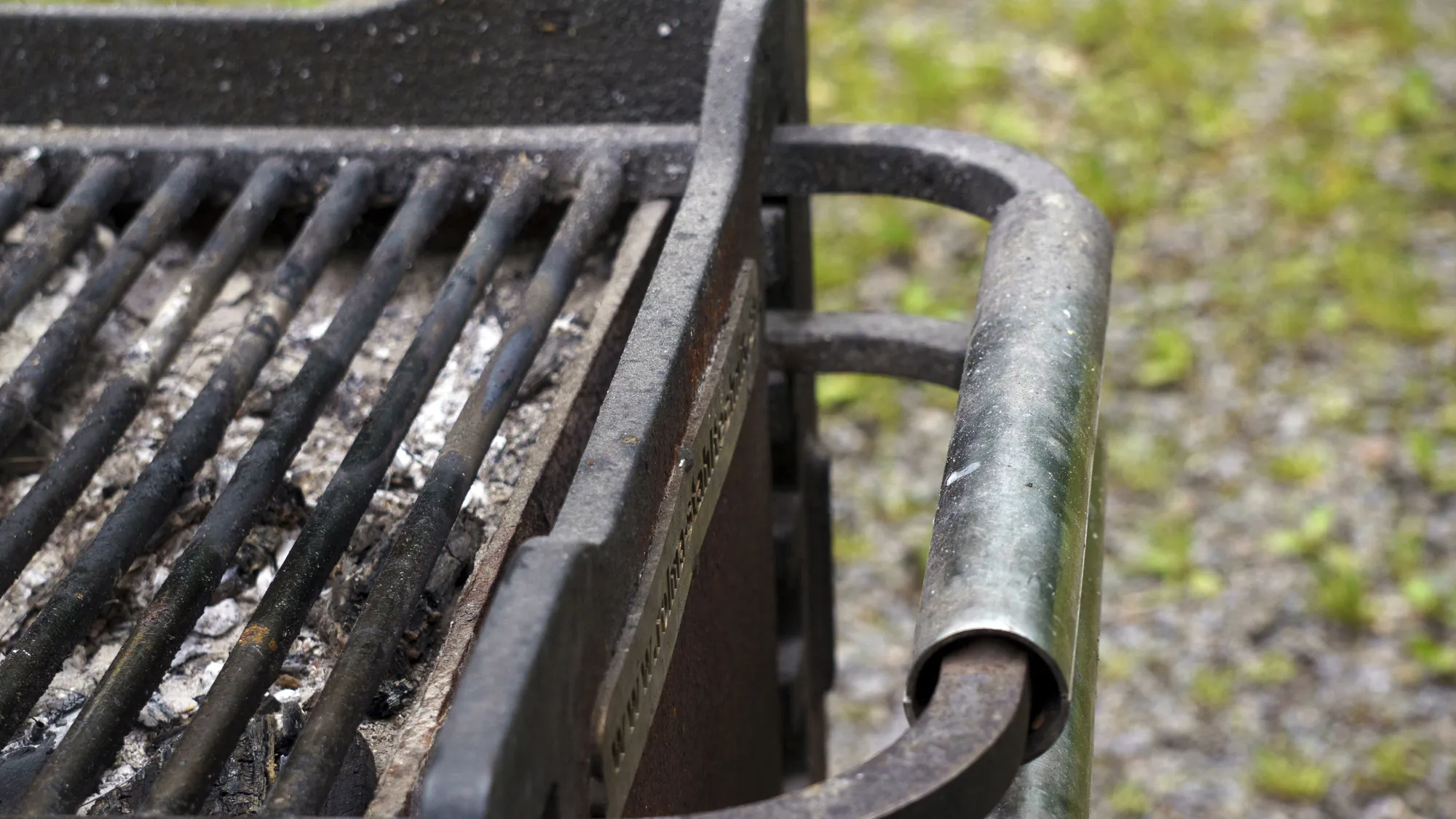
How To Get Rid Of An Old Grill: Disconnecting The Propane, Scrapping The Metal, And What Junk Removal Companies Take
The grill itself is the easy part. Almost every homeowner who calls us is more worried about the propane tank, and they’re right to be. That’s where this guide opens.
Our crews have done this work since 2014, on every kind of grill in every kind of yard. The advice below is what we tell customers when they ask whether they want to handle the disposal themselves or just have the grill hauled away today.
TL;DR Quick Answers
How To Get Rid Of An Old Grill
You’ve got four practical ways to handle this, depending on what shape the grill is in and how much heavy lifting you’re up for:
- Book a junk removal pickup. A two-person crew handles the propane tank, lifts the grill out, and recycles or donates what can be saved.
- Scrap the metal. A working-condition grill nets roughly $5 to $15 at a local scrap yard. Worth doing if you’ve got a truck and a free morning.
- Donate a working grill. Habitat for Humanity ReStore, Goodwill, and Buy Nothing groups will often take grills that still light.
- Use curbside or bulk pickup. Many cities will take a grill on a scheduled bulk-item day. The propane tank can’t ride along.
That last point is non-negotiable. A propane tank never goes in household waste, the recycling bin, or to the curb under any circumstances. Drop it at a propane exchange or a Household Hazardous Waste site instead.
Top 5 Takeaways
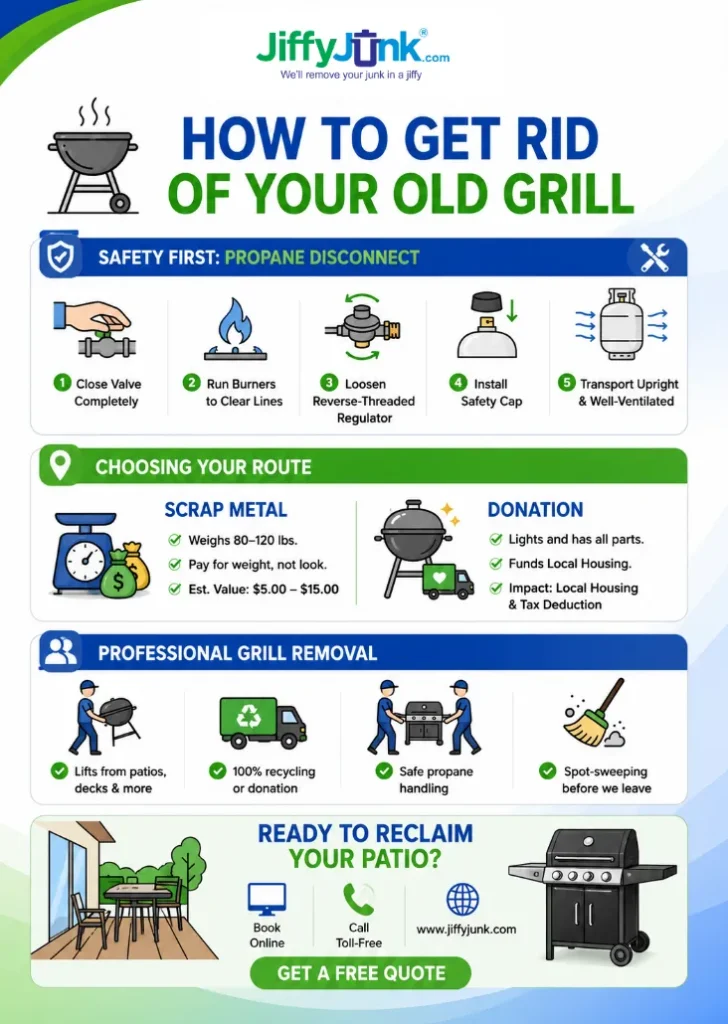
- Disconnect the propane tank first. Close the valve, run the burners for 30 seconds to clear residual gas, then unscrew the regulator counter-clockwise.
- Never put a propane tank in household waste or the recycling bin. Even “empty” tanks hold residual gas under pressure.
- A typical gas grill weighs 80 to 120 pounds and is worth $5 to $15 in scrap metal. That’s honest pricing, not a windfall.
- Working grills are donation material. If it lights, holds heat, and still has its parts, a charity will likely take it.
- In one visit, we handle the propane tank, lift the grill body out, and sweep the spot before we leave. That’s the White Glove Treatment.
Table of Contents
- How To Get Rid Of An Old Grill: Disconnecting The Propane, Scrapping The Metal, And What Junk Removal Companies Take
- TL;DR Quick Answers
- Top 5 Takeaways
- Why Your Old Grill Needs A Real Plan
- How To Safely Disconnect The Propane Tank
- Choosing Your Disposal Route — Scrap, Donate, Or Pickup
- Essential Resources On How To Get Rid Of An Old Grill
- 1. The Federal Standard For Appliance And Refrigerant Disposal
- 2. The Authority On Grill Fire Safety
- 3. The Best Place To Donate A Working Grill
- 4. The Recall Database Every Grill Owner Should Check
- 5. The Tax-Deduction Guide For Donated Property
- 6. The Federal Report On Residential Grill Fires
- 7. The Official State Guidance On Propane Tank Disposal
- Supporting Statistics
- Final Thoughts And Opinion
- Frequently Asked Questions
- Q: Can I Put My Old Grill Out For Regular Curbside Pickup?
- Q: How Do I Dispose Of An Old Gas Grill With The Propane Tank Still Attached?
- Q: How Much Does It Cost To Have A Grill Hauled Away?
- Q: Will Home Depot Or Lowe’s Take My Old Grill?
- Q: Can I Throw A Propane Tank In The Trash?
- Q: How Do I Get Rid Of An Old Weber Grill?
- Q: Do Junk Removal Companies Take Grills?
- Q: Is There Free Grill Removal Near Me?
- Ready To Reclaim Your Patio?
Why Your Old Grill Needs A Real Plan
A grill isn’t a bookshelf or a chair. It’s steel, aluminum, sometimes copper fittings, often a pressurized fuel tank, and in older units, a few components your city may classify as hazardous. Dragging it to the curb is rarely the right answer. In some cities, it’s not even legal.
Different grill types need different disposal paths. We handle a propane gas grill one way, a charcoal kettle another, and a pellet smoker or electric tabletop, or something else. If you’re not sure which category yours falls into, the overview of different types of barbecue grills on Wikipedia is a useful primer.
Once you know the type, the rest comes down to condition, timeline, and effort. Donate working grills. Scrap or schedule a pickup for grills past saving. Pickup is your fastest path if you want the grill gone today. The same playbook covers most other big home items, which we walk through in our broader guide to getting rid of old appliances.
How To Safely Disconnect The Propane Tank
If your grill runs on propane, this step comes before anything else. A 20-pound tank holds residual gas even when the gauge reads empty. Twist the regulator the wrong way, and you’ll get a leak. Here’s the order our crews follow on every gas grill pickup:
- Turn off every burner control knob on the grill.
- Close the tank valve by turning it clockwise until it stops.
- Light the grill on residual gas in the line and let it burn for 30 seconds to clear the hose.
- Put on work gloves. The regulator nut is reverse-threaded on US tanks. Turn it counter-clockwise to loosen.
- Lift the tank straight up out of the cradle.
- Install a safety cap on the tank valve before you move it anywhere.
- Transport the tank upright in a ventilated space. A sealed trunk on a hot day is the worst place for it.
Take the tank to one of these three places:
- A propane exchange cage at a hardware store, gas station, or supermarket. Free if you trade for a refill, small fee if you’re just dropping off.
- A Household Hazardous Waste facility, run by most counties. Usually free for residents and the safest route for old or expired tanks.
- A propane refill retailer, which will typically accept tanks that are past their recertification date.
A few things never to do: don’t vent the tank yourself, don’t put it in your recycling bin, and don’t leave it in a closed garage for months. Propane on its own is non-toxic. The hazard is a damaged tank releasing gas under pressure.
Choosing Your Disposal Route — Scrap, Donate, Or Pickup
With the tank off, the grill body is just metal. What you do with it next depends on what shape it’s in. And on how much you want to lift.
Scrap The Metal
Most three-burner gas grills weigh 80 to 120 pounds. A scrap yard pays five to fifteen dollars for that much metal. Charcoal kettles weigh less and bring in two to five. Aluminum side tables and lids fetch more per pound than steel, so separating materials before you go bumps your payout. Rust doesn’t change anything. Scrap is paid by weight and content, not by appearance. For a fuller look at what happens to the metal once it leaves the curb, see our complete guide to home appliance recycling.
Donate A Working Grill
If your grill still lights, holds heat, and has its main parts, it’s a candidate for donation. Habitat for Humanity ReStore takes working outdoor equipment at most locations, and many ReStore branches will pick up at the curb. Goodwill and the Salvation Army take grills, too. Local Buy Nothing groups and Freecycle posts move grills within hours, often the same day. Keep your donation receipt. The IRS lets you deduct the fair market value of donated property if you itemize.
Schedule A Pickup
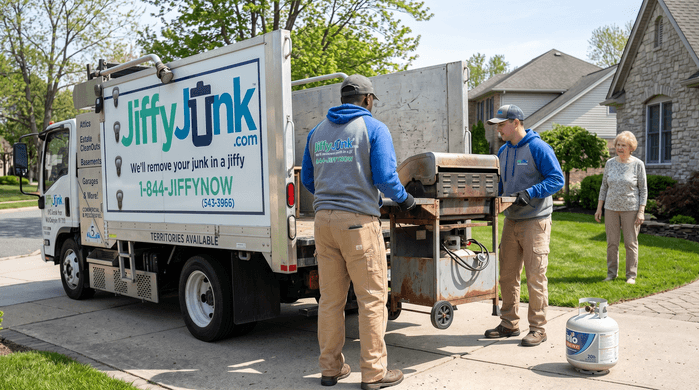
Don’t want to handle any of it yourself? We’ll take care of every step. A two-person crew shows up in your appointment window, disconnects the propane, lifts the grill out from wherever it’s sitting, and sweeps the spot before we leave. Patio, deck, balcony, side yard, even a third-floor walkup. We’ve worked all of them. We donate working units to local partners whenever possible and recycle the metal from anything past donation condition. Grill removal is part of our outdoor cleanup work, the same crews who handle our yard waste removal services nationwide.
Pricing is based on volume, meaning how much room the grill takes up in our truck. A single grill usually lands in our lowest tier. You get the price up front before we begin. No surprise fees. We’re not happy until you are happy.
“After ten years of grill pickups, the most common mistake I see is people loosening the regulator before they close the tank valve. Close the valve first, let the line burn off, then unscrew the regulator. That order is the difference between a clean disconnect and a small accident. We’ve done thousands of these jobs, and that one habit prevents almost every safety issue homeowners worry about.”
— Jiffy Junk Operations Team
Essential Resources On How To Get Rid Of An Old Grill
Grill disposal touches several other questions: how to handle the tank, where to recycle the metal, whether the unit is donation-worthy, what your tax write-off looks like, whether your model has been recalled, and what your local rules require. These are the most useful authorities for each.
1. The Federal Standard For Appliance And Refrigerant Disposal
The U.S. Environmental Protection Agency lays out the federal requirements for disposing of household appliances containing refrigerants and hazardous components. It’s the baseline every recycler and junk hauler operates against.
Source: EPA Guidance On Appliance Disposal
2. The Authority On Grill Fire Safety
The National Fire Protection Association publishes annual data on home grill fires. The leading causes are gas hose leaks and a lack of cleaning, and most incidents happen in July. The page is worth reading before you store, move, or dispose of any grill.
Source: NFPA Grilling Safety Facts And Resources
3. The Best Place To Donate A Working Grill
Habitat for Humanity operates over 900 ReStore locations across the U.S. and Canada that accept gently used outdoor equipment, including working grills. Many locations offer free pickup for larger items, and your donation funds affordable housing construction.
Source: Donate Goods To Habitat For Humanity ReStore
4. The Recall Database Every Grill Owner Should Check
Before you scrap or donate, look up your grill model at the U.S. Consumer Product Safety Commission. Recent notices like the Weber wire bristle grill brush recall, which affected over 3.2 million units, show how often grill-related products get flagged. Your model might qualify for a manufacturer’s remedy.
Source: CPSC Weber Wire Bristle Grill Brush Recall Notice
5. The Tax-Deduction Guide For Donated Property
If you donate a working grill to a qualified charity, the IRS lets you deduct its fair market value. Publication 561 explains how to determine that value and what documentation you’ll need to support the deduction at tax time.
Source: IRS Publication 561: Determining The Value Of Donated Property
6. The Federal Report On Residential Grill Fires
The U.S. Fire Administration’s report on residential grill fires covers timing, causes, and the role of gas grills. It’s worth reading. The numbers are why we treat propane tank disposal as non-negotiable.
Source: U.S. Fire Administration Report On Grill Fires
7. The Official State Guidance On Propane Tank Disposal
The Pennsylvania Department of Environmental Protection has a plain-language guide on disposing of old propane cylinders and grill tanks. The recommendations work nationally. Route the tank through a local Household Hazardous Waste collection program, or take it to a propane retailer that accepts old cylinders for recycling.
Source: Pennsylvania DEP Guide To Old Propane Cylinders And Tanks
Supporting Statistics
A few numbers worth knowing before you make a disposal decision. Each one matches what we see on the ground every week.
1. The U.S. Recycles About 88% Of End-Of-Life Appliance Steel
The U.S. Geological Survey estimates 88% of appliance steel was recycled in 2024. Grills count as appliances here. Route one to a scrap yard, and the metal feeds straight back into the supply chain. Most grill metal ends up reused. Choosing the recycler over the landfill keeps yours in that 88%.
Source: USGS Mineral Commodity Summaries 2025: Iron And Steel Scrap
2. An Average Of 22,155 People Per Year Visit ERs With Grill-Related Injuries
The Office of the Illinois State Fire Marshal, citing NFPA data, reports that grills send tens of thousands of Americans to emergency rooms annually. A meaningful share of those incidents happen during handling, not just cooking. Moving, storing, or disconnecting a grill is where things go wrong. That’s why we tell every customer to call us if they have any doubts about the propane connection.
Source: Office Of The Illinois State Fire Marshal Grilling Safety Bulletin
3. About 75% Of A Typical Home Appliance’s Weight Is Steel, And It’s All Recyclable
Per the Iowa Department of Natural Resources, the average household appliance is about three-quarters steel by weight. Recyclers can melt that steel down and reuse it indefinitely. The same goes for grills. Most of the body, frame, and grates end up back in the metal supply chain when a recycler handles it. Sending a grill to a landfill is the worst available option.
Source: Iowa DNR Appliances And Electronics Recycling Guide
Final Thoughts And Opinion
Most homeowners overestimate how hard grill disposal is. The bigger issue, almost always, is the propane tank.
Once that’s handled, the body is just metal. Scrap it for a few dollars, donate it if it still cooks, or have it hauled. We see all three constantly.
If the grill works, donate it. The fair market value goes on your taxes if you itemize, and someone in your neighborhood gets a grill they probably wouldn’t have bought new. If it doesn’t work, scrapping rarely beats pickup once you factor in fuel, time, and lifting the grill twice yourself.
Tens of thousands of grill injuries each year happen during handling, not during cooking. Close the valve, burn off the line, then cap the tank. Body comes last. The order is what keeps everything safe.
Frequently Asked Questions
Q: Can I Put My Old Grill Out For Regular Curbside Pickup?
A: Most cities require a scheduled bulk-item pickup for grills, and a few accept them on regular recycling day as scrap metal. The propane tank never goes to the curb. Check your local rules for the body, and handle the tank separately through a propane exchange or Household Hazardous Waste facility.
Q: How Do I Dispose Of An Old Gas Grill With The Propane Tank Still Attached?
A: Disconnect the tank first. Close the valve, run the burners until the line is clear, unscrew the regulator counter-clockwise, and cap the tank valve. Take the tank to an exchange program or HHW site. The grill body can then go to scrap, donation, or a junk removal pickup.
Q: How Much Does It Cost To Have A Grill Hauled Away?
A: A single grill is typically our lowest pricing tier because it takes up a small share of our truck. We quote the exact price before we begin. No surprises, no hidden fees. Call 844-543-3966 or book online for a free estimate.
Q: Will Home Depot Or Lowe’s Take My Old Grill?
A: Some locations offer haul-away as an add-on when you buy a replacement grill, but neither runs a standalone disposal program. If you’re not buying new, you’ll need a different route.
Q: Can I Throw A Propane Tank In The Trash?
A: No. This one really matters. Even “empty” tanks hold residual gas under pressure and have caused fires inside collection trucks and at sorting facilities. Use a propane exchange program or your local HHW site instead.
Q: How Do I Get Rid Of An Old Weber Grill?
A: Check Weber’s warranty program first. Certain parts of premium Weber grills carry a lifetime warranty, and a replacement may bring the unit back to life. If the grill is past saving, Weber bodies are heavy-duty steel and scrap well. Working Webers also hold strong resale value on Facebook Marketplace and Craigslist.
Q: Do Junk Removal Companies Take Grills?
A: Yes. Jiffy Junk takes grills of every size, fuel type, and condition. That includes gas, charcoal, pellet, and electric grills, plus smokers, kamados, and built-ins. We handle the propane tank as part of the service.
Q: Is There Free Grill Removal Near Me?
A: Free options exist for working grills. Charities like Habitat for Humanity ReStore often pick up at no cost, and Buy Nothing groups will move a grill across town the same day. For grills past the donation condition, Jiffy Junk offers competitive flat-rate pickup. Our post on why free junk removal isn’t always truly free covers the trade-offs in detail.
Ready To Reclaim Your Patio?
Stop staring at the old grill. Our team handles the propane, the lifting, and the cleanup in a single visit. Call 844-543-3966 or book online at www.jiffyjunk.com/booking for a free quote, and we’ll have your space cleared in a jiffy.